


TCM Perspective: Wind
What is Wind in TCM?
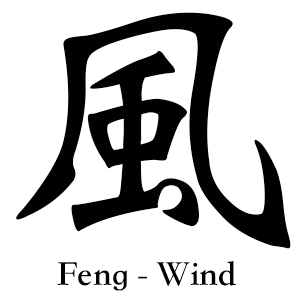
Wind (Feng 风) is a primary pathogen known as the "leader of all diseases," characterized by sudden onset, rapid change, movement, and upward transmission. Wind is thought to be initially manifested in the highest parts of, and more outside, the body, especially the face, skin, sweat glands, and lungs.
*TCM patterns are not referring to the physical, biomedical organs listed below, but rather the Chinese medicine interpretation of these organ systems
Key Characteristics of Wind in TCM:
It causes movement: Wind triggers symptoms that move from place to place, like pain, numbness, and itching.
It is swift: Diseases related to wind appear and disappear quickly.
It combines with other pathogens: Wind acts as a carrier for cold, heat, or dampness to enter the body.
The Foundations of Chinese Medicine
Chinese medicine theory can often sound like magical thinking to those not familiar with the concepts or culture. It is based on the history of how historical Chinese doctors viewed the human body, its functions, as well as nature and the body’s connection with the world. Traditional Chinese medicine theory is built upon several key principles that shape its approach to health and healing:
Qi
At the core of Chinese medicine lies the concept of Qi, which is difficult to translate. It is often described as vital energy, life force, or the function of the body systems. Qi has been said to “flow” through the body along meridians, helping to keep the body’s organ systems functioning properly, and when it is in balance, health is maintained. Imbalances or blockages in the flow of Qi are believed to lead to illness and dysfunction of certain organ systems.
Yin and Yang
The balance between Yin (dark, cold, and passive) and Yang (light, warm, and active) is fundamental to Chinese medicine. Health is achieved when these opposing forces are in harmony, and illness arises when they are imbalanced.
Five Elements
Chinese medicine categorizes the body's organs, tissues, and functions into five elements: Wood, Fire, Earth, Metal, and Water. These elements are interconnected and influence each other, providing a framework for understanding the body's functions and imbalances.

External Pathogens
External Pathogens, also known as the Six Excesses or Six Evils, originate from the environment and attack the body from the outside, often corresponding to infectious or acute illnesses.
-
The primary pathogen often carries other pathogens. Causes acute symptoms, itching, and rapid changes.
-
Causes contraction, severe pain, and stiffness. Treat with warmth.
-
Causes heavy, sluggish sensations and cloudy, sticky discharges.
-
Damages body fluids, causing dry skin, nose, and throat
-
Causes inflammation, high fever, and irritability
-
Occurs only in summer; causes high fever and extreme thirst

External vs. Internal Wind
External Wind
External Wind originates outside the body and enters through the acupuncture meridians, leading to common acute illnesses such as colds, flu, and viral infections. In traditional thought, Wind acts as a 'spearhead' since it can open the pores and allows other pathogens, or 'Evils,' like Heat, Cold, and Dampness to invade the body. For example, during summer, the body is more vulnerable to Heat-Wind, which can result in sunstroke or heatstroke. The harmful action of Wind penetrates into the muscle layers in the Meridians of the Triple Burner and the Small Intestine, which blocks the normal flow of Qi, causing muscle stiffness (Subhuti, 1993).
Internal Wind
Internal Wind is manifested from within the body. It is not literal wind, but rather a metaphor for symptoms that move rapidly and unpredictably, much like wind blowing leaves in many directions. This condition is often described as a 'stirring' of Yang energy, leading to sudden, spasm-like, or upward-moving symptoms. Internal Wind is typically linked to Liver dysfunction or severe deficiency and may manifest as tremors, dizziness, vertigo, facial twitching, or seizures. Facial paralysis after a stroke is due to Internal Wind, while Bell’s palsy is attributable to External Wind (Huang & Mao, 2007).
Unlike External Wind, this is more serious and chronic, affecting deeper levels like the channels, sinews, organs, and even the brain.
Symptoms of Internal Wind
From the Suwen Chapter 42 Treatise on Wind (300 BC - 200 CE)
Liver and Deficiency Manifestations are most common for Internal Wind, but TCM classics outline wind manifestations and symptoms for many organ systems.
*TCM patterns are not referring to the physical, biomedical organs listed below, but rather the Chinese medicine interpretation of these organ systems
-
"The Liver wind manifests as excessive sweat, aversion to wind, sadness, a pale green color, dryness of the throat, and frequent anger."
-
“The Spleen wind manifests as excessive sweat, aversion to wind, physical lethargy, limbs unwilling to move, a pale yellow color, and lack of appetite."
-
"The Lung wind manifests as sweating, aversion to wind, and a pale white color... if it continues, it causes a sunken complexion."
-
"The Heart wind manifests as sweating, aversion to wind, and a pale red color"
-
"The Kidney wind manifests as sweating, aversion to wind, face that is puffy and swollen, back pain, inability to stand straight, and a dark complexion"
-
"Head wind causes facial sweating, aversion to wind, and when it is acute, headaches"
Zhong Feng - Wind Strike
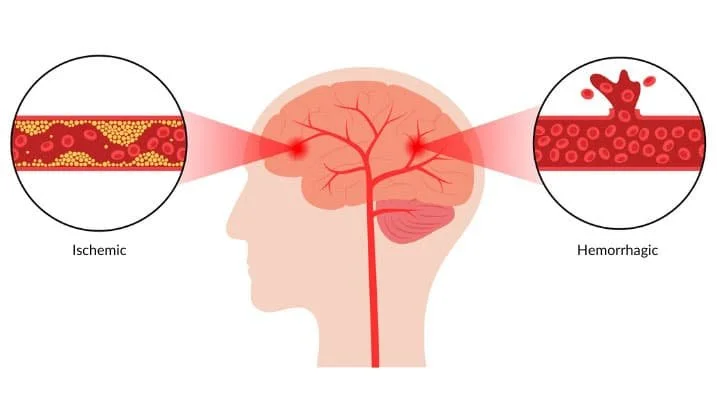
In Western medicine, acute cerebrovascular disease is defined as a serious, non-traumatic disruption of blood supply to the brain that leads to focal neurological damage. In Traditional Chinese Medicine, this condition is described as Zhong Feng or Wind Strike, where the body is struck by a combination of external pathogenic wind and internal wind. The term 'Zhong' implies a sudden onset, evoking the image of an arrow hitting its target. In TCM, Wind Strike encompasses several biomedical conditions, including brain hemorrhage, cerebral thrombosis, and vascular spasm. Clinical characteristics of cerebrovascular disease include a sudden onset and rapid progression. In TCM, this is categorized as a type of Bi-syndrome (Dashtdar et al., 2016).
Wind Strike can be summarized in four words: Wind, Phlegm, Fire, Stasis. Not all of these elements need to be present, but at least three are required to generate Blowing Wind. Additionally, they can occur with varying degrees of intensity, which can lead to a wide range of different Wind Strikes.
-
Wind triggers a sudden loss of self-awareness during an acute episode, manifesting as Wind Strike and the resulting hemiplegia.
-
Phlegm contributes to unexpected loss of consciousness. Within the meridians, Phlegm leads to numbness or tingling in the limbs. When the orifices become obstructed, Phlegm causes aphasia or slurred speech.
-
Fire damages Yin, and the subsequent Yin deficiency fails to nourish the tendons and meridians, leading to meridian malnutrition and hemiplegia.
-
Blood Stasis obstructs the meridians and joints, resulting in stiffness and pain in the extremities, an observable outcome of Wind Strike.
Bi-Syndrome 痹证, also known as 'Painful Obstruction Syndrome,' refers to joint and muscle pain, soreness, or numbness caused when wind, cold, or dampness invade the body and block the flow of Qi and blood. This syndrome corresponds to many chronic musculoskeletal conditions in Western medicine, including arthritis, neuralgia, and fibromyalgia, all of which are marked by pain, stiffness, and limited mobility.

Evidence-based Research & Useful Resources:
Role of acupuncture in the treatment of insomnia: a comprehensive review
https://medicalacupuncture.org/acupuncture-in-stroke-treatment/
Effect of Acupuncture vs Sham Acupuncture on Patients With Poststroke Motor Aphasia
https://jamanetwork.com/journals/jamanetworkopen/fullarticle/2814117
Acupuncture and stroke motor rehabilitation: a decade of evidence synthesis via systematic mapping
https://pmc.ncbi.nlm.nih.gov/articles/PMC12511885/
Acupuncture in Traditional Chinese Medicine: A Complementary Approach for Cardiovascular Health
https://pmc.ncbi.nlm.nih.gov/articles/PMC11268752/
Acupuncture in treating cardiovascular disease complicated with depression: A systematic review and meta-analysis
https://pmc.ncbi.nlm.nih.gov/articles/PMC9752033/
The Concept of Wind in Traditional Chinese Medicine