

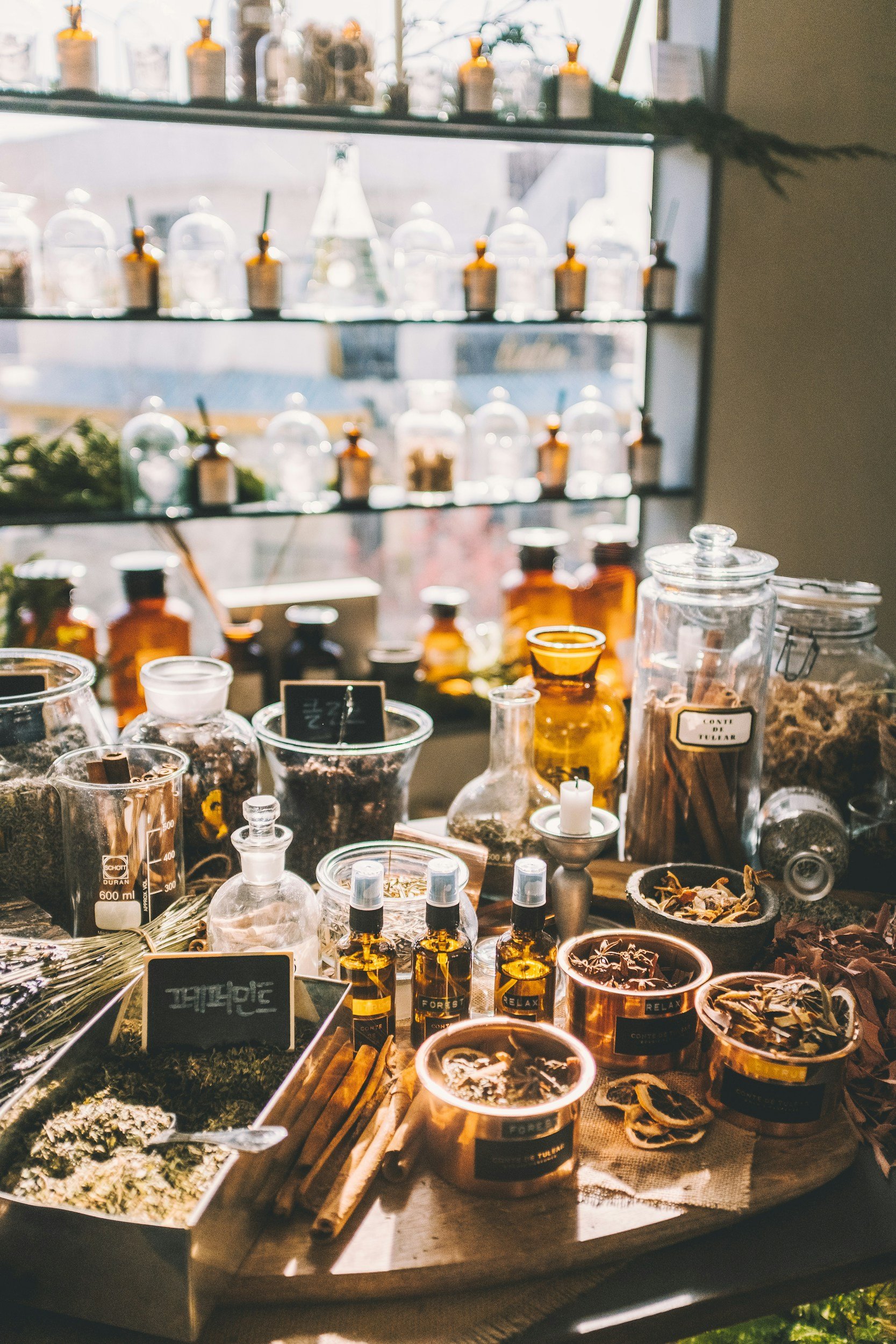
Introduction to Herbal Medicine
Point of Reference
In the United States, our primary reference is the Materia Medica by Bensky, a comprehensive encyclopedia of herbal substances used for healing. It is recognized as the standard text for both comprehensive and board exams. This text is part of a rich tradition of information that has been written, updated, and expanded upon throughout history. In the Materia Medica, the herbs are grouped by function (i.e. Herbs that clear heat or tonify). It also includes information on the best area to grow, the time to harvest, how to collect, compatibilities and incompatibilities, cautions and contraindications, and aspects and properties like taste, temperature, channels, directionality, preparation techniques, and dosage.
Information on this website is intended to be informative and express the viewpoint of Chinese Medicine. The information and products provided on this website are for educational purposes only and have not been evaluated by the Food and Drug Administration (FDA). These products are not intended to diagnose, treat, cure, or prevent any disease. Consult a licensed TCM practitioner or healthcare professional before taking any herbal products if you are pregnant, nursing, have a pre-existing medical condition, or are taking prescription medications. Individual results may vary
Historical Practices
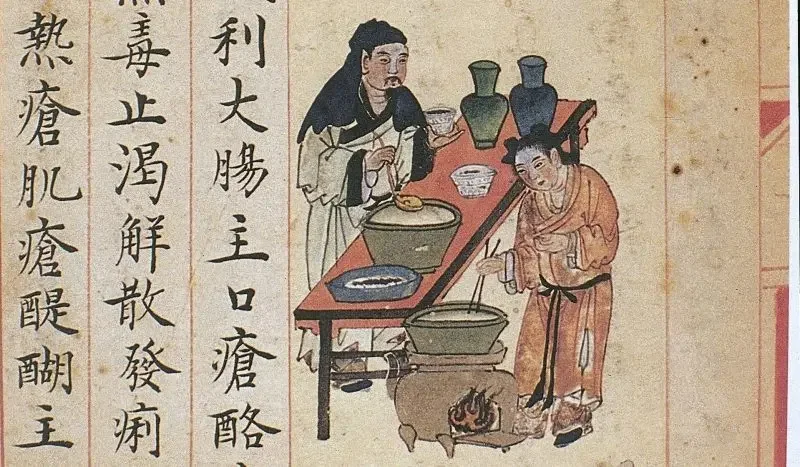
Historically, the practice of herbal medicine has drawn from a diverse range of practitioners. It began with shamans and oracle bone readers known as the first herbalists, who possessed a deep understanding of plant knowledge, often used for ceremonial purposes.
Military and martial arts traditions also played a huge role in determining herbal efficacy and use, driven by necessity; these practitioners required intimate knowledge of plants for survival, particularly for treating trauma, wounds, infection, pain, bruises, and broken bones.
Alchemists, functioning as proto-scientists, contributed through their understanding of chemistry, physics, and biology, blending medicine with mysticism to develop new substances via chemical reactions and laboratory techniques such as distillation, while also creating cosmetics, dyes, and fireworks.
Beyond these specialized roles, many were simply drawn to medicine for a myriad of reasons, whether as a profession, through lineage, or out of general interest. Family legacy has always been a significant thread, with families passing down traditions in farming, production, or martial arts, often developing a specialty or focused area of medicine that has been refined over hundreds of years. Today, this rich history informs the work of both specialists and general practice clinicians.
Discover Herbs from Each Category in the Materia Medica
*meant for educational purposes, all herbal formulas should be prescribed by a professional.
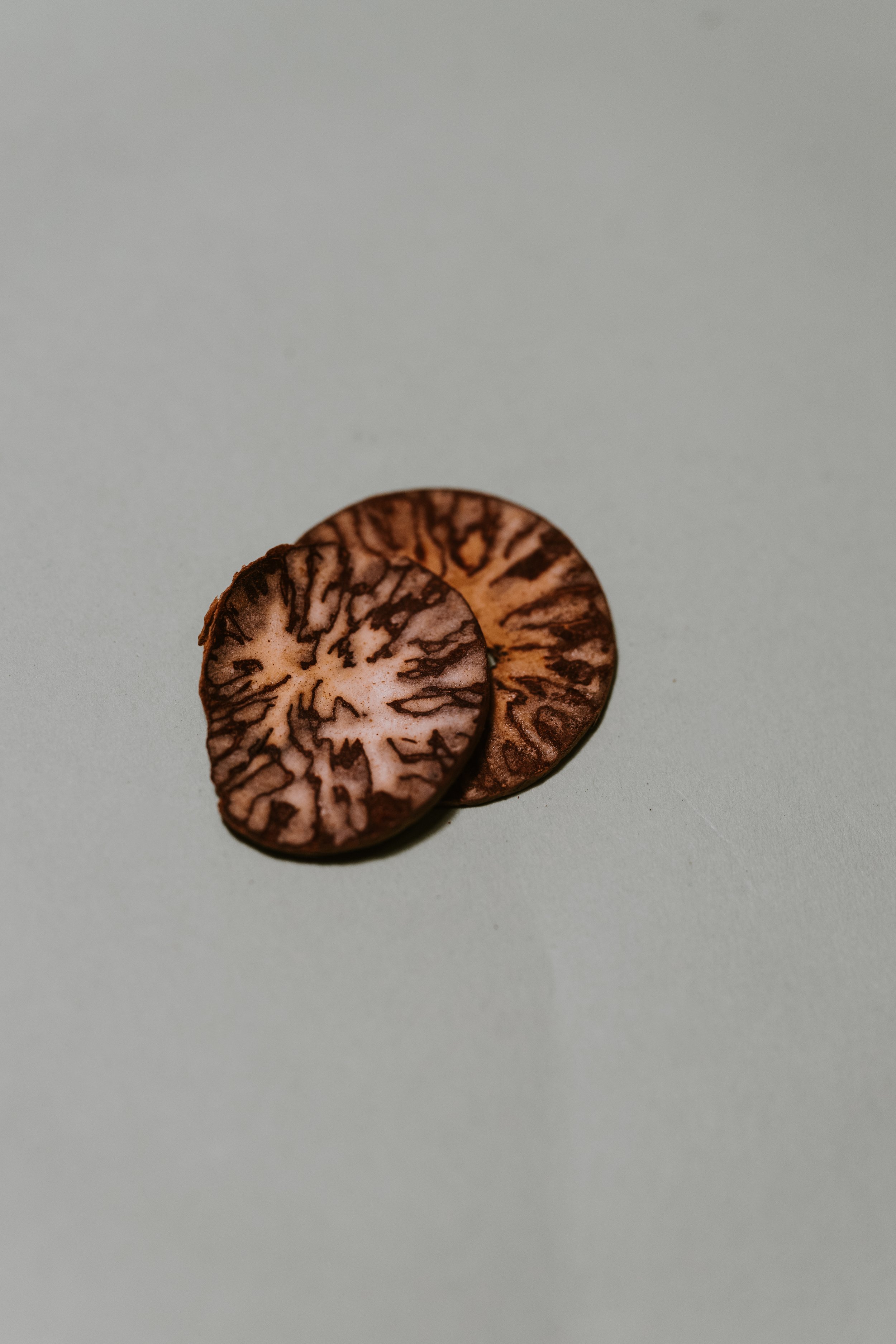
Bing Lang 檳榔
-
Herbs that Expel Parasites (Anthelmintics)
-
6-12g, 60-120g alone for tapeworms
-
Latin: Semen Arecae
Common Name: Betelnut Palm Seed
-
Taste: Acrid, Bitter
Temperature: Warm
-
Large Intestine
Stomach
-
Kills parasites and purges to aid elimination: for intestinal parasites, including tapeworms, pinworms, fasciolopsis, hookworms, roundworms, and blood flukes.
Moves stagnant qi, descends qi, and unblocks the bowels; used to treat qi, phlegm, and food stagnation causing abdominal distention, bloating, constipation, tenesmus, or difficult defecation. May also be used to dissipate qi stagnation, causing masses, cysts, enlarged organs, and ascites.
Treats nausea and vomiting associated with malaria.
Stimulates urination and reduces edema; used to treat water-damp congesting the channels, causing leg qi, edema, and inhibited urination.
-
Contraindicated during pregnancy. Contraindicated with prolapse, loose stool, and weak middle qi. An overdose (more than 20g) may lead to cholinergic toxic symptoms of excess salivation, vomiting, diarrhea, and stupor. Frequent consumption will turn the teeth black. Contraindicated for patients on antipsychotic medication.
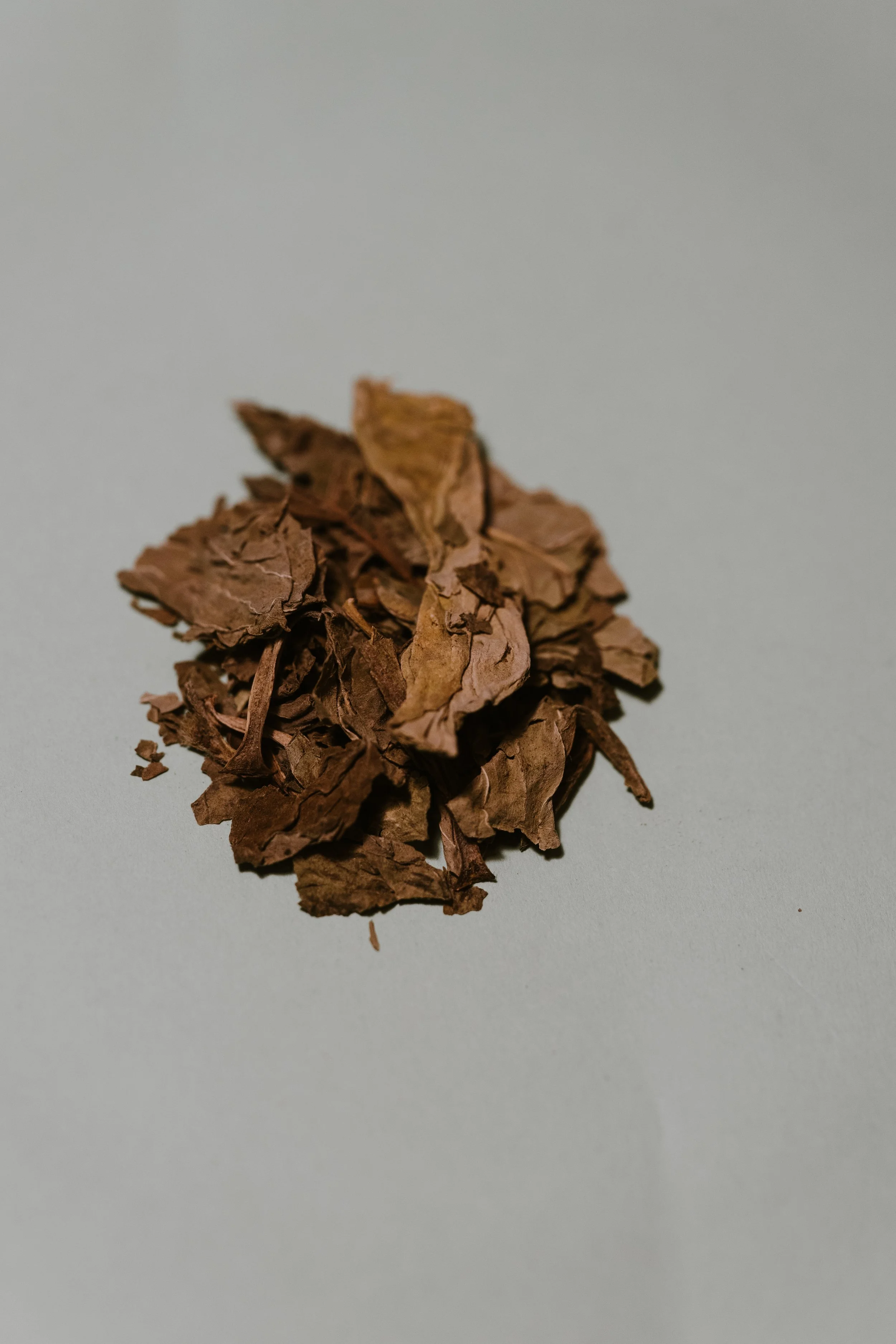
Bo He 薄荷
-
Cool, Acrid Herbs that Release the Exterior
-
1.5-6g add last 5 minutes
-
Latin: Menthae haplocalycis Herba
Common Name: Chinese Mint Aerial Parts
-
Taste: Acrid, Aromatic
Temperature: Cool
-
Lung
Liver
-
Disperses wind-heat, clears and benefits the head, eyes, and throat: for patterns of wind-heat with fever, cough, headache, red eyes, and sore throat.
Vents rashes: used in the early stages of rashes, such as measles, to induce the rash to come to the surface as a means of venting the wind and heat and thereby speed recovery.
Allows constrained Liver qi to flow freely: for constrained Liver qi with such symptoms as pressure in the chest or flanks, emotional instability, and gynecological problems.
-
Use caution with excess sweating, yin deficiency heat, yang rising, and nursing mothers. Do not use chronically.
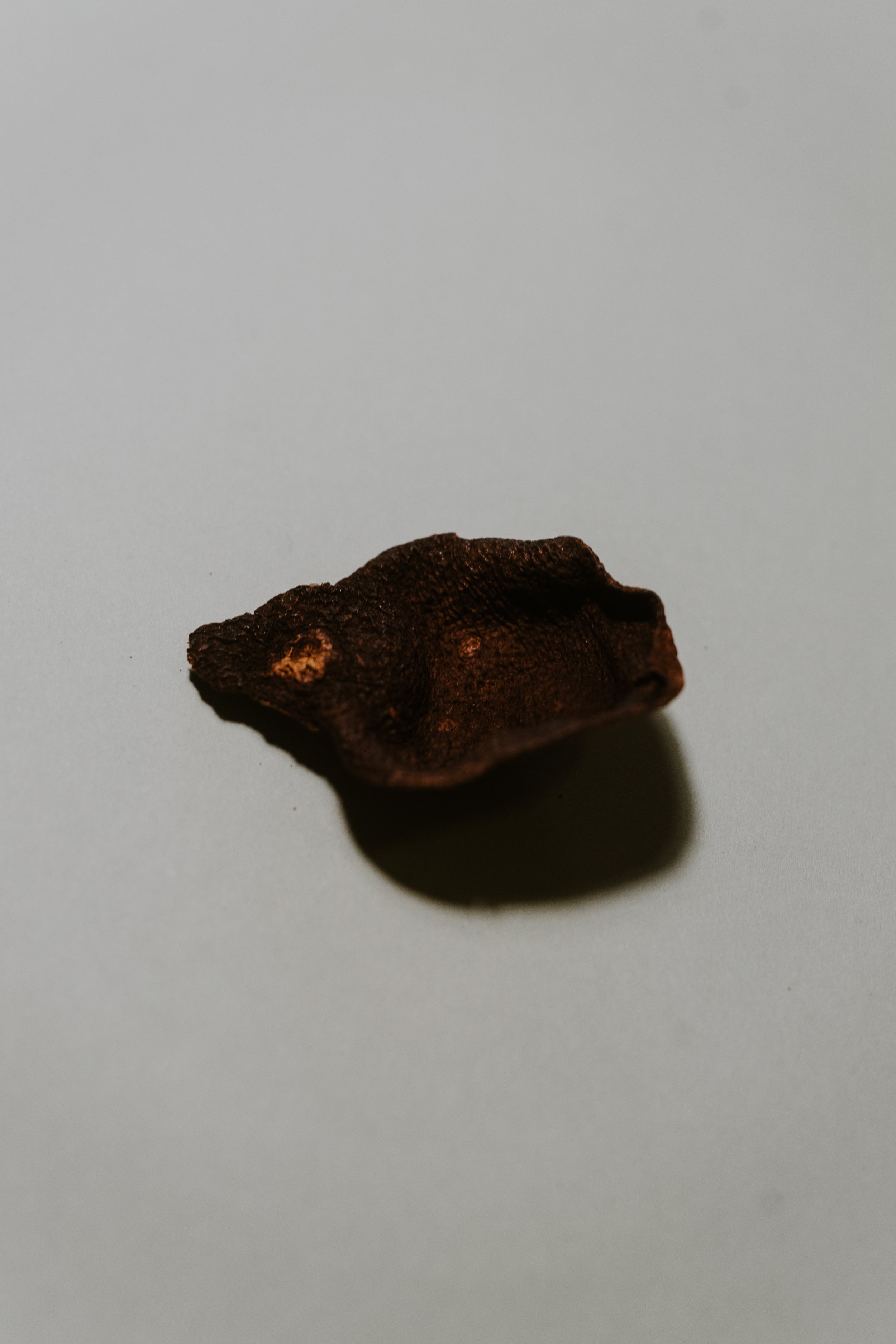
Chen Pi 陳皮
-
Regulate the Qi
-
3-9g, decocted, or in pills.
-
Latin: Citri Reticulatae Pericarpium
Common Name: Tangerine Mature Rind
-
Taste: Acrid, Bitter, Aromatic
Temperature: Warm
-
Spleen
Stomach
Lung
-
Regulates the qi, adjusts the middle, and relieves the diaphragm: for Spleen or Stomach stagnant qi patterns with such symptoms as epigastric or abdominal distention, fullness, bloating, belching, and nausea and vomiting. This herb promotes the movement of qi in general while specifically directing it downward. It is therefore commonly used in treating many different types of nausea and vomiting.
Dries dampness and transforms phlegm: an important herb for phlegm-damp coughs with a stifling sensation in the chest and/or diaphragm, and copious, viscous sputum. Also used for damp turbidity obstructing the middle with a stifling sensation in the chest, abdominal distention, loss of appetite, fatigue, loose stools, and a thick, greasy tongue coating. An important qi-level herb for both the Spleen and Lung channels, it is especially appropriate for disorders involving both channels.
Helps prevent stagnation: used with tonifying herbs to prevent their cloying nature from causing stagnation.
-
Use extreme caution with hematemesis. Use caution with yin or fluid deficiency, and excess heat. This herb is inappropriate for treating a dry cough. Long-term use may damage yuan qi.
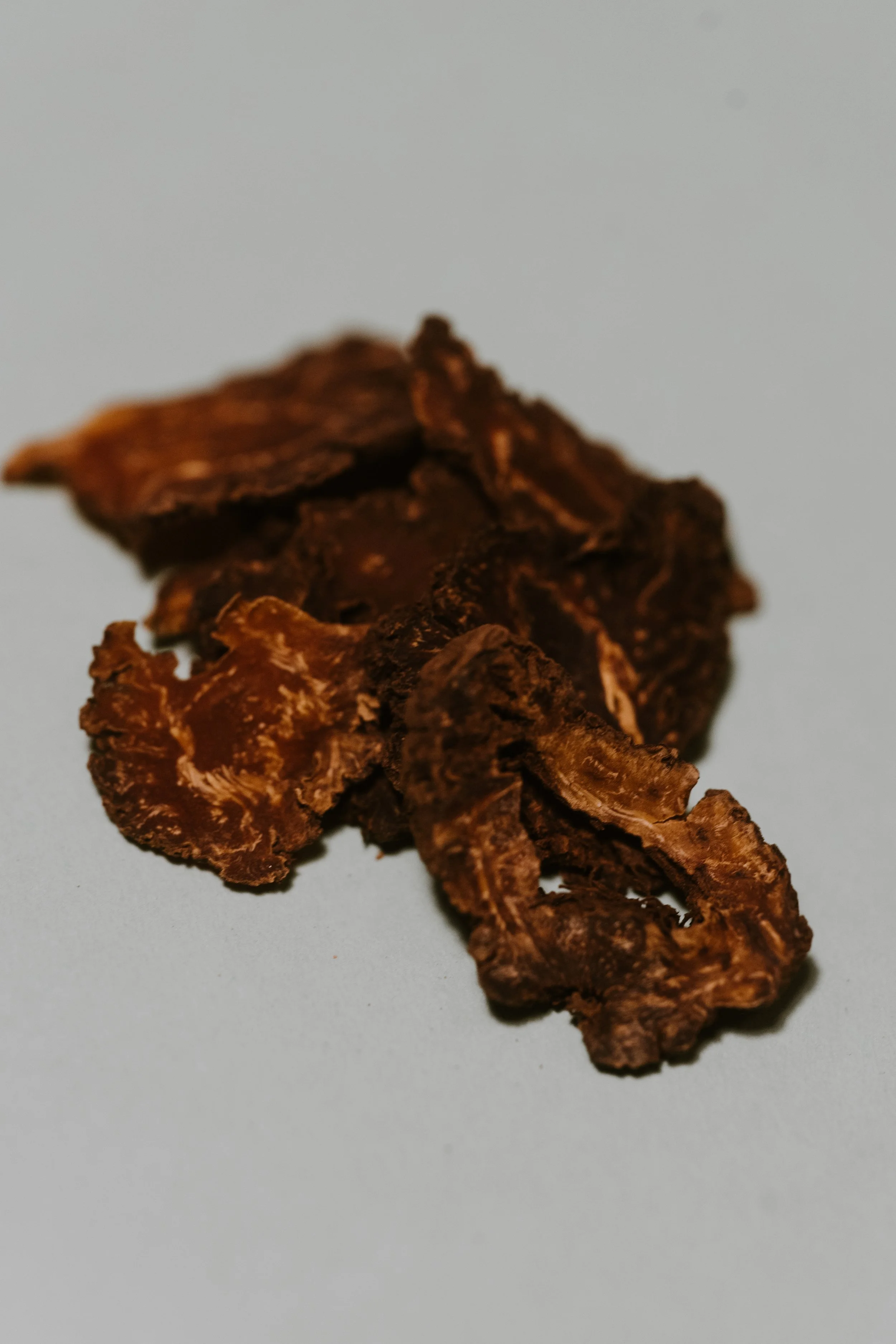
Chuan Xiong 川芎
-
Regulate Blood/Invigorate the Blood
-
3-9g, decocted. 1.0-1.5g as a powder. Wine-fry to better relieve pain.
-
Latin: Chuanxiong Rhizoma
Common Name: Sichuan Lovage Rhizome
-
Taste: Acrid
Temperature: Warm
-
Liver
Gallbladder
Pericardium
Chong
-
Moves stagnant qi and blood: used to activate qi and blood circulation to all parts of the body. Especially useful for gynecological conditions, including: dysmenorrhea, amenorrhea, difficult labor, post-partum stasis, and menstrual headaches. Also excellent for pain in the hypochondrium and chest, numbness, paralysis, and pain due to injury. May also be used for bed sores, vasculitis, and other chronic non-healing conditions due to blood stasis.
Expels wind and relieves pain: used to treat various types of headache and other aches and pains, including wind-damp-cold bi syndrome.
Added to blood tonics to prevent stagnation.
-
Yin deficiency heat, dry mouth, headache due to Liver yang rising, qi deficiency or menorrhagia. Caution=> overdose may cause vomiting or dizziness. Use caution with patients on anticoagulant or antiplatelet medication.
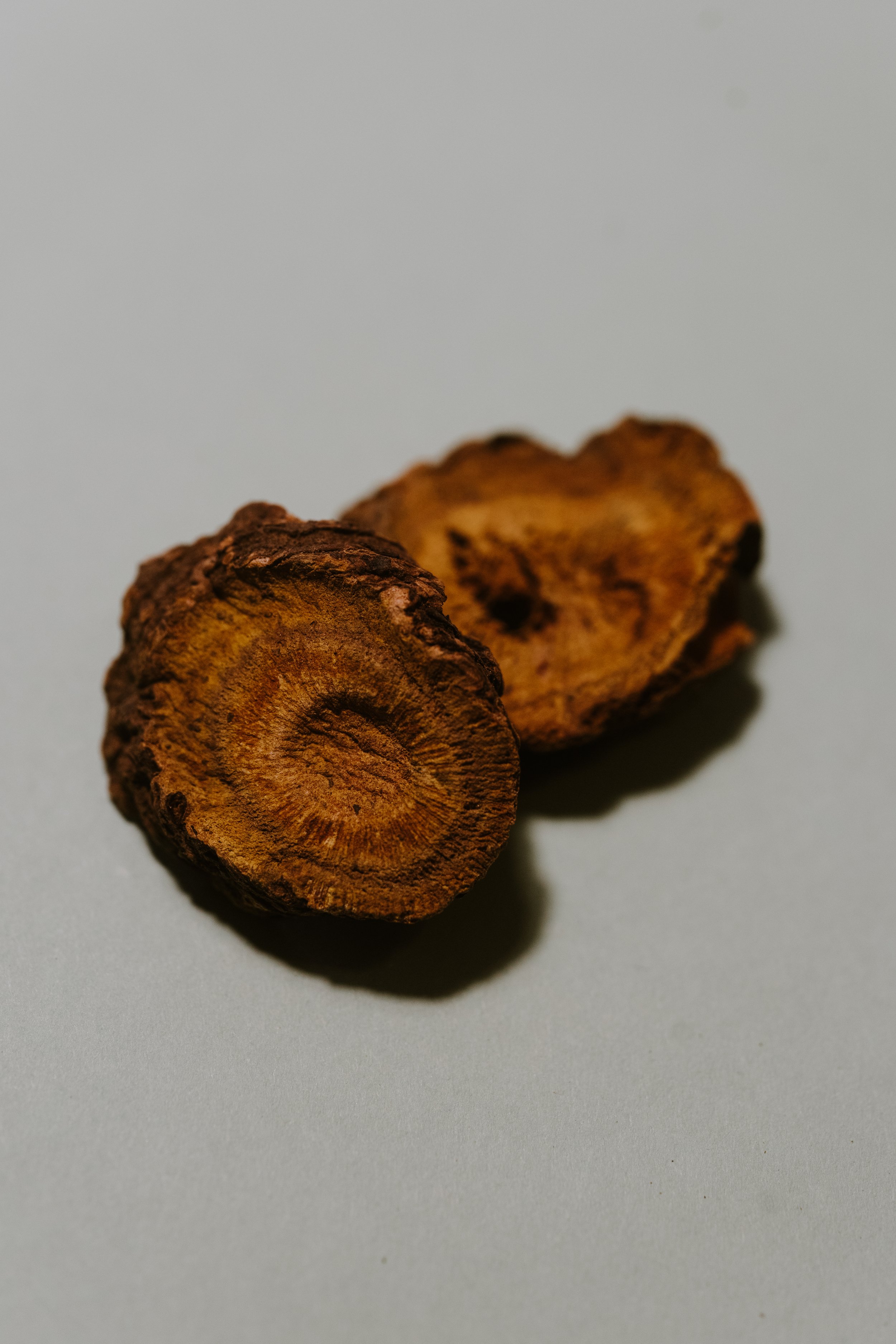
Da Huang 大黃
-
Downward-Draining Herbs/Purgatives
-
3-12g. May use raw to enhance the purgative effect, but use extreme caution, as overdosing on the raw herb can be toxic. Cook longer than 10 minutes to reduce the purgative effect. Wine or vinegar fry to
-
Latin: Rhei Radix et Rhizoma
Common Name: Chinese Rhubarb Root
-
Taste: Bitter
Temperature: Cold
-
Heart
Large Intestine
Liver
Stomach
-
Drains heat and purges accumulations: for high fever, profuse sweating, thirst, constipation, abdominal distention and pain, delirium, yellow tongue coating, and a full pulse. This presentation is referred to either as Intestinal heat excess or the yang brightness organ-stage of the six stages of disease.
Drains fire: for fire from excess leading to intense fever, sore throat, hot, swollen, and painful eyes, or fire toxin sores due to heat excess obstructing the blood level. Particularly useful when these problems are accompanied by constipation.
Clears heat, transforms dampness, and promotes urination: for damp-heat leading to such problems as edema, jaundice, painful urinary dribbling, as well as acute, hot dysenteric disorders.
Drains heat from the blood: for blood in the stool either from bleeding hemorrhoids or heat accumulating in the Intestines. Also for chaotic movement of hot blood that overflows, manifested in vomiting blood or nosebleed accompanied by constipation. Can be powdered and administered orally for bleeding from the upper digestive tract. This is an important herb because it can stop bleeding without causing blood stasis.
Invigorates the blood and dispels blood stasis: for amenorrhea, fixed abdominal masses, or fixed pain due to blood stasis. Also for blood stasis due to traumatic injury or Intestinal abscess. This is an important herb for treating both recent and long-term blood stasis as it can both eliminate static blood that is outside the vessels via the bowels, and clear the heat that often develops from stasis. It is used both internally and externally.
Clears heat and reduces fire toxicity: used either topically or internally for burns or skin lesions due to heat.
-
Contraindicated during pregnancy, for nursing mothers, qi and blood deficiency, and cold from deficiency of the Spleen and Stomach. Use extreme caution during menstruation, or post-partum. Allergic reactions to this herb have been reported (with flushing, rash, and wheezing).
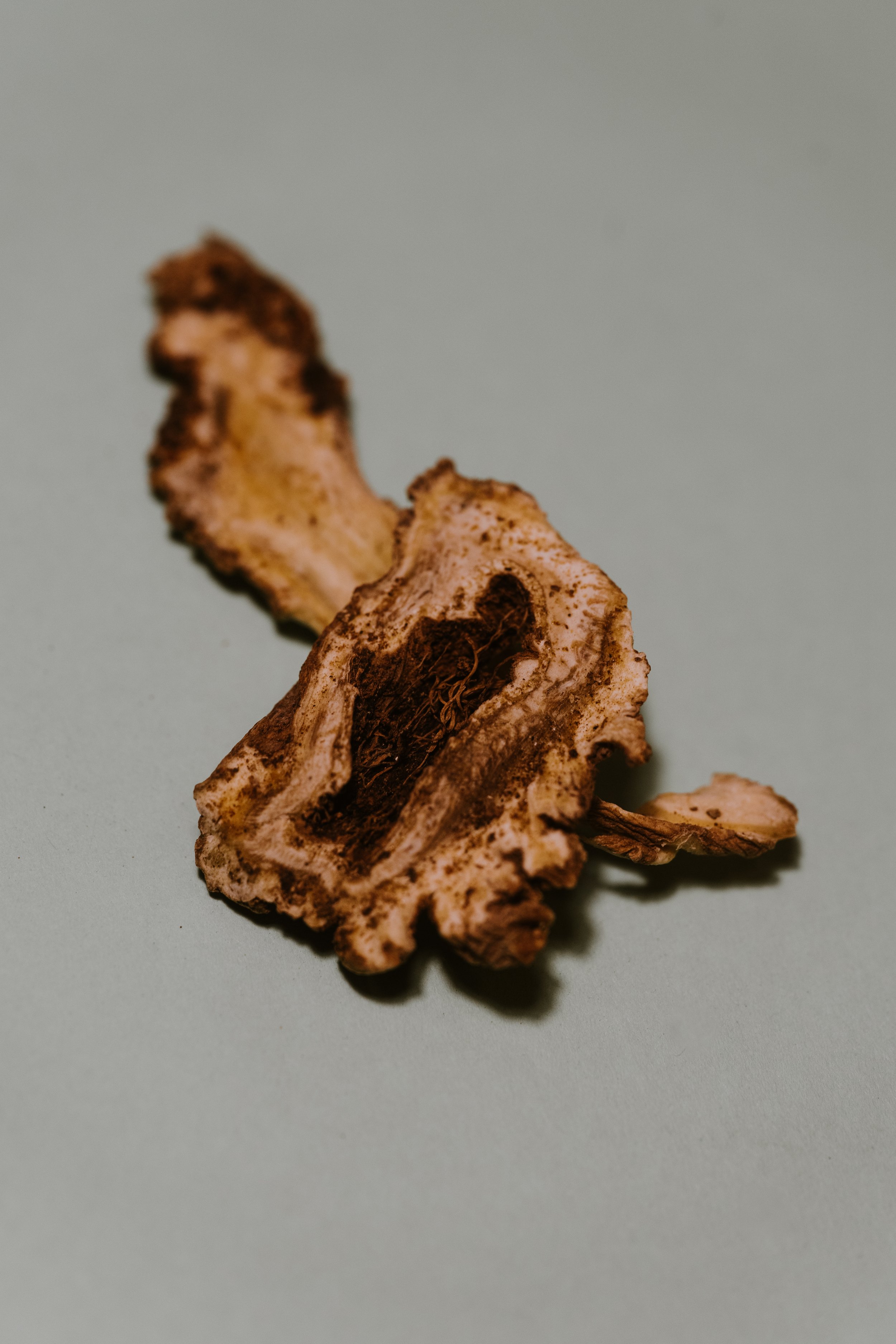
Du Huo 獨活
-
Dispel Wind-Dampness
-
3-9g
-
Latin: Angelicae Pubescentis Radix
Common Name: Pubescent Angelica Root
-
Taste: Bitter, Acrid
Temperature: Warm
-
Kidney
Urinary Bladder
Liver
-
Dispels wind-dampness and alleviates pain: for such disorders as wind-cold-damp painful obstruction, especially in the lower back and legs. Can be used for both acute and chronic conditions.
Disperses wind-cold-damp and releases the exterior: for exterior wind-cold together with dampness.
Also used for lesser yin stage headache and toothache.
-
Yin or blood deficiency, or internal Liver wind. An overdose may cause ocular pain.
Fu Ling 茯苓
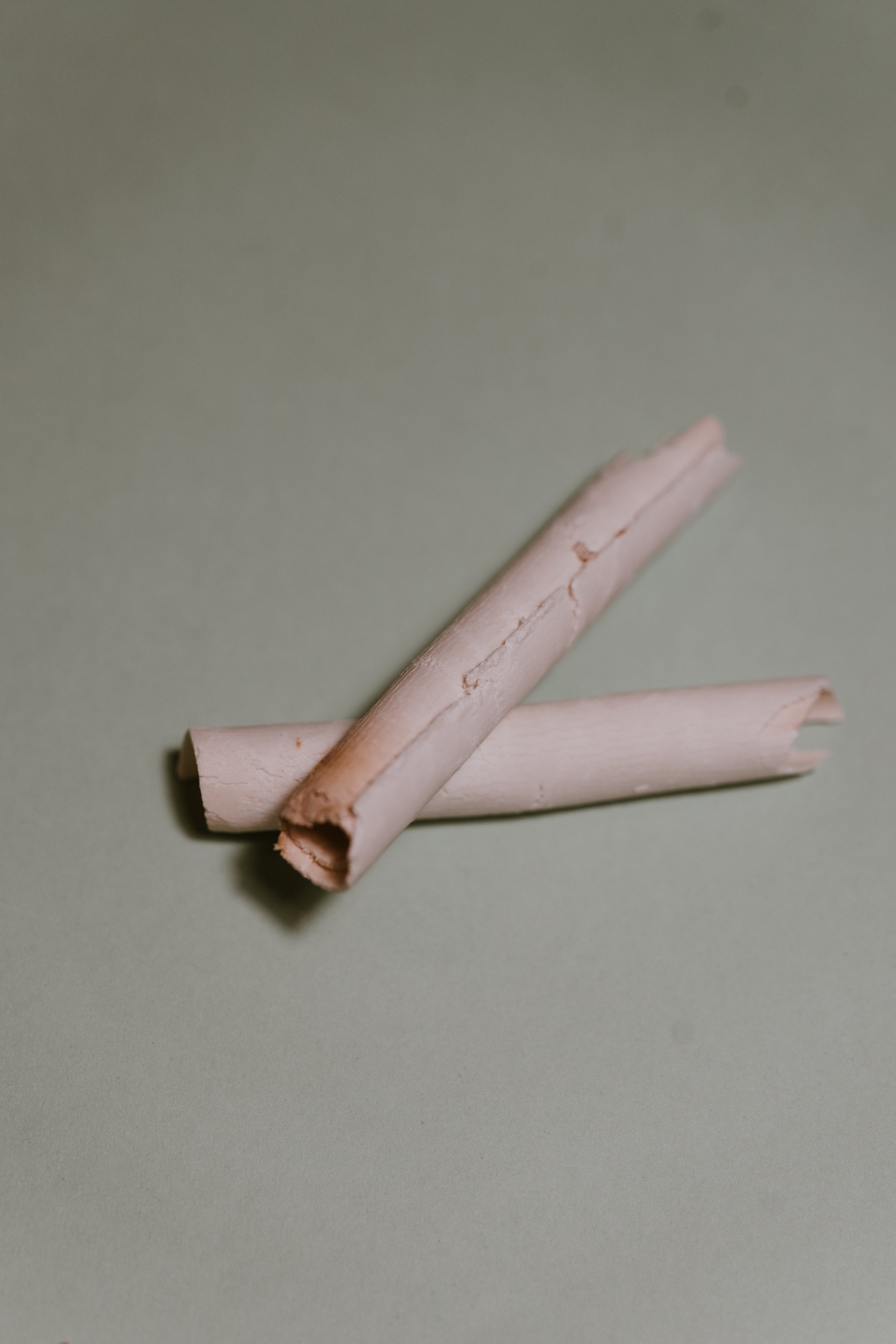
-
Drain Dampness
-
9-15g
-
Latin: Poria
Common Name: Poria Sclerotium
-
Taste: Sweet, Bland
Temperature: Neutral
-
Heart
Spleen
Lung
-
Stimulates urination and drains dampness: used to treat edema, fullness, dysuria, and water or phlegm accumulation.
Boosts the Spleen and transforms phlegm: used to treat fatigue, loose stool, low appetite, headache, dizziness, and epigastric distention.
Restores the Shen: used to treat insomnia, poor memory, and palpitations.
-
Use caution with yin deficiency, prolapse, and spermatorrhea.
Gan Sui 甘遂
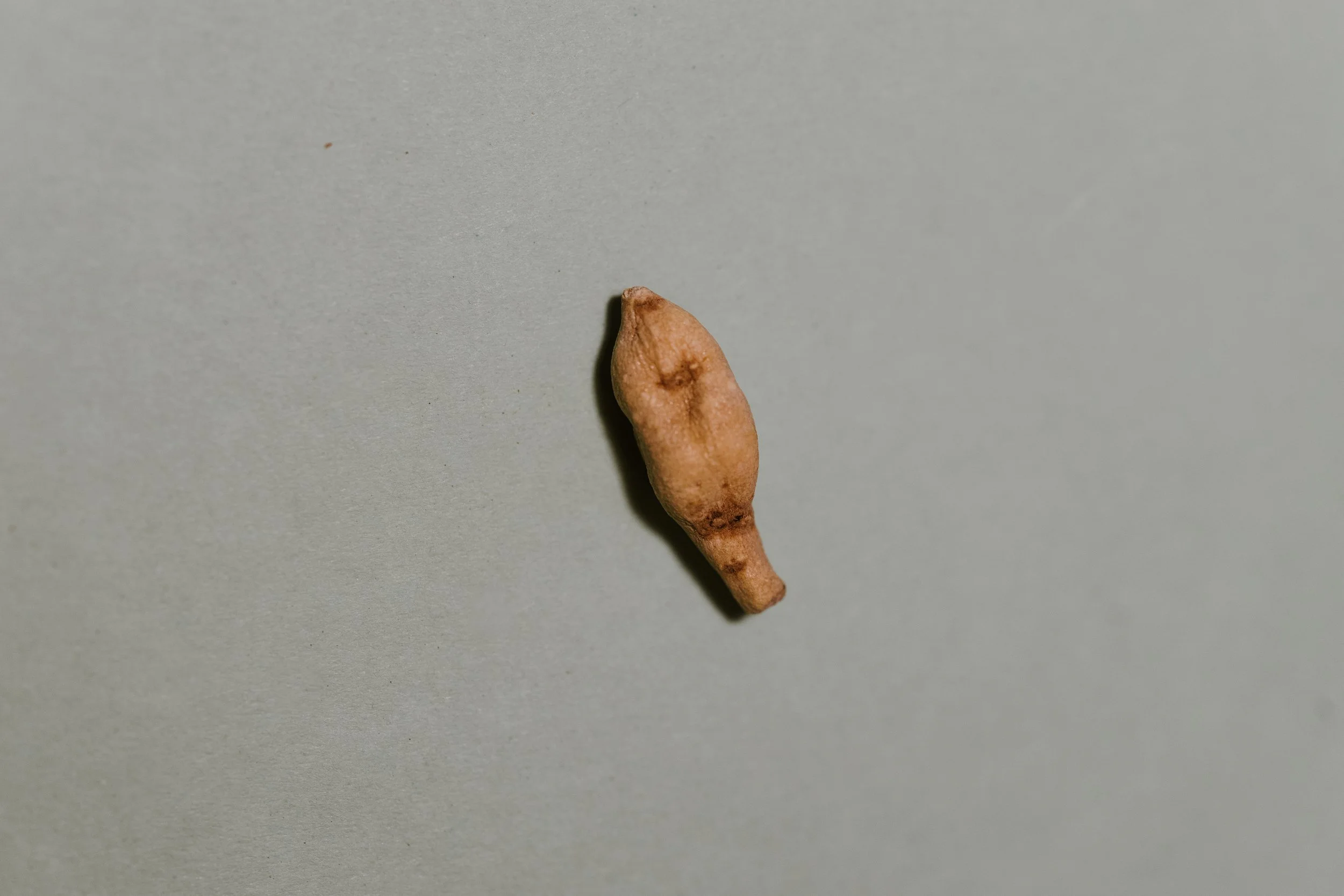
-
Downward-Draining Herbs/Harsh Expellants (Cathartics)
-
1.5-3g decoctions, 0.3-1g as a powder added to a strained decoction.
-
Latin: Kansui Radix
Common Name: Kansui Root
-
Taste: Bitter, Sweet, Toxic
Temperature: Cold
-
Kidney
Large Intestine
Lung
-
Drains water downward and drives out thin mucus: for draining of severe accumulation of fluid in the chest and abdomen. Also for generalized edema, facial edema, and abdominal distention. This is a violent, cathartic herb that causes one to pass water anally.
Drives out phlegm: for seizures from wind-phlegm or withdrawal-mania from recalcitrant phlegm congealing and clumping.
Clears heat and reduces swelling: used topically for swollen, painful, nodular skin lesions due to damp-heat. The herb is most appropriately used during the early stages of this disorder. Herbs that clear heat and resolve toxicity should be given orally at the same time.
-
Gan Sui is a highly toxic herb with severe side effects. And overdose could be fatal. It should only be used when absolutely necessary, and with extreme caution. It should never be taken during pregnancy, or with any deficiency condition, bleeding disorder, kidney or cardiovascular condition, or in those with a history of ulcers.
Gou Teng 鉤藤
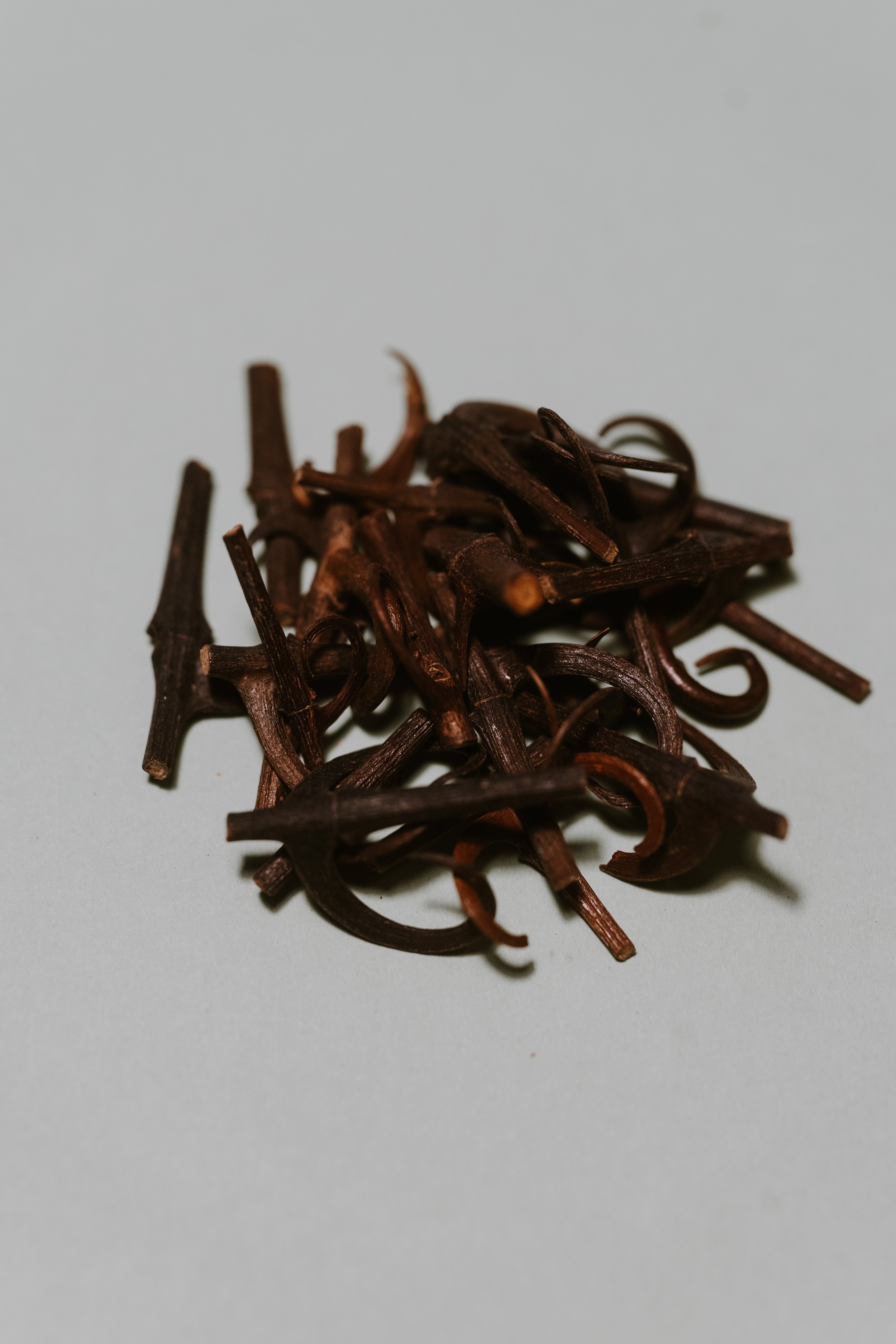
-
Extinguish Wind and Stop Tremors
-
6-15g, added in the last 10 minutes of cooking. The maximum dose is 30g.
-
Latin: Uncariae Ramulus Cum Uncis
Common Name: Uncaria Vine w/ Hooks
-
Taste: Sweet
Temperature: Slightly Cold
-
Liver
Pericardium
-
Extinguishes wind and alleviates spasms: for patterns of Liver heat with internal stirring of Liver wind with such symptoms as tremors, seizures, and eclampsia.
Drains Liver heat and pacifies Liver yang: for Liver fire and ascendant Liver yang patterns with such symptoms as headache, irritability, red eyes, and dizziness. Recently used for hypertension, especially of this type.
Releases the exterior: for exterior wind-heat patterns with such symptoms as fever, headache, and red eyes.
-
None
Gua Lou 瓜蔞
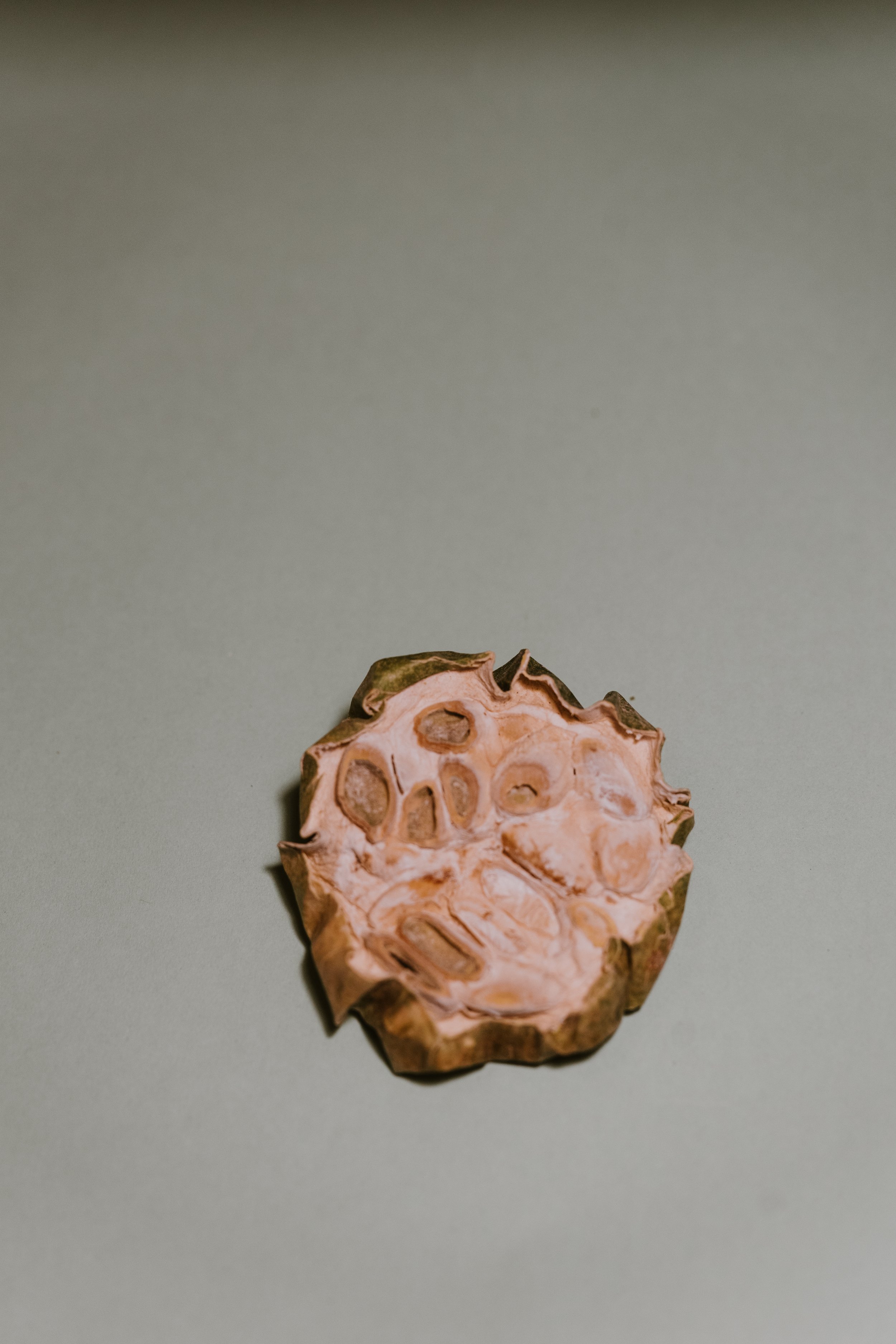
-
Cool & Transform Phlegm-Heat
-
9-21g
-
Latin: Trichosanthis Fructus
Common Name: Trichosanthes Fruit
-
Taste: Sweet
Temperature: Cold
-
Stomach
Large Intestine
Lung
-
Clears heat and transforms phlegm-heat: for heat-induced coughs with sputum that is thick and difficult to expectorate. Can be used as a stand-alone herb, especially in children.
Unbinds the chest and dissipates nodules: for conditions in which qi accumulates in the chest leading to a stifling or distended sensation, constriction, pain, or pressure in the diaphragm.
Reduces abscesses and dissipates nodules: primarily for abscesses involving the Lungs, Intestines, or breast.
-
Diarrhea due to cold from Spleen or Stomach deficiency, phlegm-cold, or phlegm-dampness. This herb cannot be taken with other drugs or herbs containing Aconite (including Fu Zi, and Wu Toui).
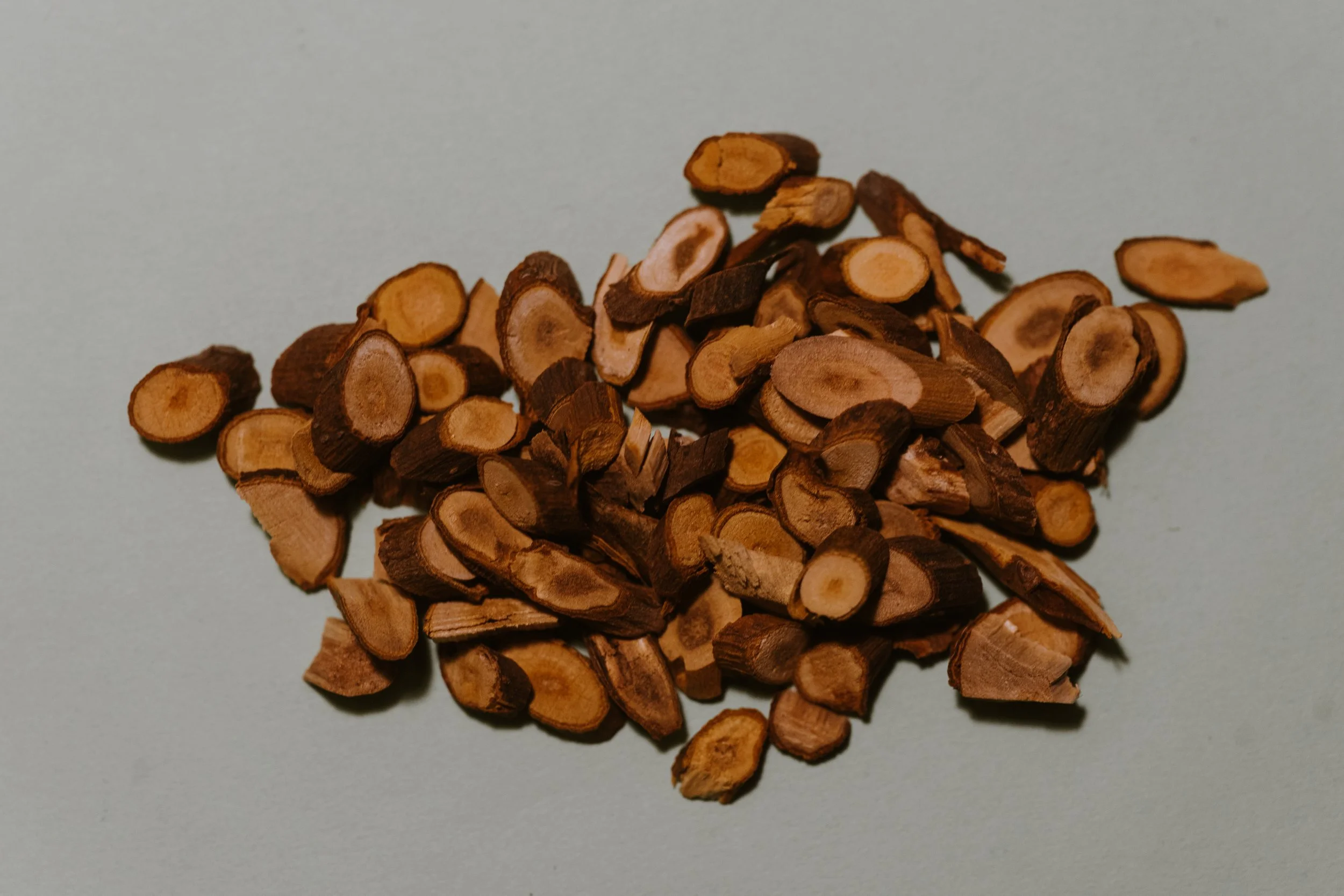
Gui Zhi 桂枝
-
Warm, Acrid Herbs that Release the Exterior
-
3-9g external invasion, 9-15g painful obstruction
-
Latin: Cinnamomi Ramulus
Common Name: Cassia Twig
-
Taste: Acrid, Sweet
Temperature: Warm
-
Lung
Urinary Bladder
Heart
-
Releases the exterior and harmonizes the Ying and Wei: used to treat exterior cold deficiency patterns where there is sweating with no improvement in the patient's condition.
Warms and opens the channels and disperses cold: used to treat wind-damp-cold bi syndrome in the joints and limbs, and dysmenorrhea caused by cold obstructing the blood.
Warms and frees the yang: used to treat edema and dysuria, and conditions in which stubborn phlegm obstructs the normal flow of qi, leading to: chest oppression, palpitations, dizziness, and vertigo.
Warms the yang in the chest: used to treat myocardial infarction, angina, and to enhance qi circulation in the chest.
Warms the yang in the Ren and Chong: used to unblock stagnation in the Ren and Chong to treat amenorrhea, dysmenorrhea, and irregular menstruation.
-
Warm-febrile diseases, yin deficiency heat, blood heat with vomiting. Caution during pregnancy, and with hypermenorrhea.
Huang Qin 黃芩
-
Clear Heat and Dry Dampness
-
3-12g. Use charred to stop bleeding. Use dry-fried to calm the fetus.
-
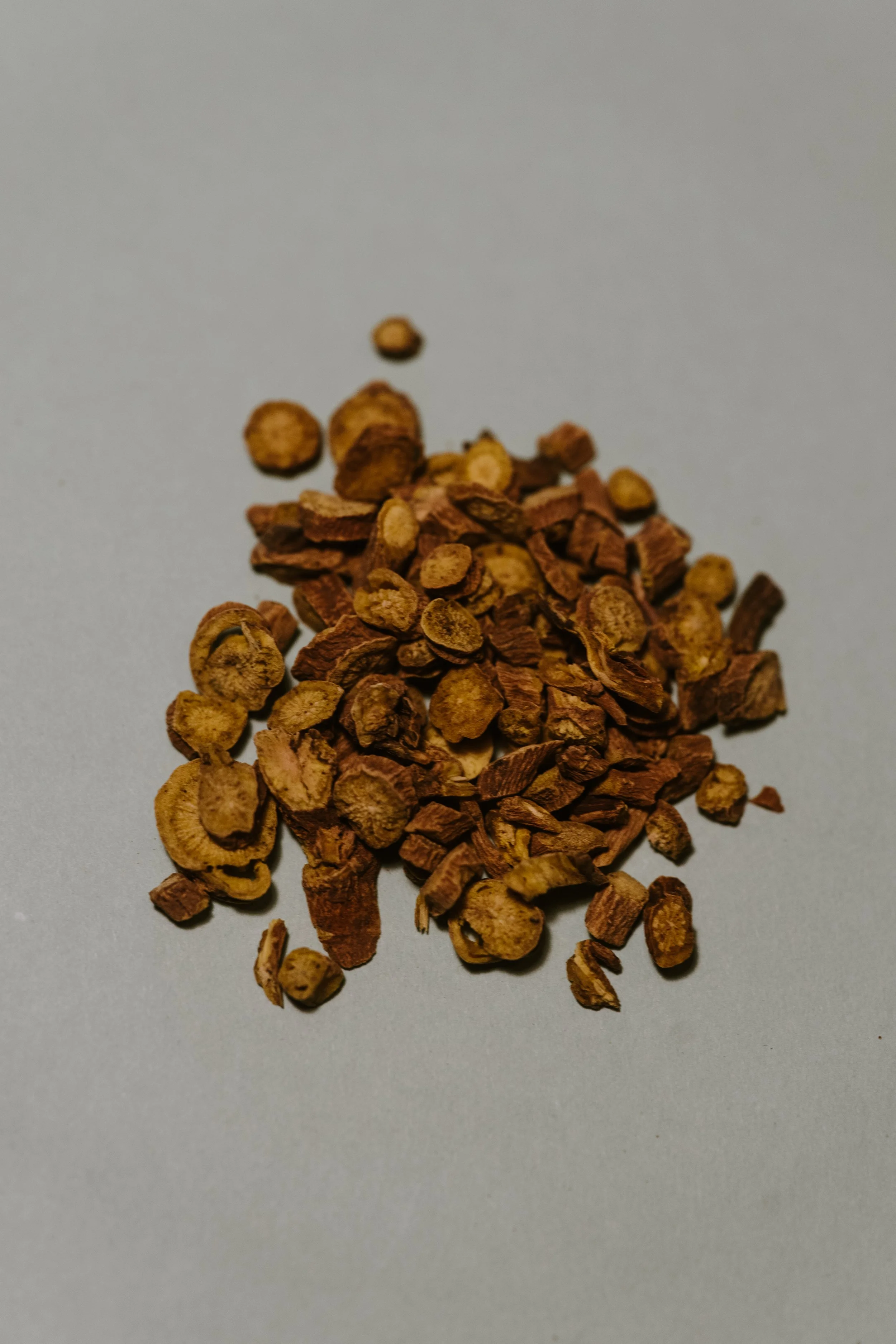
Latin: Scutellariae Radix
Common Name: Chinese Skullcap Root
-
Taste: Bitter
Temperature: Cold
-
Gallbladder
Large Intestine
Lung
Stomach
-
Clears heat and dries dampness: a major herb for damp-heat in the Stomach or Intestines, which manifests as diarrhea or dysenteric disorder; damp-warmth, which presents with fever, stifling sensation in the chest, and thirst but with an inability to drink; or for damp-heat in the lower burner with painful urinary dribbling. An auxiliary herb for damp-heat jaundice.
Clears heat and resolves toxicity, especially in the upper burner: for heat patterns with high fever, irritability, thirst, cough, and expectoration of thick, yellow sputum, or hot sores and swellings. For the latter, it can be applied topically or taken internally.
Clears heat and stops bleeding: for internal heat from excess , causing the blood to move chaotically. Symptoms include vomiting or coughing of blood, nosebleeds, and blood in the stool.
Clears heat and calms the fetus: pacifies the Womb when the fetus is restless or kicking excessively due to heat.
Sedates ascendant Liver yang: for such symptoms as headache, irritability, red eyes, flushed face, and bitter taste.
-
Use extreme caution in cases of edema due to Spleen deficiency, cold diarrhea, or any other condition with cold in the middle burner, blood deficiency causing amenorrhea or abdominal pain, and a restless fetus due to cold blood.
Huo Ma Ren 火麻仁
-
Downward-Draining Herbs/Moist Laxatives
-
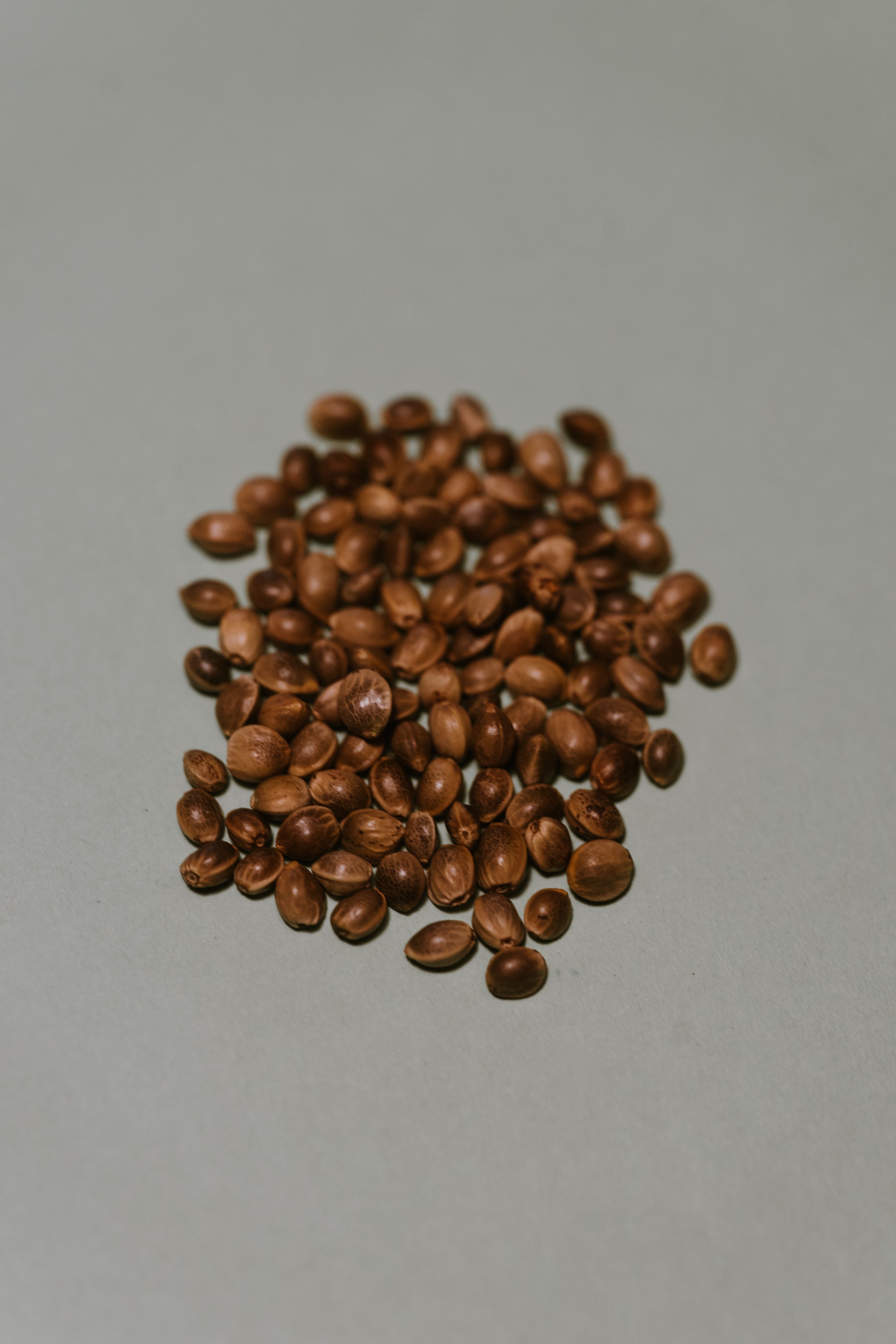
9-15g, crushed. Generally, the seeds are sold already dry-fried. But if the seeds are raw, dry-fry them first to remove slight toxicity and maximize the active components.
-
Latin: Cannabis Semen
Common Name: Hemp Fruit
-
Taste: Sweet
Temperature: Neutral
-
Large Intestine
Spleen
Stomach
-
Replenishes fluids in the Intestines and induces bowel movement: used for constipation with dry stool, due to blood deficiency. Works especially well for the elderly, recovery from febrile disease, post-partum, and in cases of chronic debility.
Benefits the hair: used to treat dry hair and hair loss due to blood deficiency. Use as a rinse, shampoo, or tincture.
Benefits the skin : used orally or topically to repair damaged skin.
-
Overdosage or long-term use may result in vaginal discharge or spermatorrhea.
Huo Po 厚朴
-
Aromatic Herbs that Transform Dampness
-
3-9g, preferably fried in ginger.
-
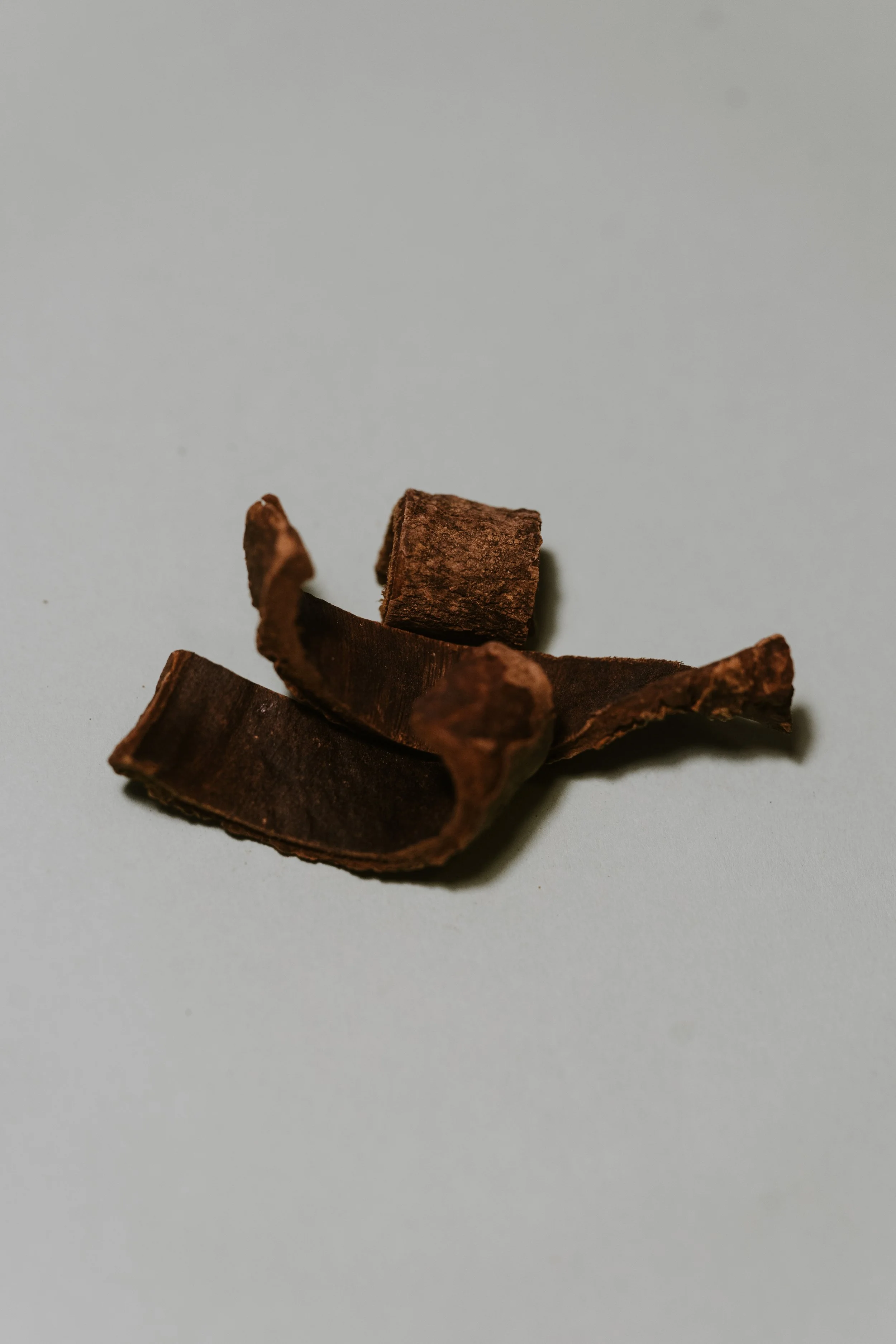
Latin: Magnoliae officinalis Cortex
Common Name: Magnolia Bark
-
Taste: Acrid, Bitter
Temperature: Warm
-
Spleen
Stomach
Lung
Large Intestine
-
Promotes the movement of qi in the middle burner and resolves stagnation: for qi stagnation affecting the Spleen and Stomach, and in cases of food stagnation, with such symptoms as chest and/or abdominal distention and full- ness. This is an important herb for reducing and eliminating distention and fullness and can be used whenever these symptoms occur due to qi stagnation.
Promotes the movement of qi downward, dries dampness, and transforms phlegm: for dampness or phlegm obstructing the middle burner affecting the qi dynamic. Symptoms include distention, fullness, nausea, and diarrhea. The tongue coating is usually turbid and greasy.
Directs qi downward, reduces phlegm, and calms wheezing: for cough and wheezing from phlegm clogging the Lungs.
-
Use caution during pregnancy. Use caution with anticoagulant and antiplatelet medications.
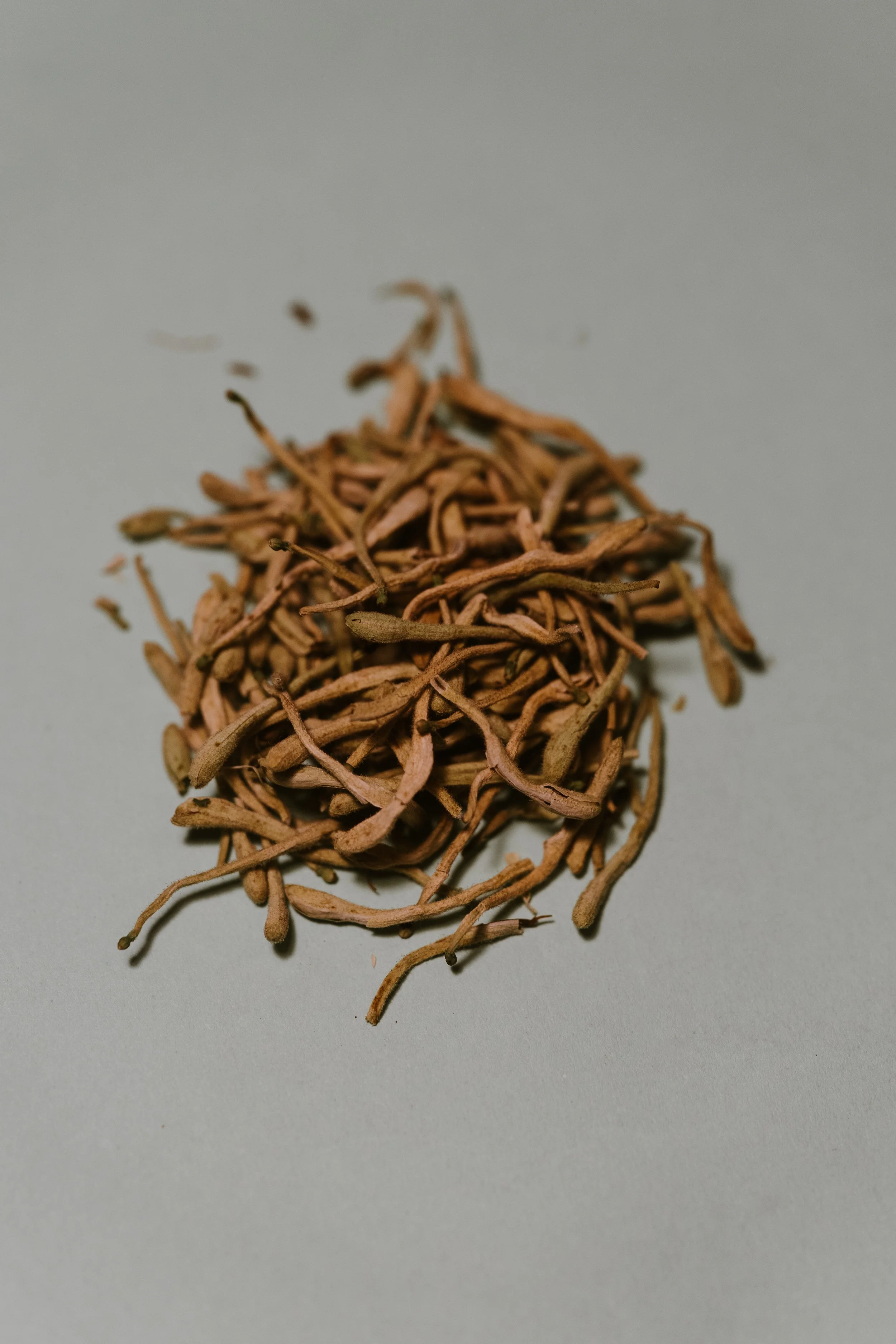
Jin Yin Hua 金銀花
-
Clear Heat & Resolve Toxicity
-
9-15g
-
Latin: Lonicerae Flos
Common Name: Japanese Honeysuckle Flower
-
Taste: Sweet
Temperature: Cold
-
Large Intestine
Lung
Stomach
-
Clears heat and resolves fire toxicity: for hot, painful sores and swellings in various stages of development, especially of the breast, throat, or eyes. Also for Intestinal abscess.
Vents and disperses externally-contracted wind-heat: for the early stages of warm-heat pathogen diseases with such symptoms as fever, slight sensitivity to wind, sore throat, and headache. Also for externally-contracted summerheat.
Clears damp-heat from the lower burner: for damp-heat dysenteric disorder or painful urinary dribbling.
-
In cases of diarrhea due to Spleen and Stomach cold from deficiency; also for sores due to qi deficiency and yin ulcers.
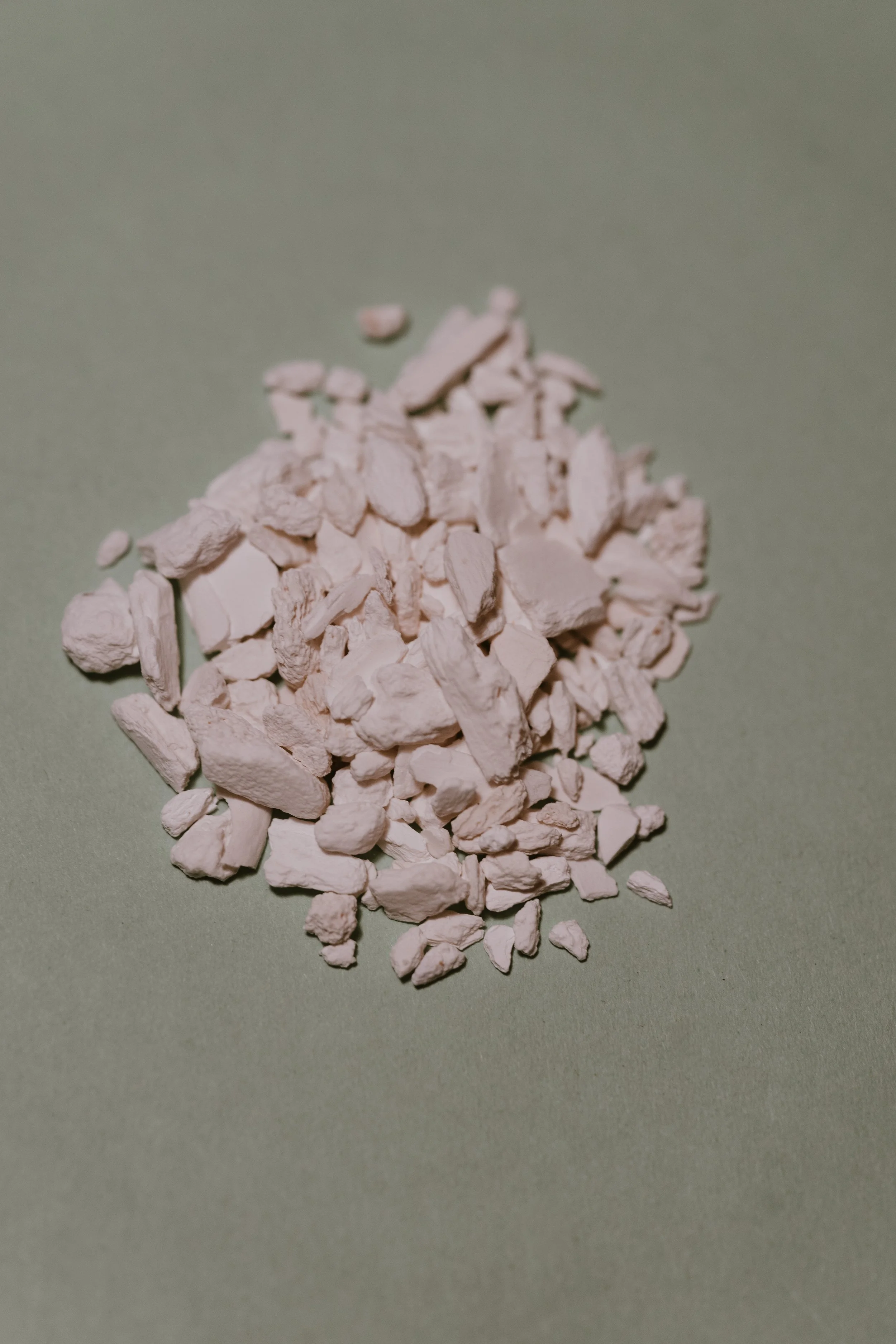
Long Gu 龍骨
-
Anchor, Settle, and Calm the Spirit
-
15-30g
-
Latin: Os Draconis
Common Name: Fossilia Ossis Mastodi
-
Taste: Sweet, Astringent
Temperature: Cool
-
Heart
Liver
Kidney
-
Restores the Shen: used to treat restlessness, insomnia, anxiety, aggitation, jumpiness, palpitations, forgetfulness, and mania.
Clears Liver heat and anchors rising yang: used to treat Liver yin deficiency with yang rising causing such symptoms as dizziness, vertigo, bad temper, deviated mouth and eyes, and facial paralysis.
Astringes fluids: used to prevent leakage of fluids due to defiency conditions, causing: spermatorrhea, spontaneous sweating, night sweats, nocturnal emissions, clear vaginal discharge, and excessive pale uterine bleeding.
Heals the skin: use topically, calcined, to heal stubborn ulcerative sores and eczema.
-
Damp-heat, Kidney fire, and excess pathogens.
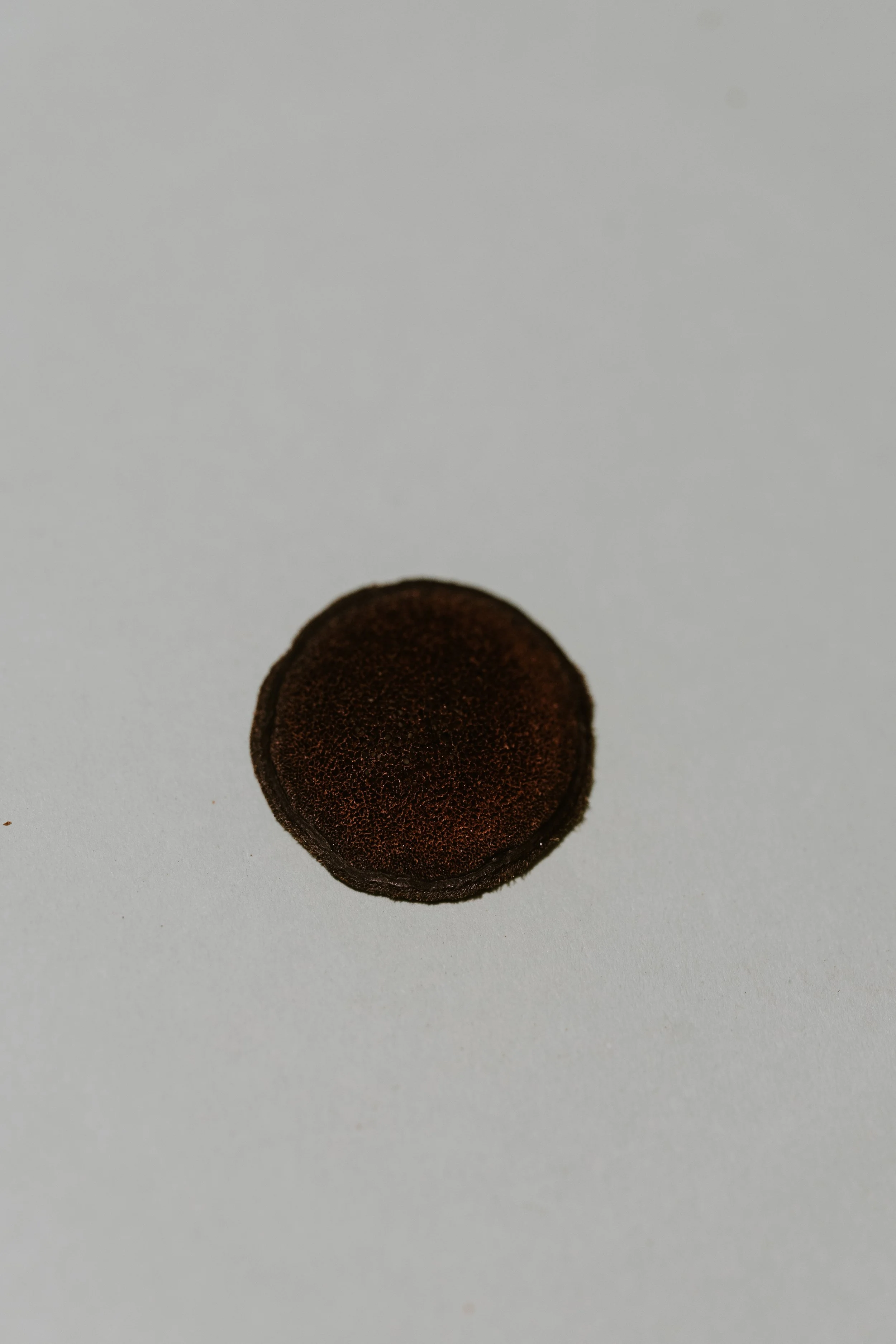
Lu Rong 鹿茸
-
Tonify the Yang
-
1-2g powder, 3-4.5g double-boiled by itself. Soak in wine to enhance the warming effect. Begin with a low dose and slowly increase; failure to do so can lead to excess heat, or yang rising, generating internal wind. If heat signs begin to show during treatment (fever, sore throat, acne), then decrease or discontinue treatment with this herb.
-
Latin: Cervi Cornu Pantotrichum
Common Name: Cervi Cornu Pantotrichum
-
Taste: Sweet, Salty
Temperature: Warm
-
Kidney
Liver
-
Tonifies the Kidneys and fortifies the yang: for patterns of Kidney yang deficiency with such symptoms as fatigue, impotence, cold extremities, lightheadedness, tinnitus, soreness, and lack of strength in the lower back and knees, and frequent, copious, clear urination.
Warms the yang, regulates the Penetrating and Conception vessels, and stabilizes the Girdle vessel: for vaginal discharge or uterine bleeding due to cold from deficiency. Also for infertility with a cold Womb. Can be used as a stand-alone herb for this purpose.
Tonifies the Governing vessel, augments the essence and blood, and strengthens the sinews and bones: used especially in cases of deficient essence and blood in children with such physical and/or mental developmental disorders as failure to thrive, mental retardation, learning disabilities, insufficient growth, or skeletal deformities (including rickets). Also used for nonhealing fractures with Kidney deficiency and exhaustion of the essence. This use has been expanded to include the treatment of nonhealing ulcers. Can be used as a stand-alone herb for these purposes.
Tonifies and nourishes the qi and blood: used especially for chronic ulcerations or yin-type boils (those that are concave, ooze a clear fluid, and do not heal). This use is related to the close relationship between the blood and the essence.
-
Yin deficiency heat, blood heat, Lung phlegm-heat, Stomach fire, warm-heat invasion.
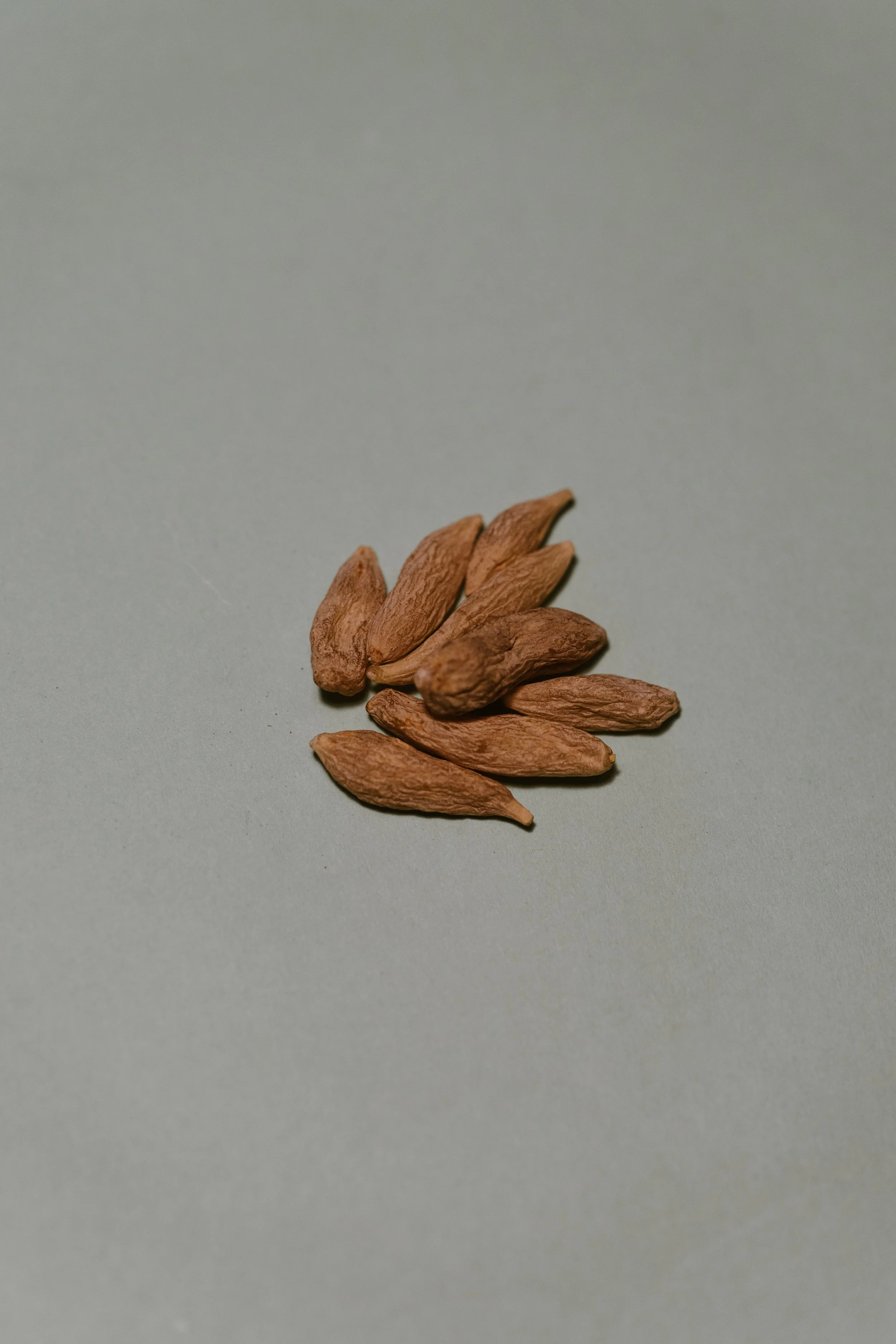
Mai Men Dong 麥門冬
-
Tonify the Yin
-
9-15g, crushed.
-
Latin: Ophiopogonis Radix
Common Name: Ophiopogon Root
-
Taste: Sweet, Slightly Bitter
Temperature: Cool
-
Lung
Heart
Stomach
-
Replenishes the Lungs and clears heat: used to treat damaged Lung yin from dryness, with dry mouth, dry throat, dry cough, coughing up blood, and difficult to expectorate thick sputum. May be used for chronic cough, especially in those with flushed cheeks, irritability, and low fever. May also be used for acute conditions with heat, such as bronchitis, tuberculosis, and pertussis.
Replenishes Stomach yin and produces fluids: used to treat dry tongue and mouth with thirst. May also be used to treat wasting and thirsting syndrome (clinically, diabetes).
Clears deficient Heart heat: used to clear heat and rebuild yin and blood deficiencies, to treat irritability which is worse at night, insomnia, restlessness, and anxiety.
Moistens the intestines: used to treat constipation due to yin and fluid deficiencies.
-
Cough due to wind-cold, or damp-phlegm, and diarrhea from cold middle jiao. Use caution, as use of this herb may cause drowsiness.
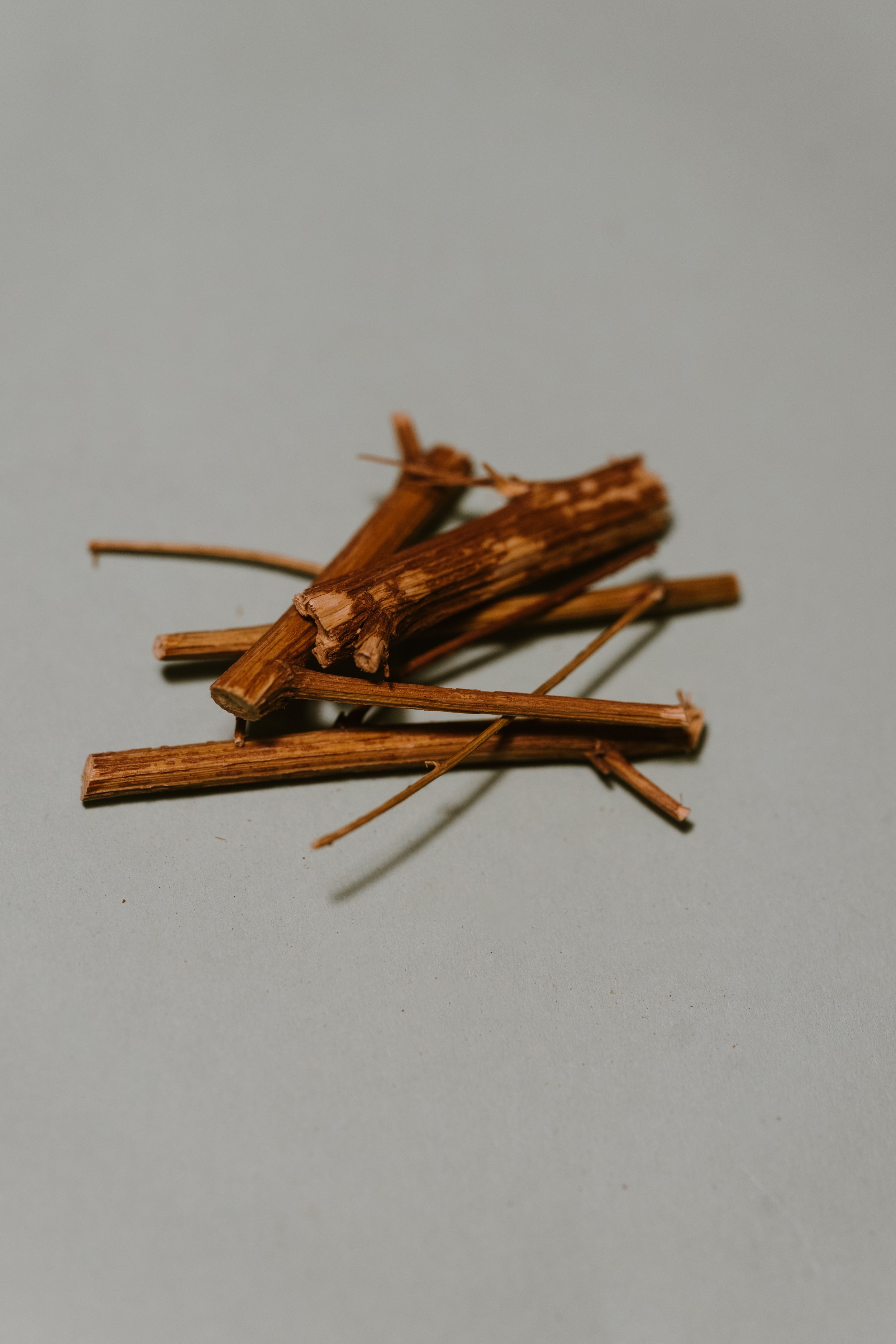
Qing Hao 青蒿
-
Clear Heat from Deficiency
-
3-9g, added at the end of cooking. The fresh juice is preferrable to treat summerheat and malaria.
-
Latin: Artemisiae annuae Herba
Common Name: Chinese Wormwood Aerial Parts
-
Taste: Bitter, Acrid
Temperature: Cold
-
Liver
Gallbladder
Stomach
Kidney
-
Clears summerheat: especially for summerheat with low fever, headache, dizziness, and a stifling sensation in the chest.
Clears fever from deficiency: for fevers from either blood deficiency or as the sequelae of a febrile disease. Especially useful when steaming bone patterns are marked by an absence of sweating.
Cools the blood and stops bleeding: for purpuric rashes or nosebleed due to heat in the blood
Checks malarial disorders and resolves heat: for the alternating fever and chills of malarial disorders
-
Spleen/Stomach deficiency cold.
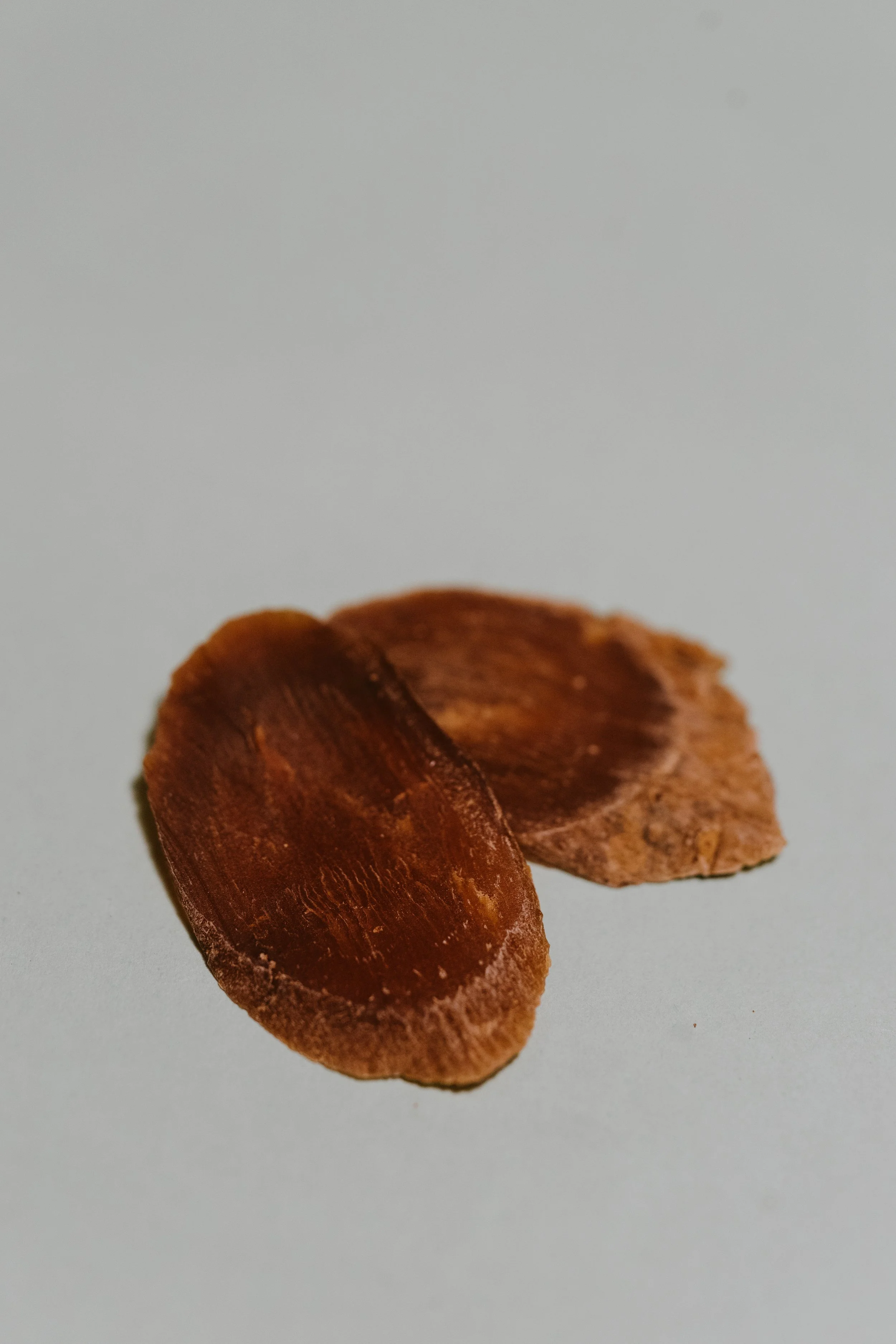
Ren Shen 人參
-
Tonify the Qi
-
3-9g, decocted alone for maximum extraction. Up to 30g for hemorrhagic shock (taken in multiple small doses). 0.5-1.0g powdered.
-
Latin: Ginseng Radix
Common Name: Asian Ginseng
-
Taste: Sweet, Slightly Bitter
Temperature: Slightly Warm
-
Lung
Spleen
Heart
-
Strongly tonifies Source qi: used to treat qi collapse due to profound loss of blood or body fluids, from illness, vomiting or diarrhea, excessive perspiration, or shock. Qi collapse may manifest with shortness of breath, weak or shallow respiration, cold extremities, and a weak or minute pulse. Used alone for this condition.
Tonifies qi and blood: used to treat fatigue, weakness, and sallow complexion.
Tonifies the Lungs: used to treat shortness of breath, wheezing, and labored breathing with exertion due to Lung qi deficiency.
Tonifies the Spleen and Stomach: used to treat lack of appetite, abdominal distention, lack of energy, chronic diarrhea, and prolapse of internal organs.
Replenishes fluids and alleviates thirst: used to treat unquenchable thirst, which may be due to injury to qi and fluids from high fever and profuse sweating, or related to wasting and thirsting disorder.
Tonifies Heart qi, restores the spirit, and improves cognitive function: used to treat confusion, forgetfulness, palpitations, anxiety, insomnia, dream-disturbed sleep, frightfulness, nervousness, and neurasthenia.
-
Yin deficiency heat, heat excess, bleeding due to reckless movement of hot blood, absence of significant qi deficiency, hypertension with Liver yang rising, constipation, phlegm accumulation, and wheezing due to Lung heat.
Use extreme caution when prescribing Ren Shen for patients on antidepressant or antidiabetic medications. Do not take with turnips, daikon, or black or green tea. Incompatible with Wu Ling Zhi, Lai Fu Zi, and Li Lu. Do not overdose. Should an overdose occur, remedy with 100g of Gan Cao, decocted. Allergies to this herb have been reported.
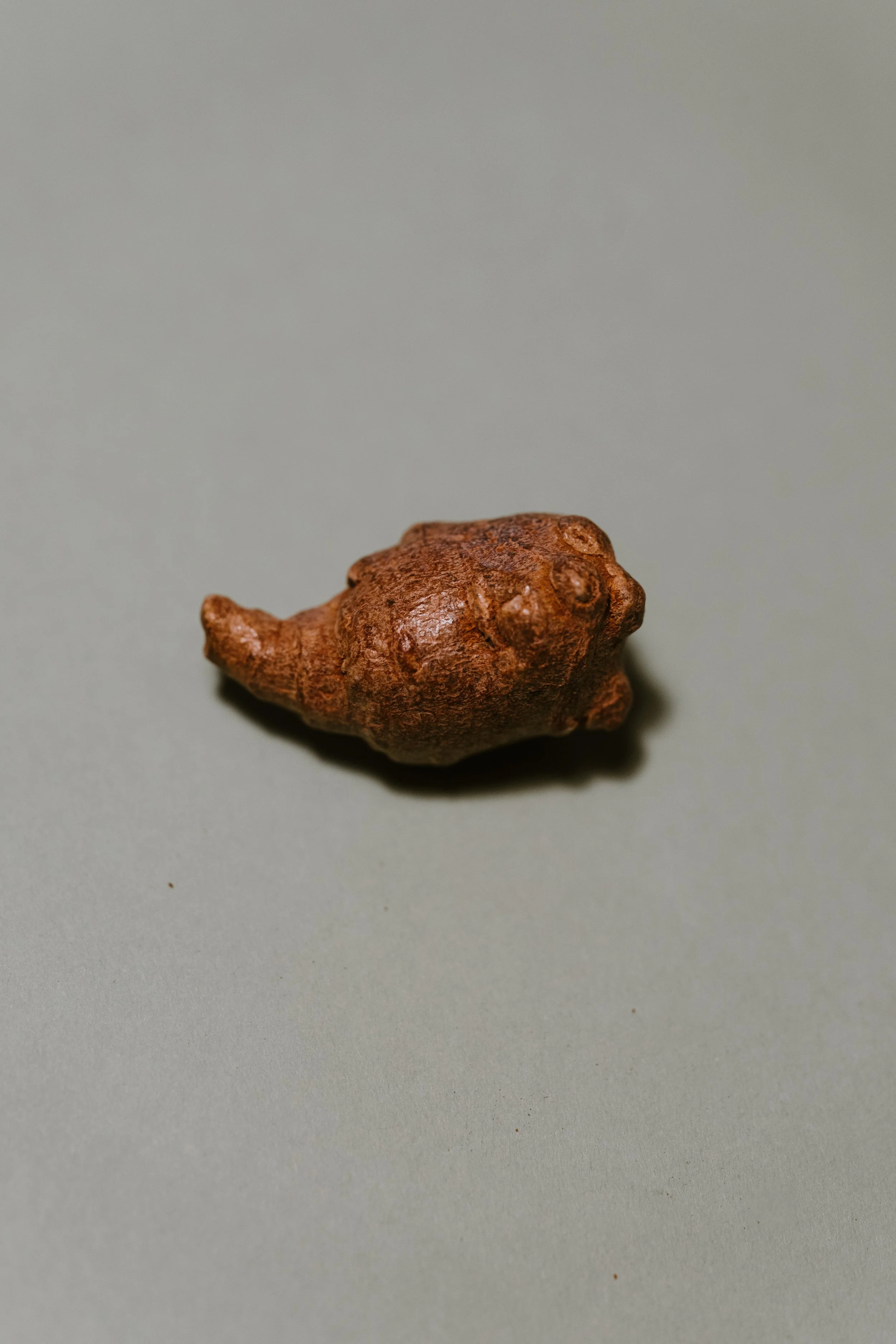
San Qi 三七
-
Regulate Blood/Stop Bleeding
-
3-9g decocted. 1-1.5g powdered or in pills. May double the dose for severe cases.
-
Latin: Notoginseng Radix
Common Name: Tienchi Ginseng Root
-
Taste: Sweet, Slightly Bitter
Temperature: Warm
-
Liver
Stomach
Large Intestine
-
Stops bleeding and transforms blood stasis: for internal and external bleeding including vomiting blood, nosebleed, and blood in the urine or stool. Because this herb can stop bleeding without causing blood stasis, it is very widely used.
Reduces swelling and alleviates pain: the herb of choice for traumatic injuries, used for swelling and pain due to falls, fractures, contusions, and sprains. Effective in invigorating the blood, it is used for chest and abdominal pain, as well as joint pain that has been caused by blood stasis. These actions also make it useful in the treatment of sores and abscesses.
-
Pregnancy. Caution with blood or yin deficiency. Allergies to this herb have been reported. Some patients have experienced negative side-effects such as=> headache, nausea, vomiting, toothache, and dizziness.
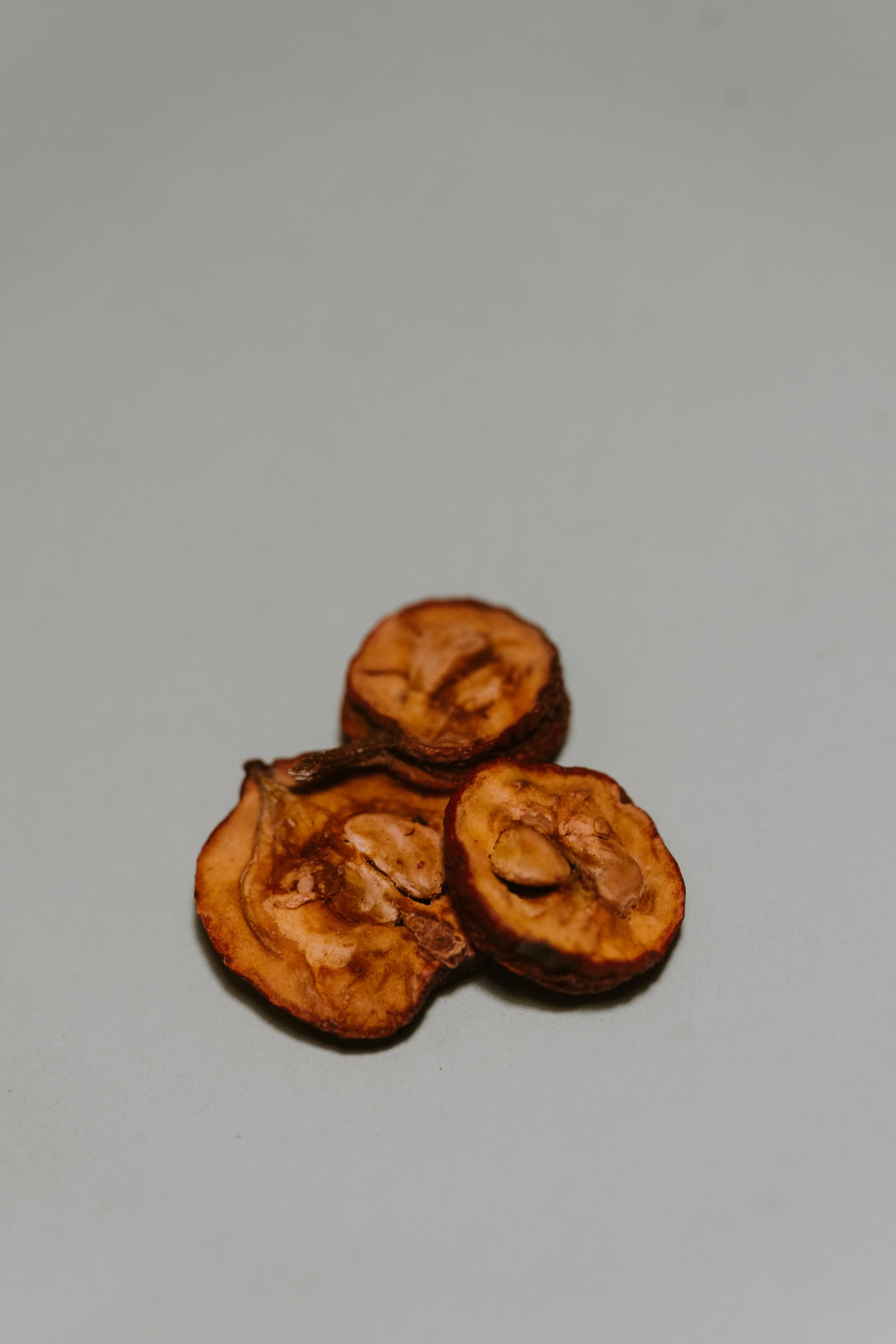
Shan Zha 山楂
-
Relieve Food Stagnation
-
9-15g. 30g maximum. Use raw, dry-fried, or charred.
-
Latin: Crataegi Fructus
Common Name: Chinese Hawthorn Fruit
-
Taste: Sour, Sweet
Temperature: Slightly Warm
-
Liver
Spleen
Stomach
-
Reduces food stagnation and transforms accumulation: for accumulation due to meat or greasy foods with abdominal distention, pain, or diarrhea.
Transforms blood stasis and dissipates clumps: for postpartum abdominal pain and clumps due to blood stasis. Also for bulging disorders.
Stops diarrhea: the partially charred herb is used for diarrhea of chronic dysentery-like disorders.
Also recently used for hypertension, coronary artery disease, and elevated serum cholesterol
-
Caution with Spleen or Stomach deficiency without food stagnation, and with ulcers and acid regurgitation. Do not take daily long-term, or Stomach disharmony may result.
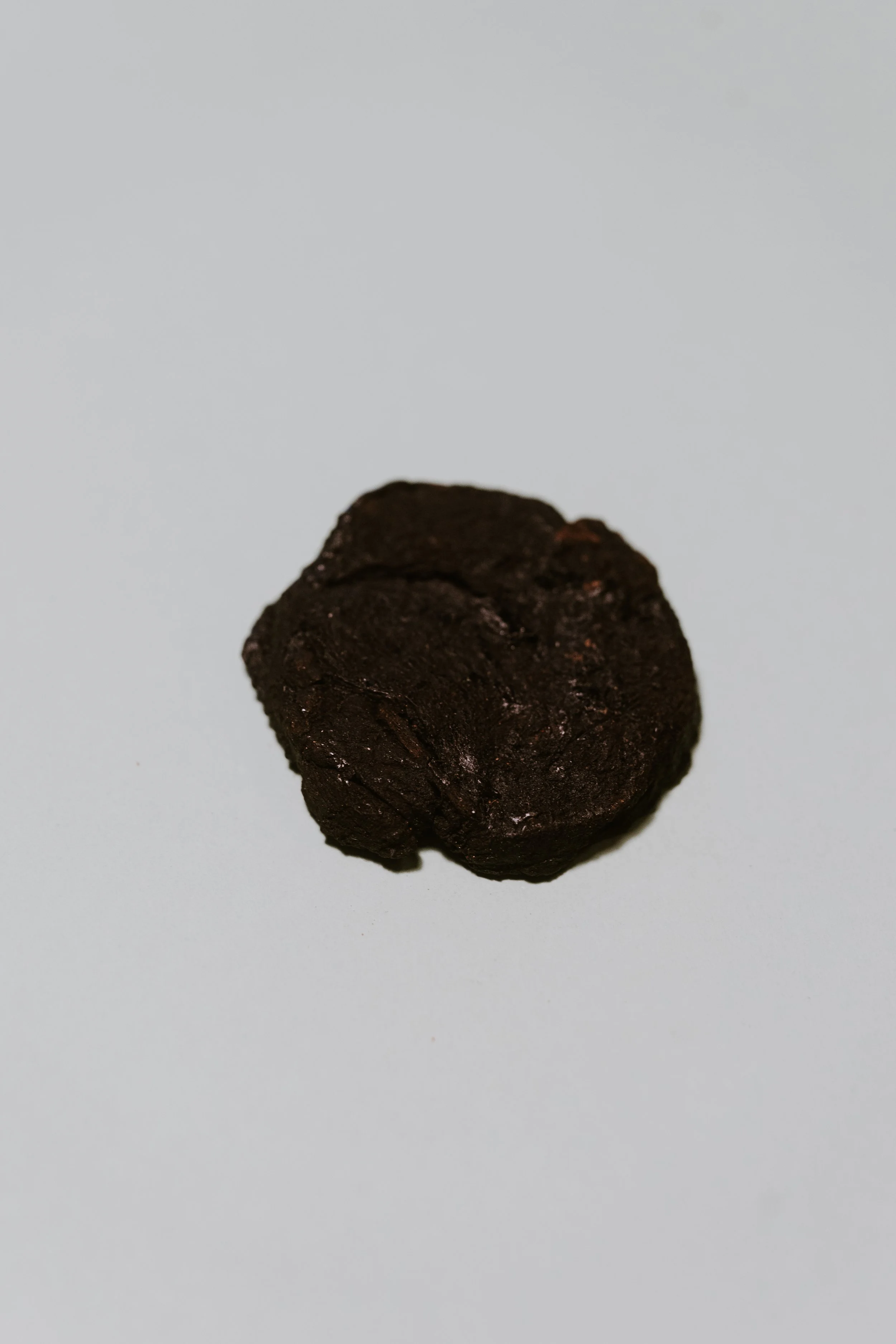
Sheng Di Huang 生地黃
-
Clear Heat/Cool the Blood
-
9-30g. 100g maximum. To reduce the cloying quality either=> process with Sheng Jiang, prescribe with Sha Ren, or wine-fry.
-
Latin: Rehmanniae Radix
Common Name:Rehmannia Root Tuber
-
Taste: Sweet, Bitter
Temperature: Cold
-
Heart
Kidney
Liver
-
Clears heat and cools the blood: for all warm-heat pathogen diseases where heat enters the nutritive level, causing very high fever, thirst, and a scarlet tongue. Also indicated in cases of hemorrhage due to heat entering the blood level.
Nourishes the yin and generates fluids: for yin deficiency with heat signs, as well as injury to the fluids. Manifestations include dry mouth, continuous low-grade fever, and constipation. Also for throat pain associated with yin deficiency and wasting and thirsting disorder.
-
Spleen deficiency with dampness, yang deficiency, and in pregnancy with blood deficiency or Spleen/Stomach deficiency.
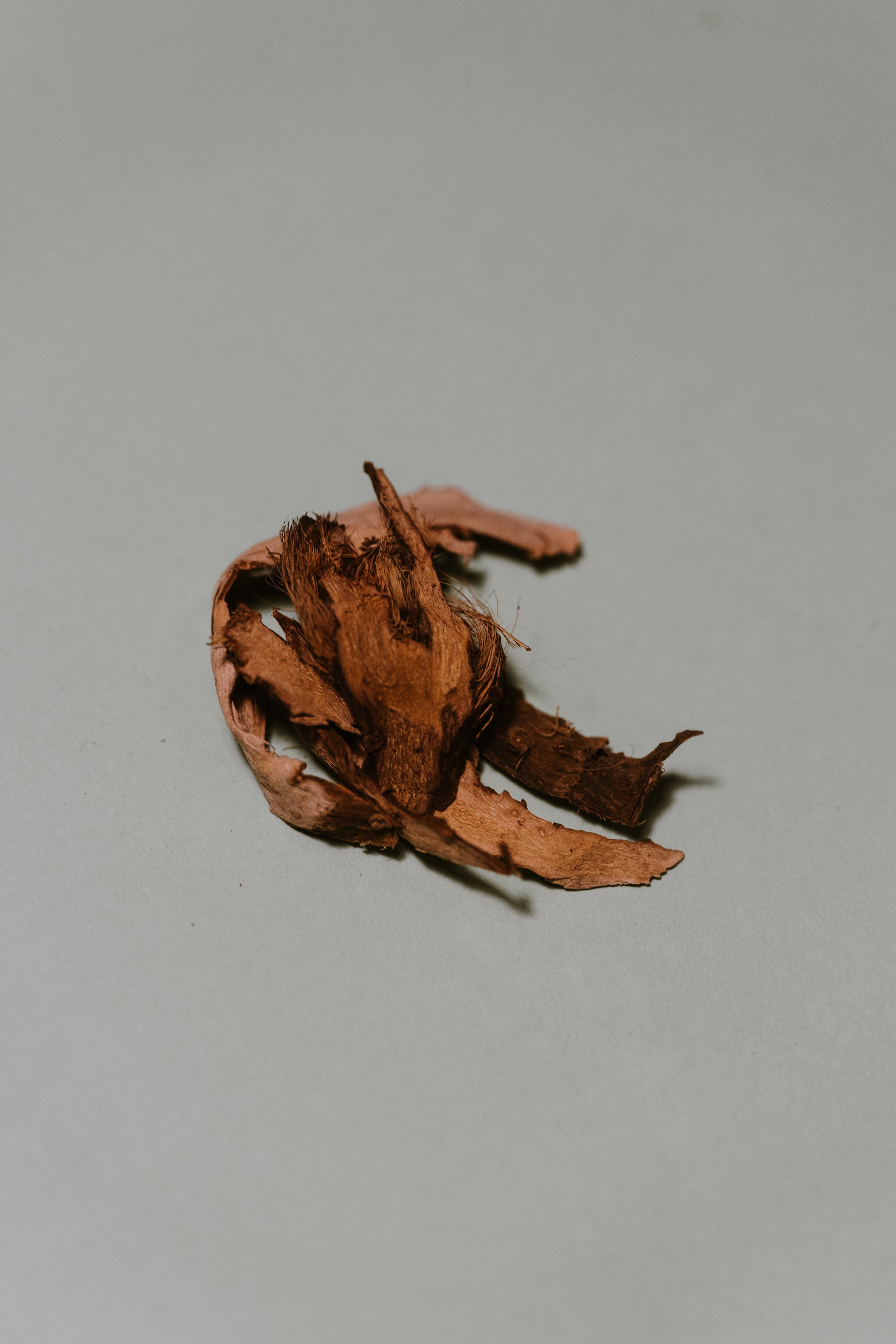
Shi Chang Pu 石菖蒲
-
Aromatic Substances that Open the Orifices
-
3-9g, decocted or in pills. Use topically as a wash made from the powdered herb.
-
Latin: Acori tatarinowii Rhizoma
Common Name: Grass-Leaf Sweetflag Rhizome
-
Taste: Acrid, Aromatic, Bitter
Temperature: Slightly Warm
-
Heart
Stomach
-
Opens the orifices, dislodges phlegm, removes filth, and quiets the spirit: for phlegm-dampness veiling and blocking the sensory orifices with such symptoms as deafness, dizziness, forgetfulness, a dulled sensorium, as well as seizures or stupor.
Transforms turbid dampness, awakens the Spleen, and promotes movement of qi: for such symptoms as chest and epigastric fullness, abdominal distention, and pain due to dampness and turbidity obstructing the middle burner.
Promotes blood flow and reduces swelling: used both internally and topically for wind-cold-damp painful obstruction, trauma, and sores.
-
Caution with yin deficiency, blood deficiency, and spermatorrhea.
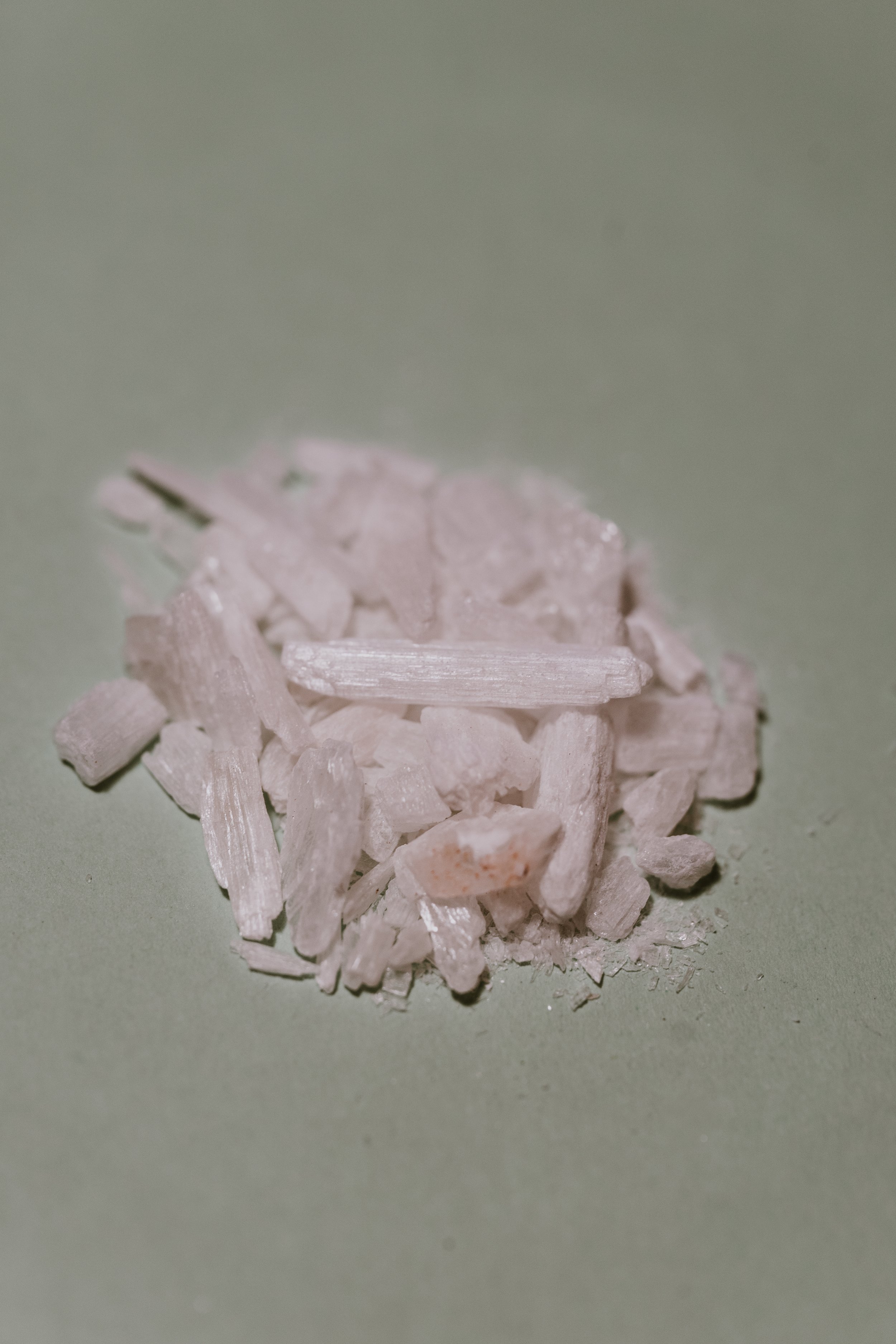
Shi Gao 石膏
-
Clear Heat Drain Fire
-
20-60g, crushed and precooked 30 minutes. May use up to 100g for very high fevers. As a powder use 6-15g. Use calcined for topical application.
-
Latin: Gypsum fibrosum
Common Name: Gypsum
-
Taste: Sweet, Acrid
Temperature: Very Cold
-
Lung
Stomach
-
Clears heat and drains fire: for high fever without chills, irritability, intense thirst, profuse sweating, a big, flooding pulse, and a red tongue with a yellow coat.
Clears excess from excess from lungs: for cough and wheezing with fever and thick, viscous sputum
Clears blazing Stomach fire: for headache, toothache, and swollen gums due to blazing Stomach fire
For eczema, burns, and ulcerated sores: usually applied topically in powdered form after being calcined and mixed with other herbs. May also be taken internally for these conditions.
-
Qi, yin, or yang deficiency, and Stomach cold. For short-term use only.
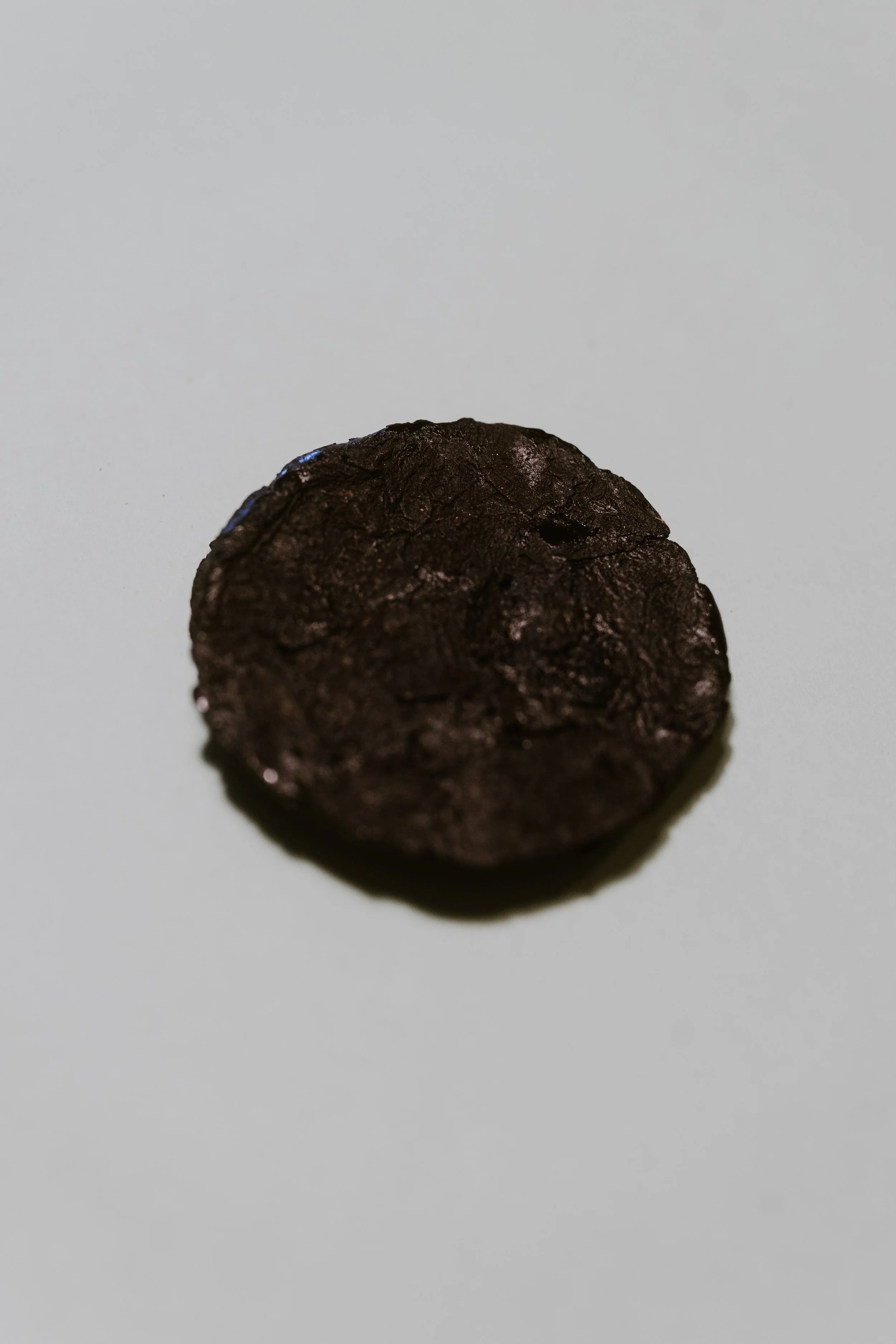
Shu Di Huang 熟地黃
-
Tonify the Blood
-
9-30g
-
Latin: Rehmanniae Radix preparata
Common Name: Rehmannia Root Tuber (prepared)
-
Taste: Sweet
Temperature: Slightly Warm
-
Heart
Kidney
Liver
-
Tonifies the blood: for blood deficiency with such symptoms as facial pallor, dizziness, palpitations, and insomnia. Very commonly used when blood deficiency leads to such problems as irregular menstruation, uterine bleeding, and postpartum bleeding. Best when there is deficiency but no significant stagnation.
Nourishes the yin: for Liver and Kidney yin deficiency with such symptoms as weak lower back and limbs, dizziness, tinnitus, tidal fevers, nightsweats, and nocturnal emissions.
Strongly enriches the yin and relieves wasting and thirsting disorder: especially useful for lower burner wasting; can be used as a stand-alone herb in large doses for this problem.
Nourishes the blood and tonifies the essence: for problems with both blood and essence such as delayed development during childhood, blunted affect, premature aging, diminished mental acuity, greying of hair, impotence, and memory loss.
-
Caution with Spleen and/or Stomach deficiency, qi stagnation, or phlegm accumulation.
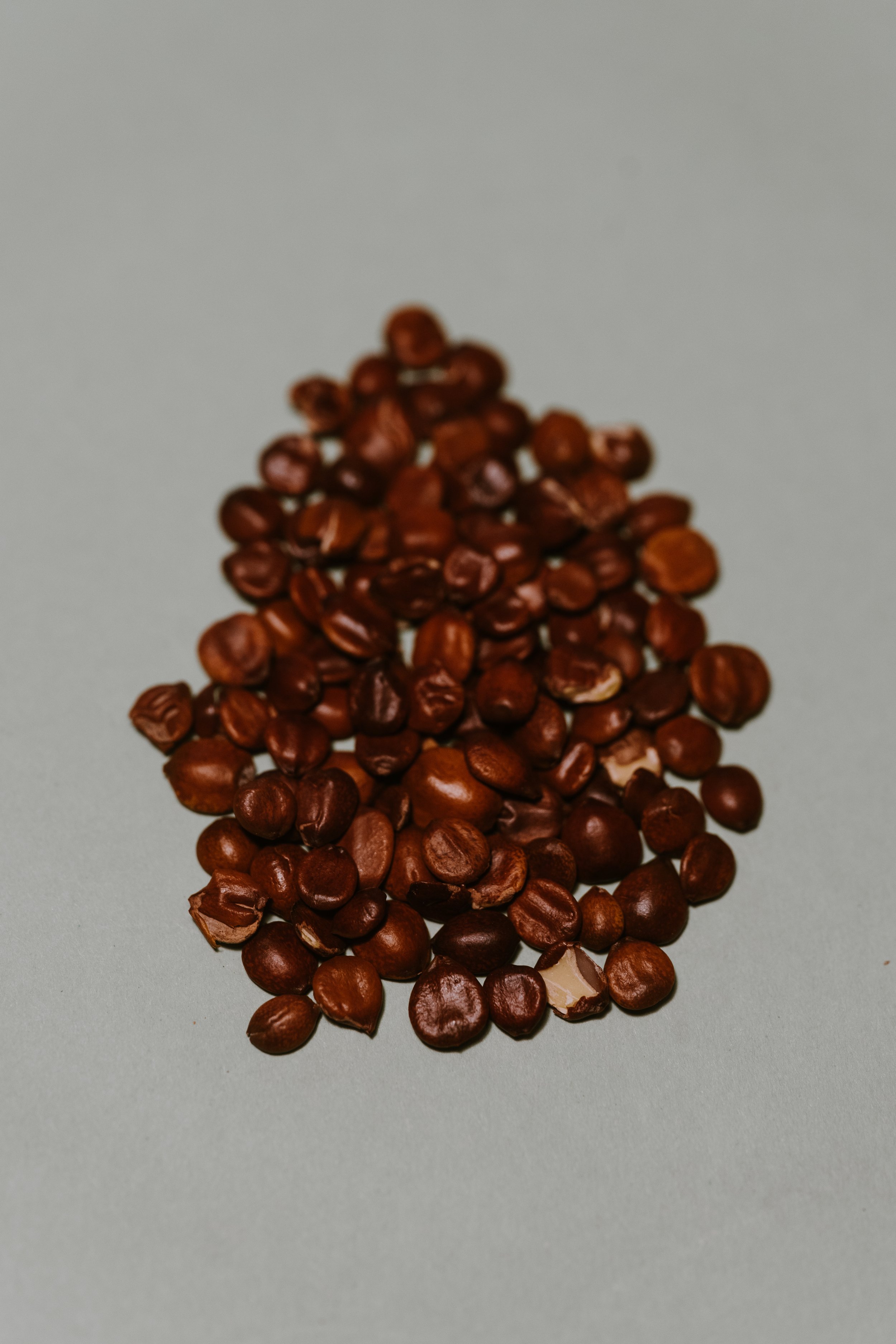
Suan Zao Ren 酸棗仁
-
Nourish the Heart and Calm the Spirit
-
9-18g, crushed. 1.5-3g, powdered. Use raw or dry-fried. Always crush prior to decocting. May take as powder or pill as a single-herb remedy before bed to improve quality of sleep.
-
Latin: Ziziphi spinosae Semen
Common Name: Jujube Seed
-
Taste: Sour, Sweet
Temperature: Neutral
-
Gallbladder
Heart
Spleen
Liver
-
Nourishes the Heart yin, augments the liver blood, and quiets the spirit: for irritability, insomnia, and palpitations with anxiety due to either blood deficiency (inability to nourish the Heart) or yin deficiency (with upward-flaring fire).
Prevents abnormal sweating: for both spontaneous sweating and night sweats.
-
Caution with severe diarrhea or excess heat conditions.
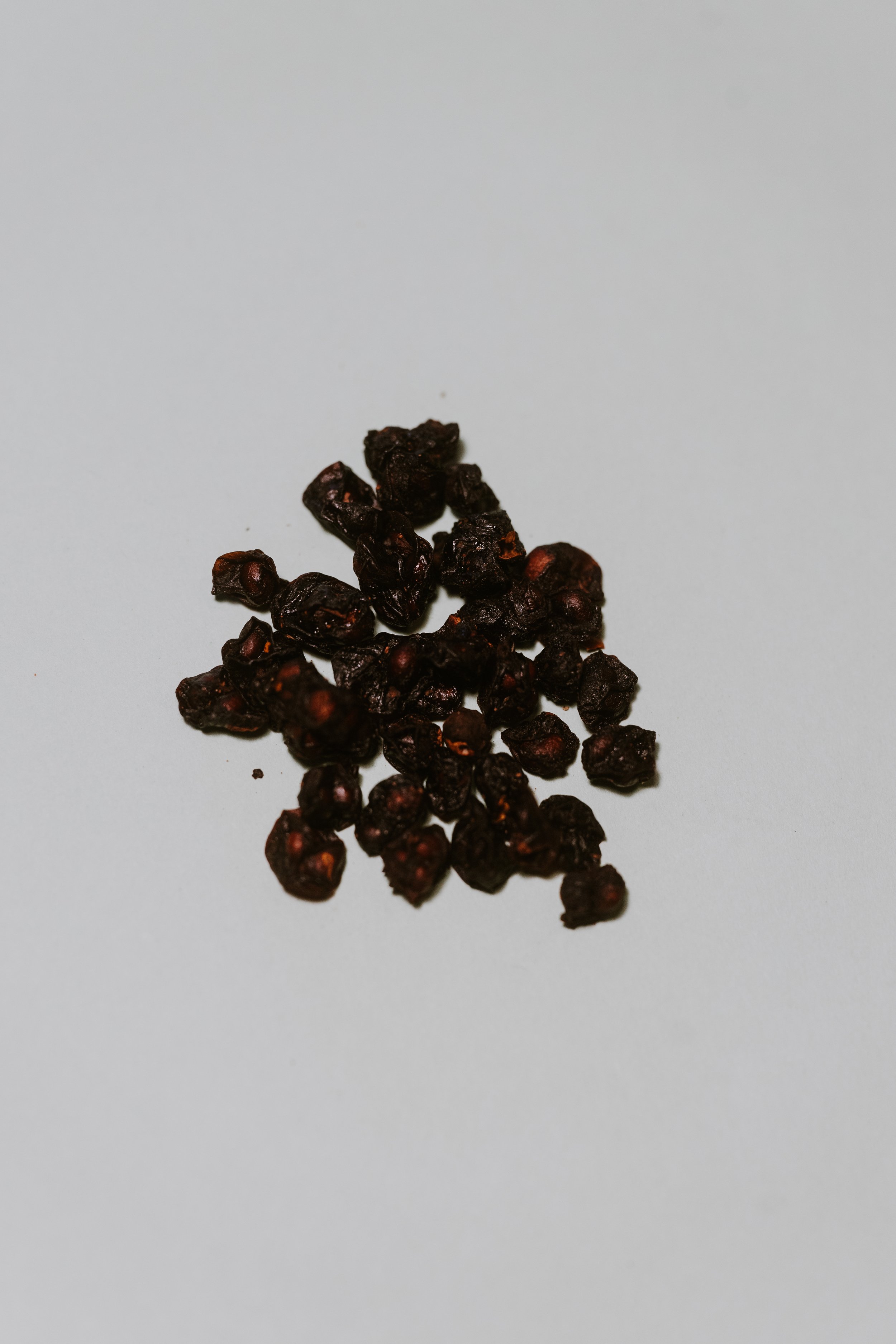
Wu Wei Zi 五味子
-
Stabilize and Bind
-
1.5-9g, decocted, or 1-3g powdered. Use a lower dose for chronic cough, and a higher dose as a tonic. Use raw, or steamed with vinegar or wine.
-
Latin: Schisandrae Fructus
Common Name: Schisandra Fruit
-
Taste: Sour, Sweet
Temperature: Warm
-
Heart
Kidney
Lung
-
Contains the leakage of Lung qi and stops coughs: for chronic cough and wheezing due to Lung deficiency, or patterns of Lung and Kidney deficiency. It inhibits the leak- age of Lung qi above, enriches the Kidney yin below, and also stops coughs. It is thus an important and effective herb for treating chronic coughs.
Tonifies the Kidneys, binds up the essence, and stops diarrhea: for nocturnal emissions, spermatorrhea, vaginal discharge, and urinary frequency due to Kidney deficiency. Also used for daybreak diarrhea associated with Spleen and Kidney deficiency.
Inhibits sweating and generates fluids: for excessive sweating, especially when accompanied by thirst or a dry throat. With other appropriate herbs, it is variously used for spontaneous sweating, night sweats, or even wasting and thirsting disorder.
Quiets the spirit while calming and containing the Heart qi: for irritability, palpitations, dream-disturbed sleep, and insomnia due to injury to the blood and yin of the Heart and Kidneys or lack of communication between these two organs. Nowadays commonly used for various types of insomnia.
-
Lingering exterior or excess conditions, for example, heat, phlegm, dampness, or fire, manifesting, for example, as a rash, cold, or virus.
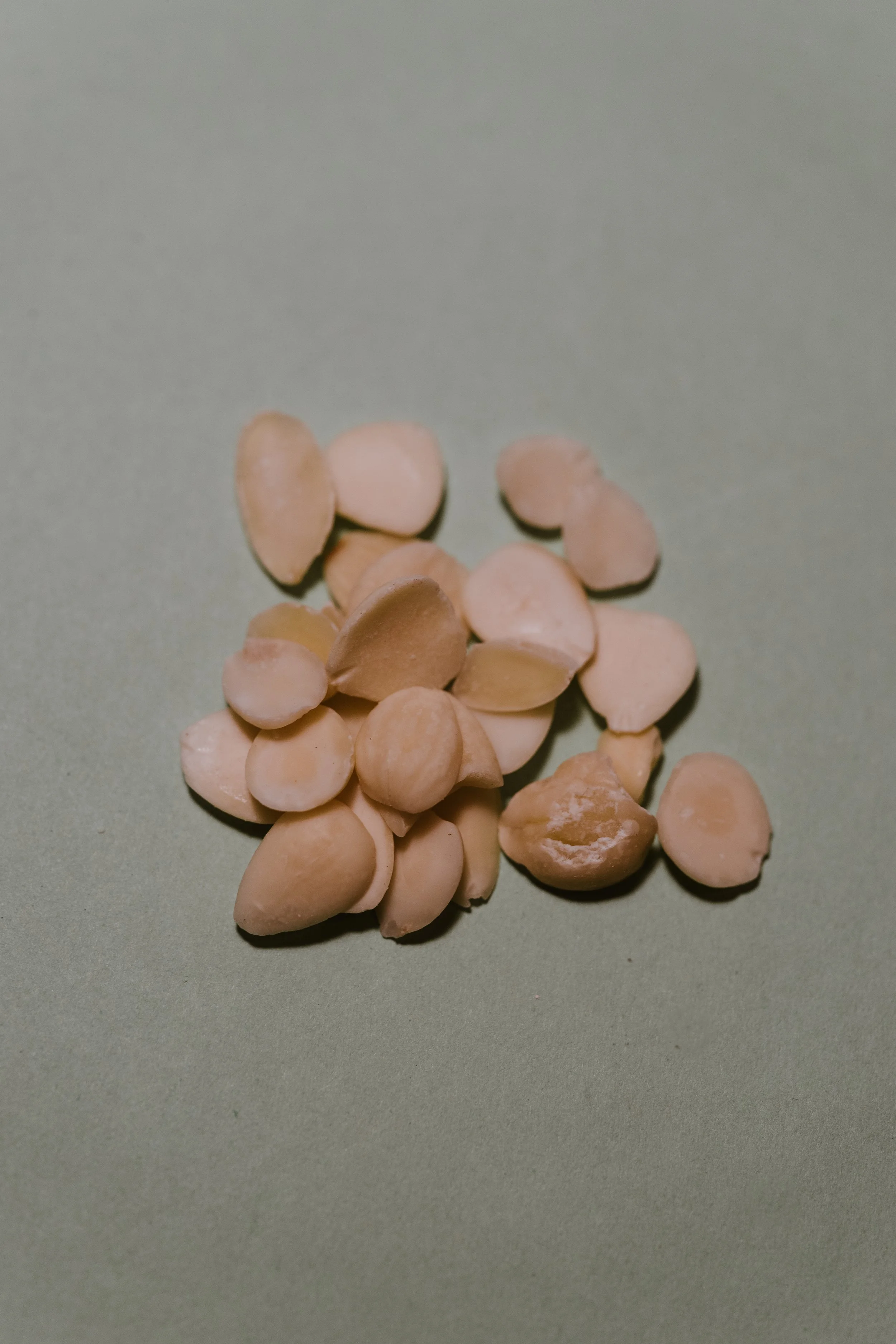
Xing Ren 杏仁
-
Relieve Coughing and Wheezing
-
3-9g, decocted, added lastly. Dry-fry for patients with a deficient Spleen/Stomach.
-
Latin: Ku Xing Ren
Common Name: Armeniacae Semen
-
Taste: Bitter, Slightly Toxic
Temperature: Slightly warm
-
Large Intestine
Lung
-
Stops cough and calms wheezing: used quite broadly for many kinds of cough disorders caused by either heat or cold, depending on the combination. Because the herb is moist in nature, it is especially useful for an externally contracted dry cough.
Moistens the Intestines and unblocks the bowels: this secondary use of the herb derives from its high oil content.
-
Do not overdose. An overdose may be as little as 40 kernels per adult, or 10 kernels per child. Mild overdose may be treated with a decoction of the bark of the tree on which Xing Ren grows. Severe overdose requires hospitalization. Use caution for those with diarrhea. Because of its toxicity, this herb is inappropriate for infants.
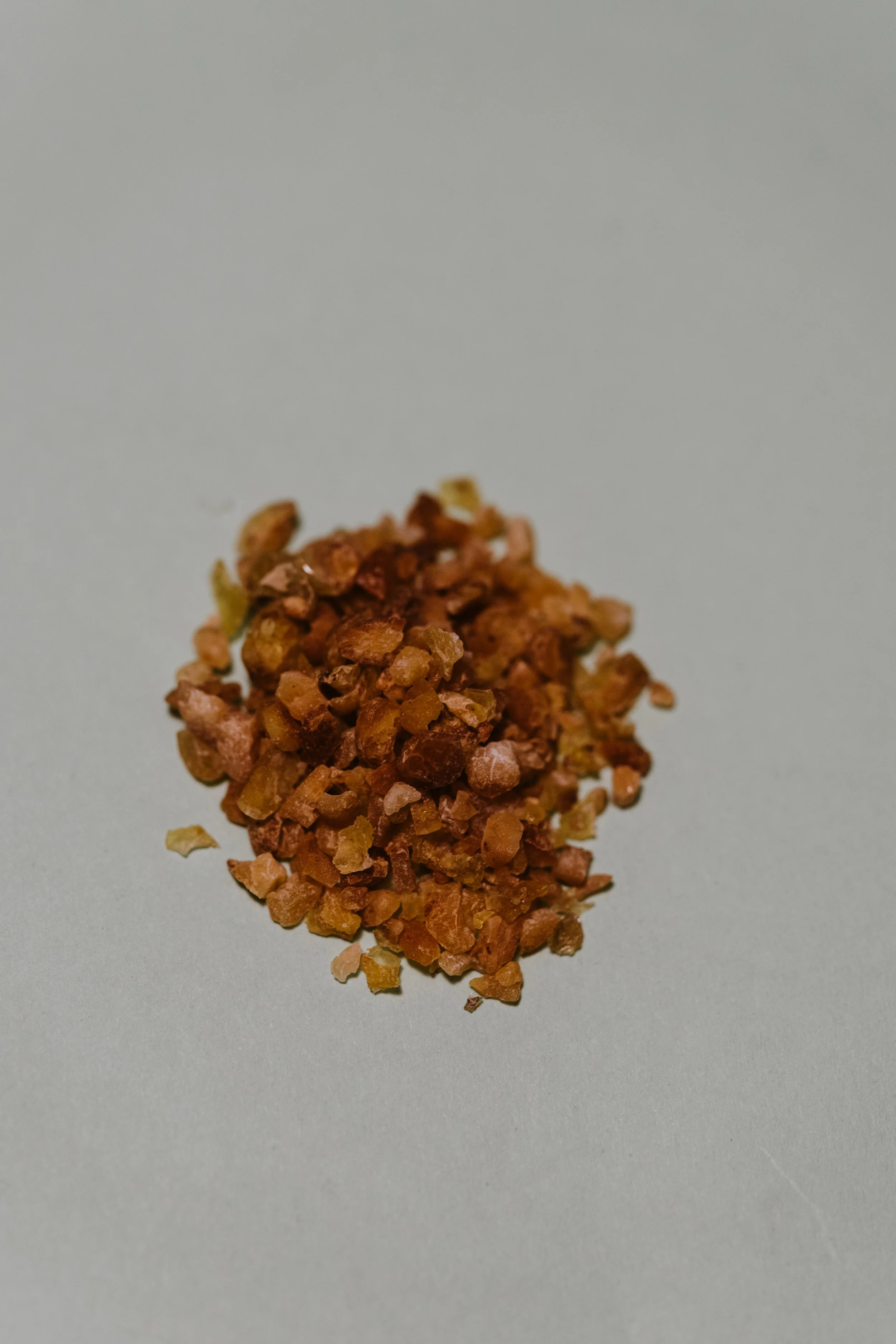
Zhi Ban Xia 製半夏
-
Warm & Transform Cold-Phlegm
-
4.5-12g. Ban Xia is always sold processed (with ginger, vinegar, or alum), which removes its toxic properties.
-
Latin: Pinelliae Rhizoma Preparatum
Common Name: Pinellia Rhizome (processed)
-
Taste: Acrid, Toxic
Temperature: Warm
-
Lung
Spleen
Stomach
-
Dries dampness, transforms phlegm, and causes rebellious qi to descend: for cough with copious sputum, as in cold-phlegm in the Lungs. Especially effective for transforming phlegm due to dampness of the Spleen.
Directs rebellious qi downward and stops vomiting: for nausea and vomiting due to many causes, including cold, thin mucus, Stomach deficiency, Stomach heat, or pregnancy.
Dissipates nodules and reduces clumps: for nodules, pressure, distention, or pain due to phlegm lingering in the chest, phlegm nodules in the neck (such as goiter and scrofula), or obstruction caused by phlegm anywhere in the body. Also for focal distention in the chest and epigastrium.
-
Use extreme caution with all bleeding conditions, yin deficiency cough, hot phlegm, and fire conditions. Incompatible with Wu Tou, Cao Wu, Chuan Wu, and Fu Zi. Allergies to this herb have been reported.
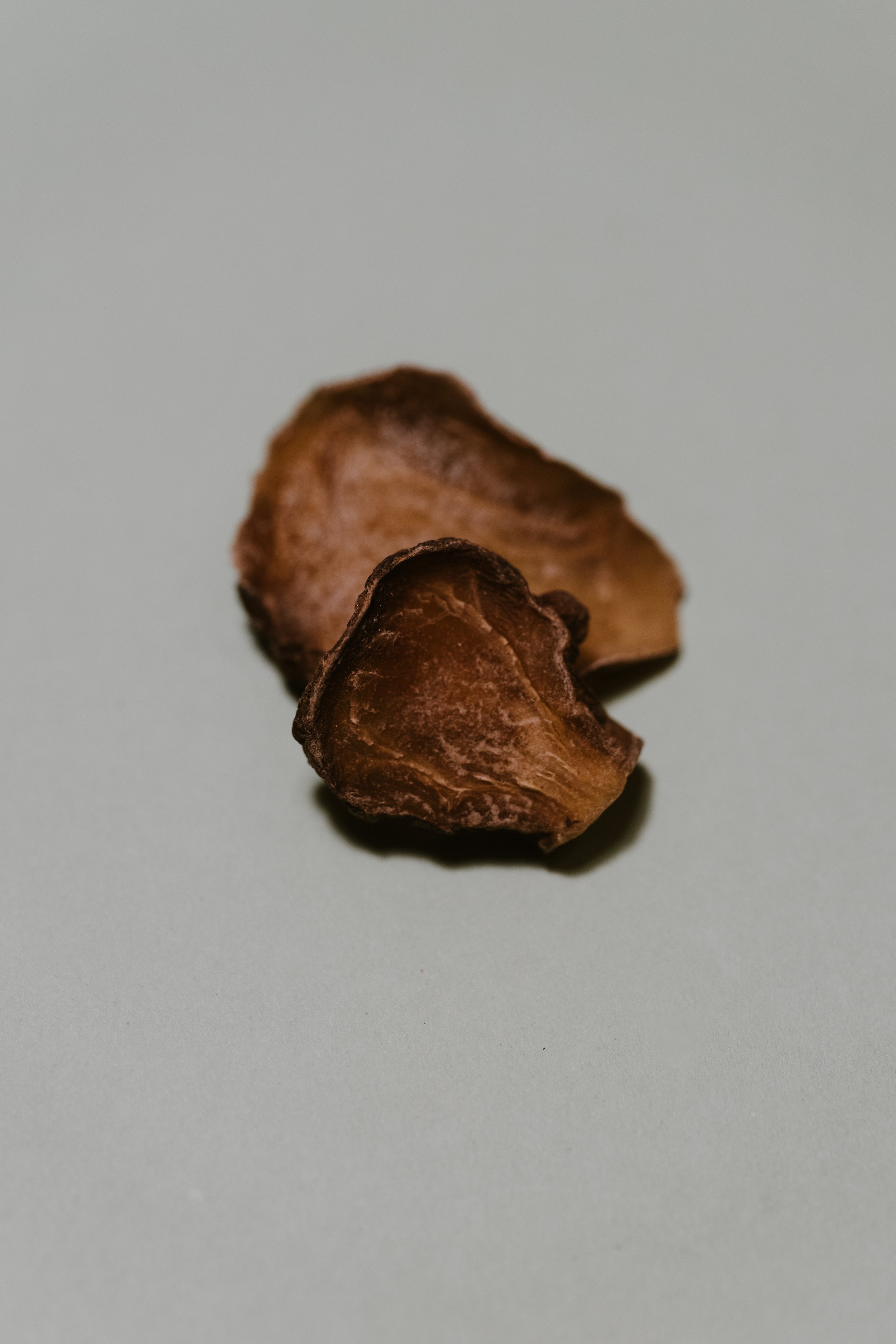
Zhi Fu Zi 附子(製)
-
Warm Interior and Expel Cold
-
1.5-15g, pre-cooked 30-60 minutes.
-
Latin: Aconiti Radix Lateralis Preparata
Common Name: Aconite
-
Taste: Acrid, Toxic
Temperature: Hot
-
Heart
Kidney
Spleen
-
Rescues the yang: used to treat yang collapse, presenting with profuse sweating, icy hands and feet, diarrhea with undigested food, chills and fear of cold, possible loss of consciousness, and a very faint pulse.
Warms the yang: used to treat Spleen, Heart, and Kidney yang deficiencies.
Disperses cold, opens blocked channels, and alleviates pain: used to treat wind-damp-cold bi syndrome, and cold obstructing organs, muscles, bones, and blood vessels. May also be used to treat yin-type sores.
-
The toxicity of this herb is actually quite low, because it has been processed correctly prior to its arrival in the pharmacy. Do not, however, exceed 15g per day. It is contraindicated for yin deficiency with false cold and true heat, and during pregnancy, and when consuming alcohol. Alcohol increases the absorption of the herb's toxic properties. Toxic reactions to this herb are usually due to overdose, or incorrect preparation of the fresh herb. Always take care to ensure proper diagnosis with this herb especially.