

Craniosacral Therapy: Practitioner Perspectives
Reiki, Energy Work, & Coaching
Have you tried Craniosacral Therapy? Are you curious about it?
Craniosacral therapy (CST) is a gentle, non-invasive, hands-on form of bodywork that is practiced throughout the world. At Minnesota Integrative Health Studio, we currently have four craniosacral therapy practitioners: Elsie Olin CMT, Derrick Lundberg CMT, Sarah White CMT, and Caspian Wirth-Petrik, Certified Craniosacral Practitioner.
Recently, I had the opportunity to do a craniosacral session with Caspian, and to chat with Derrick about his thoughts on CST. Both Caspian and Derrick emphasized that theirs are two perspectives among multiple lineages and many approaches to craniosacral therapy. Below find their unique perspectives on this fascinating practice.
How is craniosacral therapy believed to work?
Craniosacral therapy is historically connected to the field of osteopathy. The mechanism of action has been a subject of debate in the fields of research, medicine, and integrative health. Some scientific literature scrutinizes the theories and observations of CST practitioners, or rejects its clinical effectiveness altogether. Still, many patients and practitioners hold CST theories and practices with utmost respect–and professional CST organizations like the Upledger Institute International and the Biodynamic Craniosacral Therapy Association of North America remain steadfast in their commitment to advancing awareness and research of the practice.
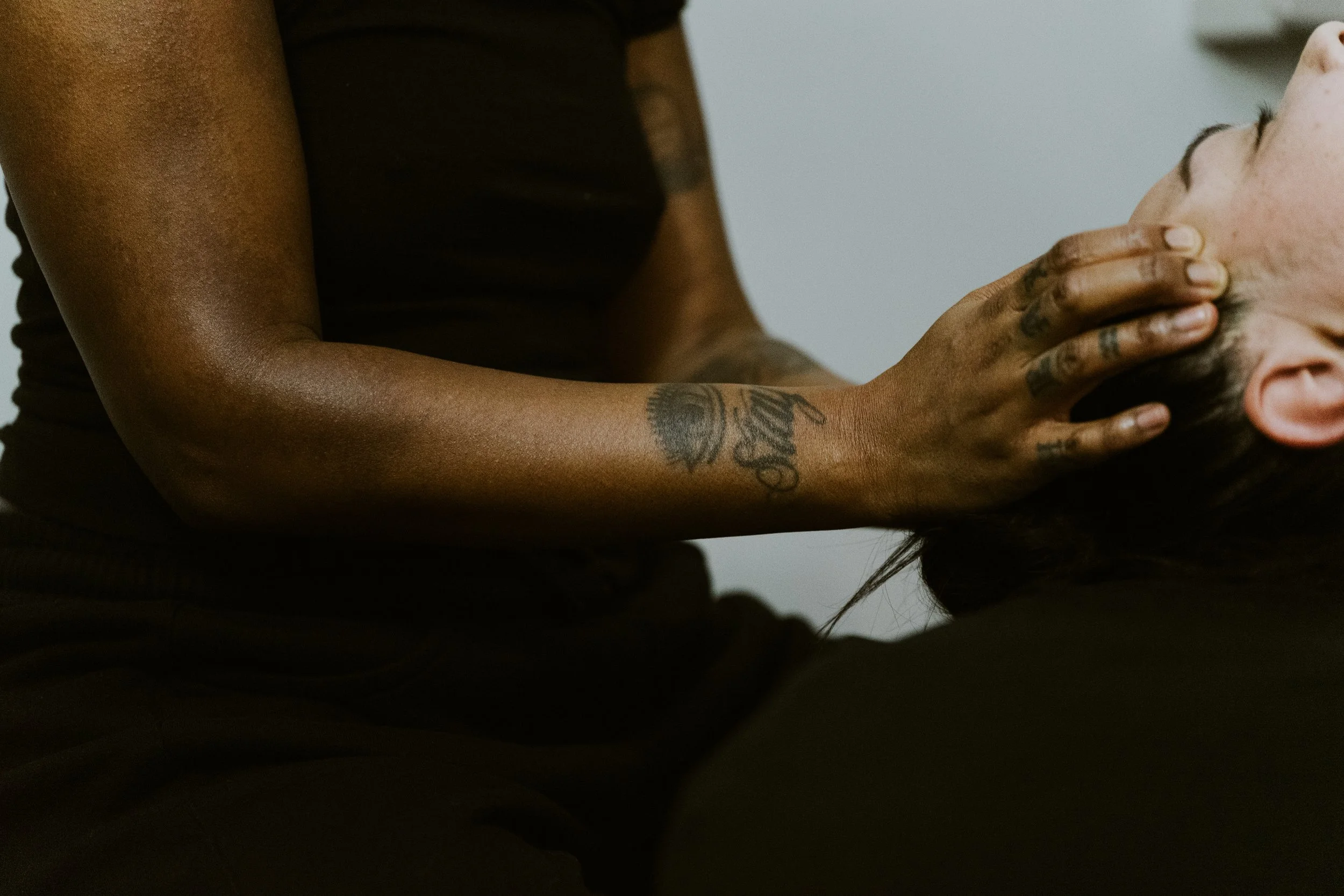
Derrick: “My thoughts on craniosacral therapy are that it plays a very important role in the healing process, though I do not believe it to be largely physical in nature. In fact, the way it is taught in the original Upledger lineage often feels closer to energy work.
The touch is light—less than five grams—and the awareness is placed on a rhythm within the body. The focus is less on the tissues themselves and more on using the tissues as a "handle" to regulate the nervous system. This is done through recognition of the craniosacral rhythm, which tracks the creation and distribution of cerebrospinal fluid. As this fluid is produced, the cranium expands; as the cranium contracts, it moves like the mouth of a scallop, pushing that fluid down the spinal canal. The fluid reflects off the sacrum and returns through this semi-closed hydraulic system.
In that process, the cerebrospinal fluid is pushed out into the body as the rhythm engages all tissues, carrying the chemical and neurological messengers that maintain the connection between the whole body and the outlook tower at the top. This is known in a larger scope as the Primary Respiratory Mechanism. This mechanism exists not only within the cranial system but also the sacrospinal system and beyond.
However, in my practice, I realize this is only one part of the equation. If we want to make changes in the physical tissues, we are better suited to use a modality like myofascial release to actually release the restrictions that cause imbalances in cerebrospinal and whole-body movement.”
Gentle work, deep histories
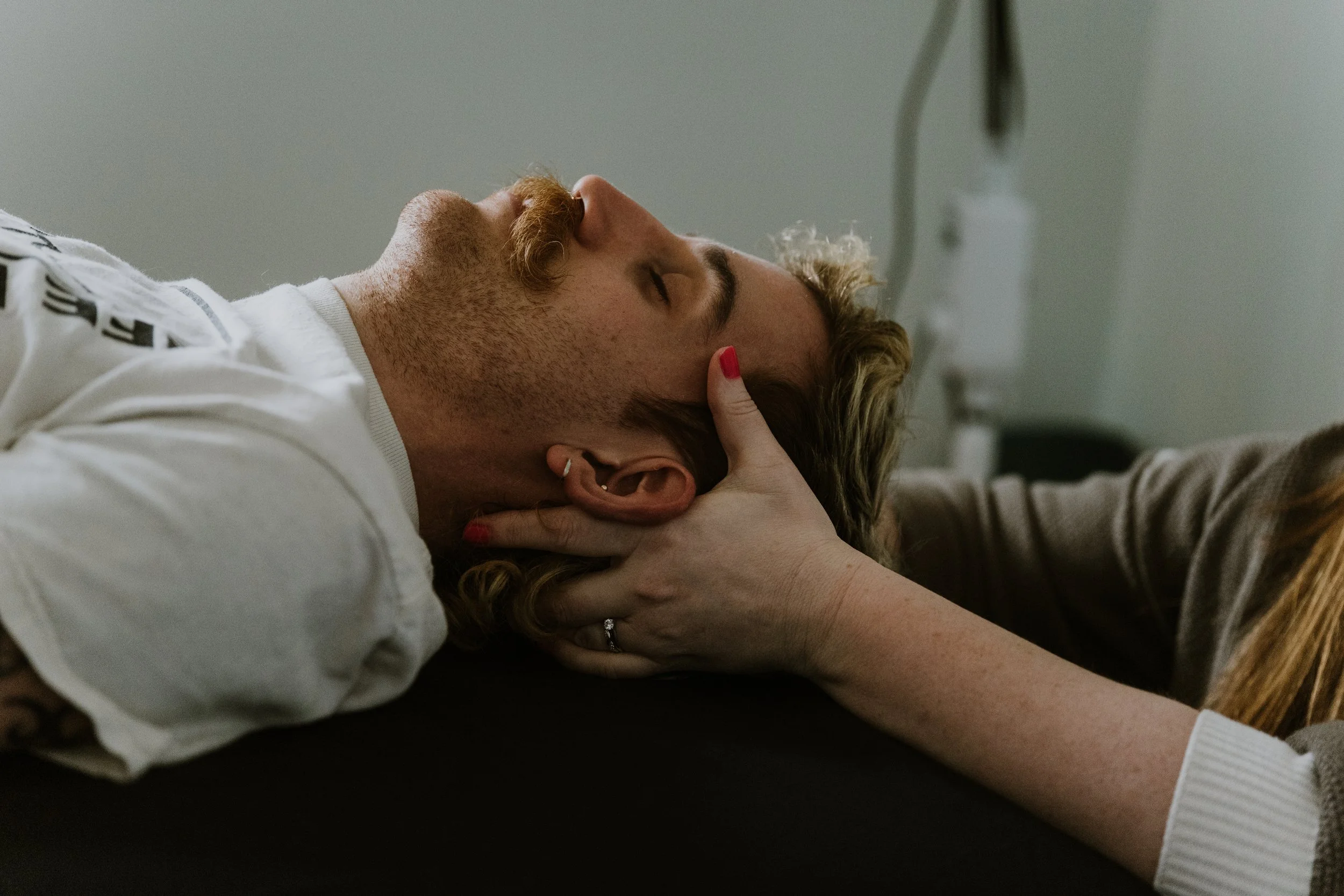
Craniosacral therapy may offer benefits that run far deeper than current scientific or medical models can grasp. The wisdom accessed through CST practice is arguably ancient, and innately human. Below, Caspian references an article by her craniosacral teacher Susan Raffo which is an invaluable resource for exploring these deeper histories.
Caspian: “I love the craniosacral hold, holding the occiput and holding the whole length of the spine. A lot of people say that it feels like being held like a baby again. Being an identical twin, I'm very drawn to the womb and that we can go back, far back.
And if we can go back, far back, thinking that's still affecting us, can we go even farther back and thinking about 500 years, and thinking about the indigenous people of this land and how you can still feel some of those wounds here? I like it growing our ability to think about time differently.
Sometimes I think about my heritage, the Norse mythologies about the rainbow bridge, and I think about the world tree, about that being our spine. And since there's the nine worlds connected with the world tree, thinking about the spine, the tree trunk, we can imagine ourselves being open to all these other worlds.
Sometimes I think about how all the nerves come out of the spine, so you can connect with the whole body from that midline point. It's connecting with the cerebrospinal fluid, it's connecting with the nerves, connecting with the midline. And then it's connected with the deep mythology of all of our people who have understood what that midline is, and all the worlds that we are.
In Susan Raffo’s blog post she goes into the history to try to expand the narrative of CST beyond just osteopathy, but that really a lot of this is this deep indigenous knowledge. And she says that Still [Andrew Taylor Still, regarded as the “father of osteopathic medicine”] worked with, I think, Cherokee and Shawnee people, observed their practices and just was the one to write it all down, get all the credit.”
A Tea Date With Your Body…or An Appointment With Your “Inner Physician”
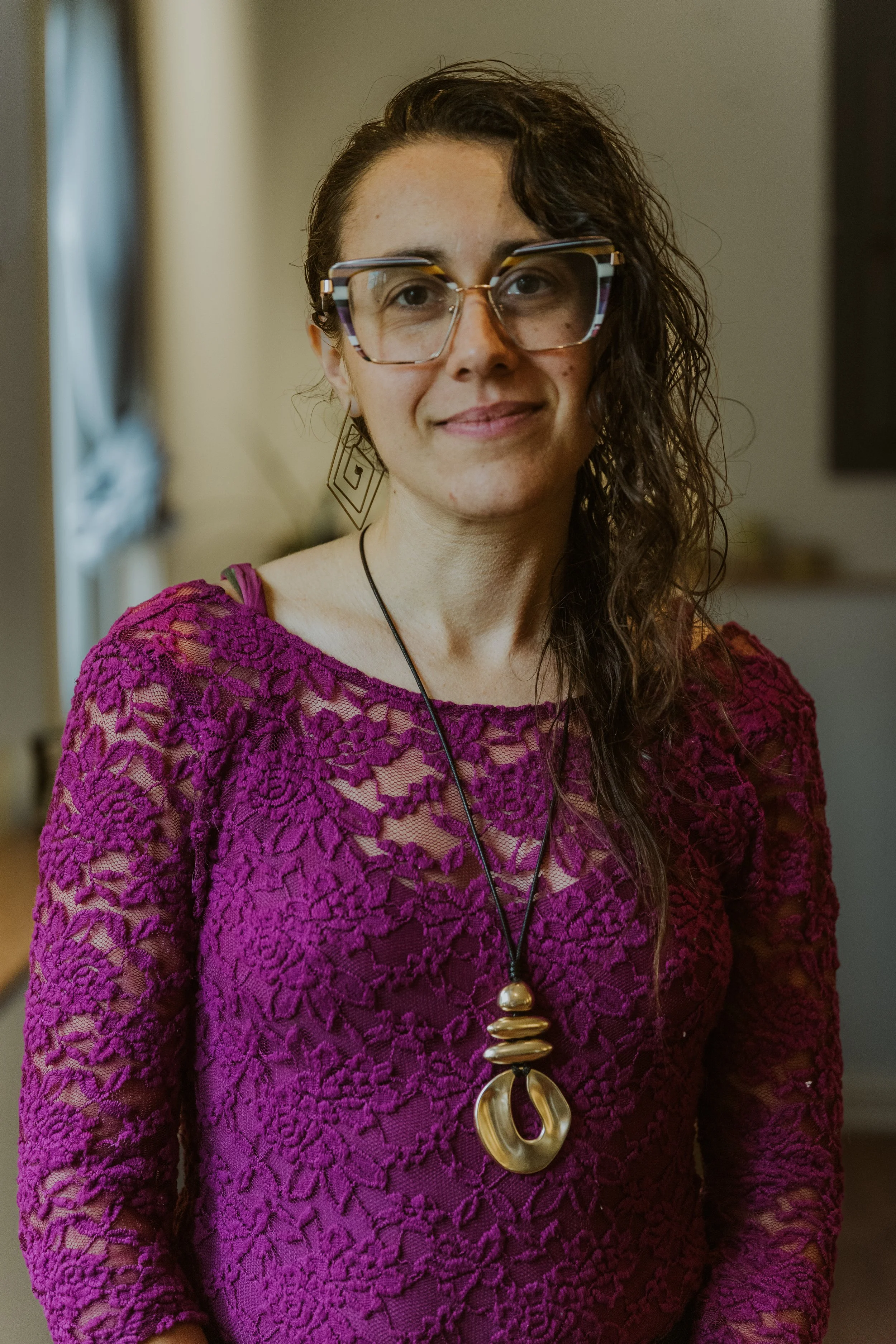
Caspian: “I approach craniosacral like a tea date between you and your body. You get to just set aside time, like with a friend: How are you? Let's talk. You know, for the people we care about, we set aside at that time. Can we do that
for ourselves? And that's what a craniosacral session is. If you're here showing up to listen, and I'm here also showing up to listen, and we might notice the same things, or we might notice different things.
Some things people notice might be heat changes throughout the body. Some tissue softening happens so that the blood vessels could open a little bit more and more blood flow could get to that area, and that creates heat. Some people may call that a release.
Heat might just mean blood flows to an area, bringing more nutrition and oxygen through an area, bringing away some of what needs to be released–toxins or whatever you want to call them. I really love when people can get some heat or pulsing happening.
So people might feel that.
But other people might have memories or emotions or colors, however life communicates with them. And this is also a time to notice is life bringing messages and what form is it? Feelings, sensations, or colors? “
Derrick: “Where I believe craniosacral therapy excels is in tapping into internal wisdom, or as Upledger calls it, the "inner physician." By measuring the craniosacral rhythm and listening for the "significance detector"—or still points within the rhythm—we can tell what is significant to the inner physician and what is just noise from the mind.
The goal of craniosacral therapy is to encourage the body to stay within these positions of stillness. This quiet allows us to tune out the noise that is ever-present in our daily lives. In this silence, we can hear the wisdom of that which we already know and find freedom from what we merely think.
Consequently, the primary tool of craniosacral therapy becomes "dialoguing"—finding the questions that help deepen the stillness and connect with the inner physician. This can lead to beautiful breakthroughs, mentally and emotionally, as we get out of our regular thinking minds and tune in to our feeling cores.”
Slow and Subtle
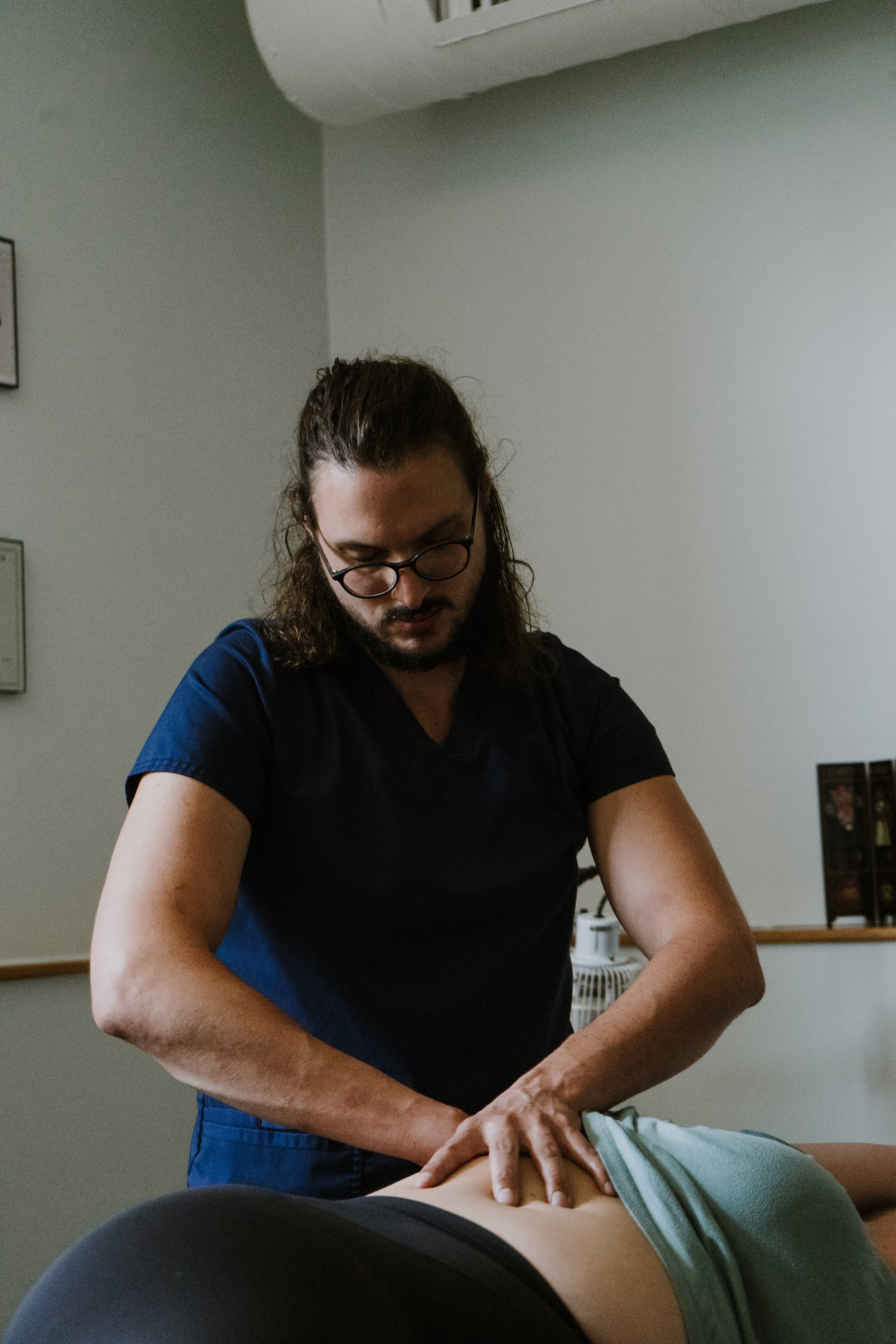
Caspian: “During the session, you're able to do a body scan and be aware of where there might be some unconscious bracing patterns or holding patterns. I really love craniosacral as a time to practice being familiar with comfortable peace, slowness, or the subtle. If our larger culture says that being hypovigilant and stressed is safer because it's familiar and predictable, then this is practice time of getting more familiar with calm, or just the feeling of yourself.
I love the points of slowness and subtleness. Sometimes with healing, some people might need a big release but for other people, I don't want them to feel like they have to perform healing. I want them to actually heal. And sometimes it's the smallest thing.
I think maybe it was Resmaa Menakem, who was talking about, some of our family patterns are not going to completely heal in our lifetimes; sometimes we're gonna create a breath. We're really trying to just have that unconditional love space. You don't have to move the whole pattern right now. Just listening, seeing where you're at today and really trusting the small symbol of light touch. These small things can mean so much.”
Derrick: “We provide the opportunity for a reset. We induce a still point, invite the body back, and then evaluate the rhythm again. Has it improved? Is it still off? Do we repeat for another still point here, or do we use the fascia as a handle to reach deeply into the body and feel the source of this asynchronicity? We look for ways to bring comfort and support to that place, offering another point of stillness—another opportunity for deep reflection, insight, and time to complete our healing process.
The longer we can stay within these positions of stillness, the further back in time we can go, the deeper truths we can uncover, and the closer to our true selves we can become.”
Interested in trying a Craniosacral Therapy session for yourself? You can book online here.To find out more about Craniosacral Therapy and other Minnesota Integrative Health Studio services, check out our website. Questions? Feel free to contact us, call (612.345.5648), at or stop by “the studio” on our corner of northeast Minneapolis.
Resources:
Vaught, W. Craniosacral therapy. Taking charge of your health and wellbeing. Retrieved on 1/6/2025 from https://www.takingcharge.csh.umn.edu/craniosacral-therapy
Biodynamic Craniosacral Association of North America. https://www.craniosacraltherapy.org/what-is-bcst-
Upledger Institue International. https://www.upledger.com/
MN Integrative Health Studio. Craniosacral therapy. https://www.mnintegrative.com/craniosacral
Ceballos-Laita, L., Ernst, E., Carrasco-Uribarren, A., Cabanillas-Barea, S., Esteban-Pérez, J., & Jiménez-del-Barrio, S. (2024). Is Craniosacral Therapy Effective? A Systematic Review and Meta-Analysis. Healthcare, 12(6), 679. https://doi.org/10.3390/healthcare12060679 https://www.mdpi.com/2227-9032/12/6/679
Upledger, J.E. (1995) DO, OMM. Research and observations that support the existence of a craniosacral system. https://www.iahe.com/storage/docs/articles/Article__-_CranioSacral_Therapy_Research.pdf
Upledger Institute. Resources. https://www.upledger.com/resources/articles
Jäkel, A., von Hauenschild, P. (2012). A systematic review to evaluate the clinical benefits of craniosacral therapy. Complementary Therapies in Medicine. Volume 20, Issue 6. Pages 456-465.ISSN 0965-2299.https://doi.org/10.1016/j.ctim.2012.07.009. https://www.sciencedirect.com/science/article/abs/pii/S096522991200115X?via%3Dihub
Haller H, Lauche R, Sundberg T, Dobos G, Cramer H. Craniosacral therapy for chronic pain: a systematic review and meta-analysis of randomized controlled trials. BMC Musculoskelet Disord. 2019 Dec 31;21(1):1. doi: 10.1186/s12891-019-3017-y. PMID: 31892357; PMCID: PMC6937867.https://pubmed.ncbi.nlm.nih.gov/31892357/
Craniosacral Therapy Association. Resources. Retrieved on 1/6/25 from https://www.craniosacral.co.uk/resources/research-studies/
Raffo, S. (2020). aligning the relational field: a love story about retelling the creation of craniosacral therapy (and a lot of other touch-based bodywork as well) https://www.susanraffo.com/blog/aligning-the-relational-field-a-love-story-about-retelling-the-creation-of-craniosacral-therapy-and-a-lot-of-other-touch-based-bodywork-as-well
https://wevikings.com/articles/bifrost/
https://www.britannica.com/topic/Yggdrasill
The DO. (2024). Timeline: A breakdown of the history of osteopathic medicine. https://thedo.osteopathic.org/2024/06/timeline-a-breakdown-of-the-history-of-osteopathic-medicine/?_gl=1*1e143rs*_ga*OTkxMDU4Njc3LjE3Njc2NTk0MjA.*_ga_Z1NR3MSC4E*czE3Njc2NTk0MTkkbzEkZzEkdDE3Njc2NTk1OTYkajMxJGwwJGgw
Cleveland Clinic. (2025). Cerebrospinal fluid. https://my.clevelandclinic.org/health/body/csf-cerebrospinal-fluid