TCM and Acupuncture for Stroke and Other Neurological Conditions: Said and Larissa’s Story

MIHS co-owners Said Isayed TCMD and Larissa Vados LAc, PhD
Reiki, Energy Work, & Coaching
Imagine a world where acupuncture, herbs, and Traditional Chinese Medicine (TCM) are available to everyone, at the highest levels of care.
In this world, acupuncture is not only available at specialty clinics like MN Integrative Health Studio, or through a referral to a small department in a major hospital system. Instead, TCM is embedded into every aspect of the health care system itself. A person suffering from a time-sensitive, life-threatening, and disabling medical crisis–like a stroke–benefits from the best of life-saving allopathic medical interventions…and then immediately begins a holistic rehabilitation program incorporating the best of modern neurology alongside time-tested, evidence-based TCM practices for optimal results.
This scenario may sound like mere fantasy to those of us trapped in the dizzying nightmare of copays, deductibles, and one-diagnosis-from-bankruptcy precarity that is the U.S. healthcare system. After all, the United States spends more money on health care than any other high-income nation in the world, while producing some of the poorest health outcomes.
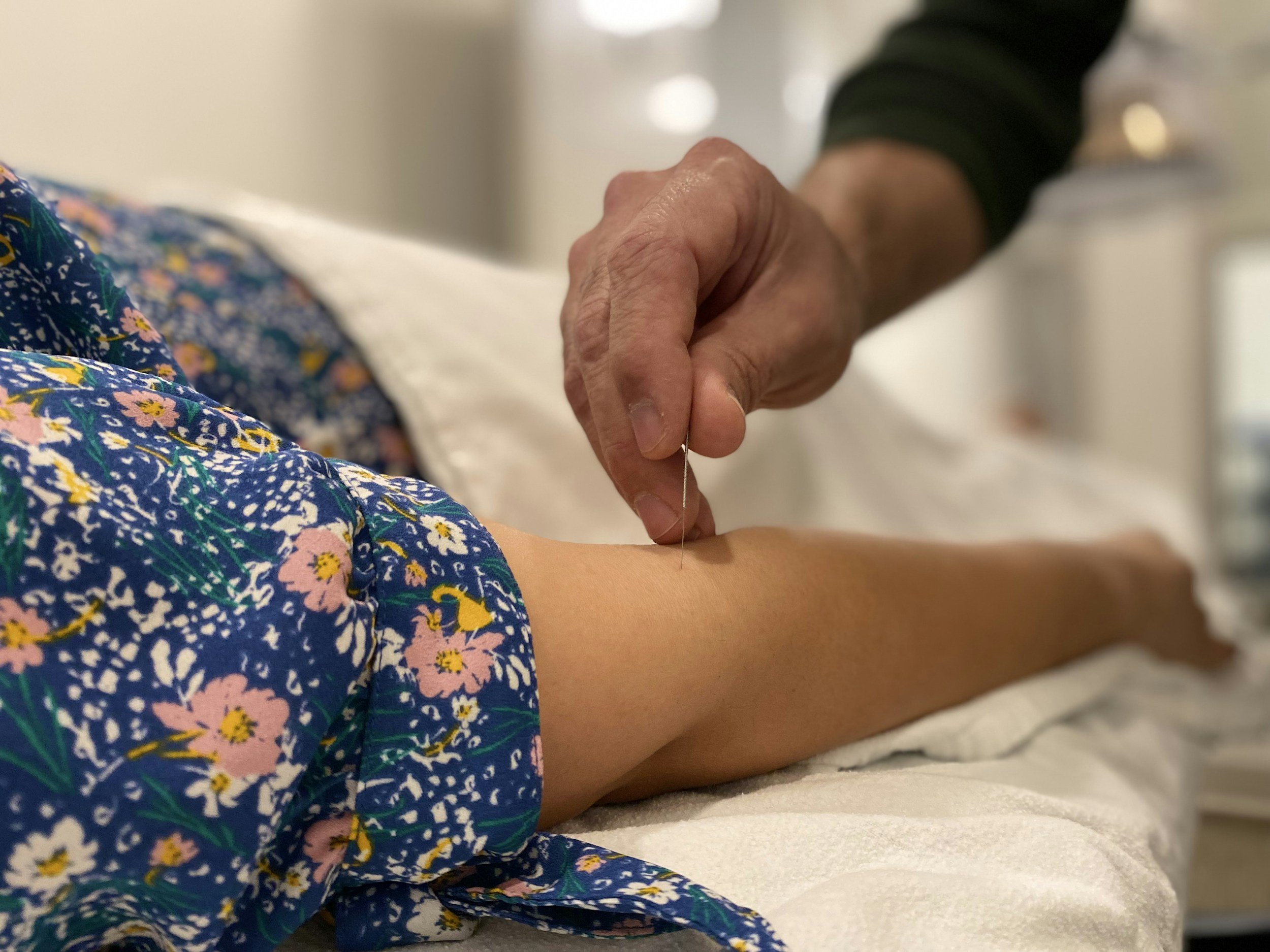
But across the world in Tianjin, China, this sort of cutting edge, seamlessly integrative care is reality.
At Tianjin University of Traditional Chinese Medicine (TUTCM), where MIHS co-owners Said Isayed and Larissa Vados studied TCM, integration of TCM and conventional medicine is the standard of care. In fact, it was here at Tianjin that Said and Larissa met, and developed their shared passion and unique expertise in treating patients recovering from stroke and other neurological conditions.
Tianjin University of Traditional Chinese Medicine and First Teaching Hospital
The First Teaching Hospital of Tianjin University of Traditional Chinese Medicine (TUTCM) is renowned for its stroke recovery outcomes. A medical tourism destination for patients around the world, over 2,000 people receive acupuncture every day at the hospital. Both Said and Larissa completed advanced studies in TCM at TUTCM, gaining valuable experience in the use of TCM practices like acupuncture, cupping, tuina, and herbal medicine in the treatment of stroke.
The First Teaching Hospital of TUTCM is the focus of 9,000 Needles, a documentary telling the remarkable story of stroke survivor Devin Dearth. Denied coverage for ongoing stroke rehabilitation by his insurance company, Dearth and his family traveled from their home in rural Kentucky all the way to Tianjin to take a chance on TCM. 9,000 Needles documents the outstanding results Dearth achieved after months of treatment at Tianjin. Watch 9,000 Needles here. The lead doctor in the stroke recovery program, Dr. Shi Xuemin? Said and Larissa studied and trained directly with him.
Deciding to Study in China
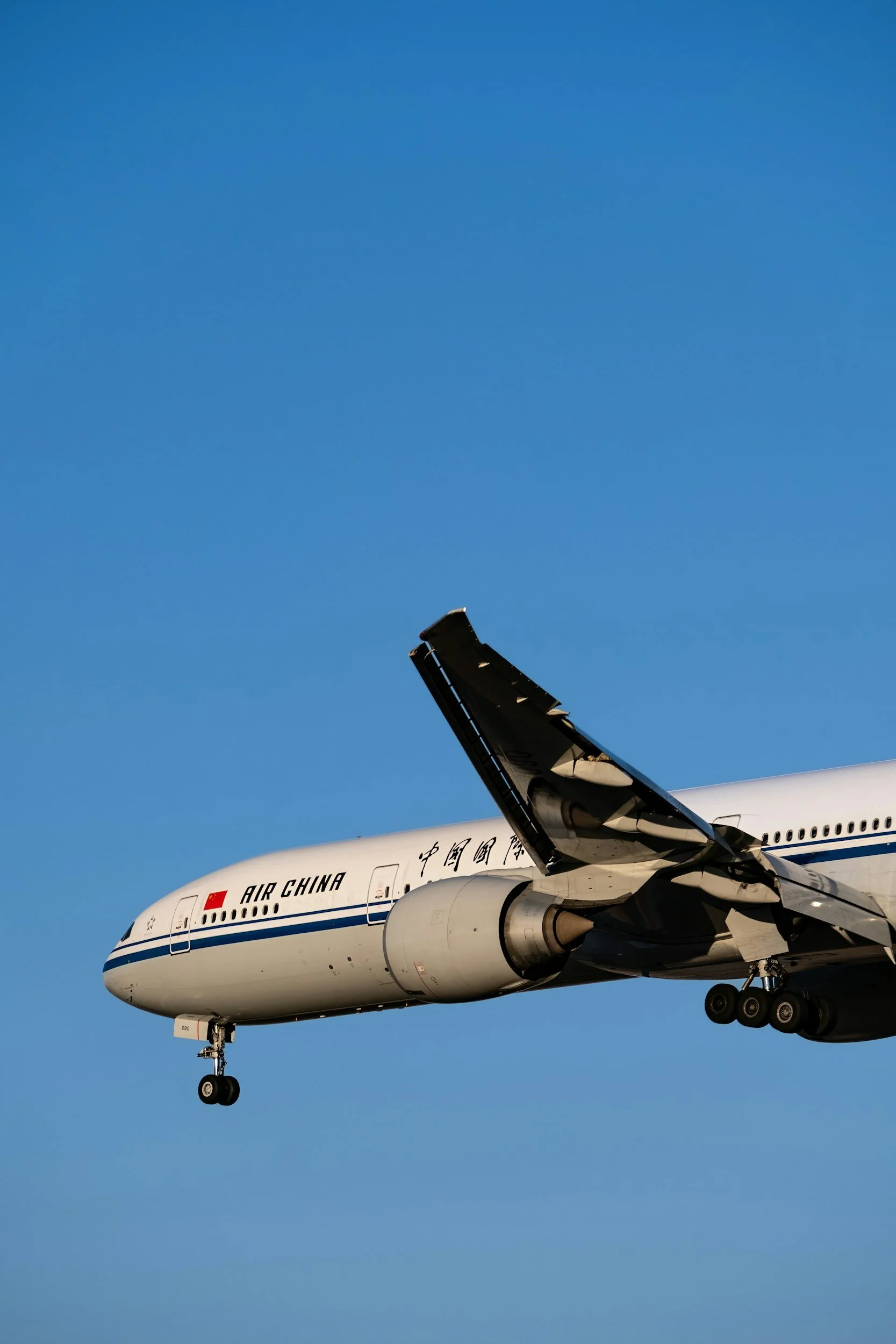
Today, Said and Larissa share a home, a family, and are co-owners of MN Integrative Health Studio. But back in 2011, they were a world apart—literally. How did it come to be that Said from Hebron, Palestine and Larissa from Minnesota would find each other in Tianjin, China?
Said
Said grew up in an herb and spice shop that his family founded in Jerusalem and has run continuously since the 1800s—he’s a 5th generation herbalist. Said says his family encouraged him to study in China, where the system of herbal medicine has been well documented over millennia. If you want to learn herbalism and healing, they reasoned, there is simply no better way than to study Traditional Chinese Medicine where it originated.
Read more about Said’s story in our article Meet Said.
Larissa
In 2011, Larissa was studying acupuncture at Northwestern Health Sciences University (NWHSU) in Minnesota, where several of her professors were from Tianjin. From them, she learned about a unique model of stroke recovery offered at Tianjin University of Traditional Chinese Medicine. Larissa practiced the Tianjin-based stroke acupuncture protocol for two semesters while working with people recovering from stroke and other neurological conditions at Courage Kenney in Golden Valley, MN.
Then she had the opportunity to visit TUTCM for two weeks as a student–an opportunity that would shape her destiny. Larissa explains,
“It was never in my head that I wanted to spend time studying in China, even though that's where this medicine is from…
…but I decided to go on this trip, and it just changed my whole life. The whole way home, I actually cried, I wasn’t ready to leave. I just felt it so strong, ‘I will come back here.’ It was such an amazing experience.
It wasn’t just learning about stroke treatment, but that was a huge part of it. It was seeing how different it is there, how it's just fully blended, you know? Traditional and modern medicine together, in the hospital.”
After graduation from the NWHSU acupuncture program, Larissa received a scholarship and was on her way back to Tianjin—this time to complete a 3-year PhD program.
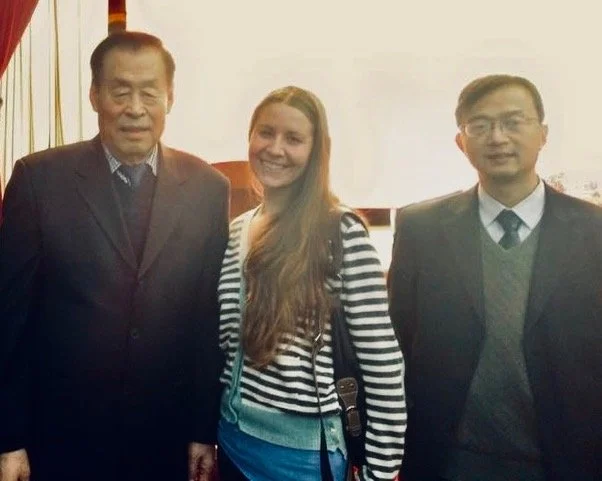
Larissa with Dr. Shi Xuemin and Dr. Wang Shu
Learning to Treat Stroke in Tianjin
Said’s Traditional Chinese Medicine Doctor training
Said’s graduation from TUTCM
In Tianjin, Said studied to become a Traditional Chinese Medicine Doctor (TCMD). Said explains that in China, TCM students are essentially training to become MDs, learning the same curriculum as medical doctors. While Said is not a licensed medical doctor in the U.S., had he stayed in China, he says he would be working in a hospital doing what TCMDs in China do. This includes medical examinations, medication management, ordering imaging and labs, alongside TCM practices in the hospital setting like acupuncture, cupping, tuina, and herbal remedies. Said explains,
“the whole system is TCM and Western medicine, integrated. The same doctors are good on both sides, they've trained in both.”
Said worked directly under TCMDs, learning the Tianjin stroke recovery protocols and seeing all that is possible when TCM is fully integrated with standard medical care. He says the system at Tianjin First Hospital,
“...really eliminates a lot of the bureaucracy in the healthcare system, because you get everything under one roof. And you don't have to wait for referrals. Most practitioners are able to treat with acupuncture, with herbs, give people physical therapy and occupational therapy and speech therapy. It's all under one roof, and they can utilize whatever tools they need for the patient.
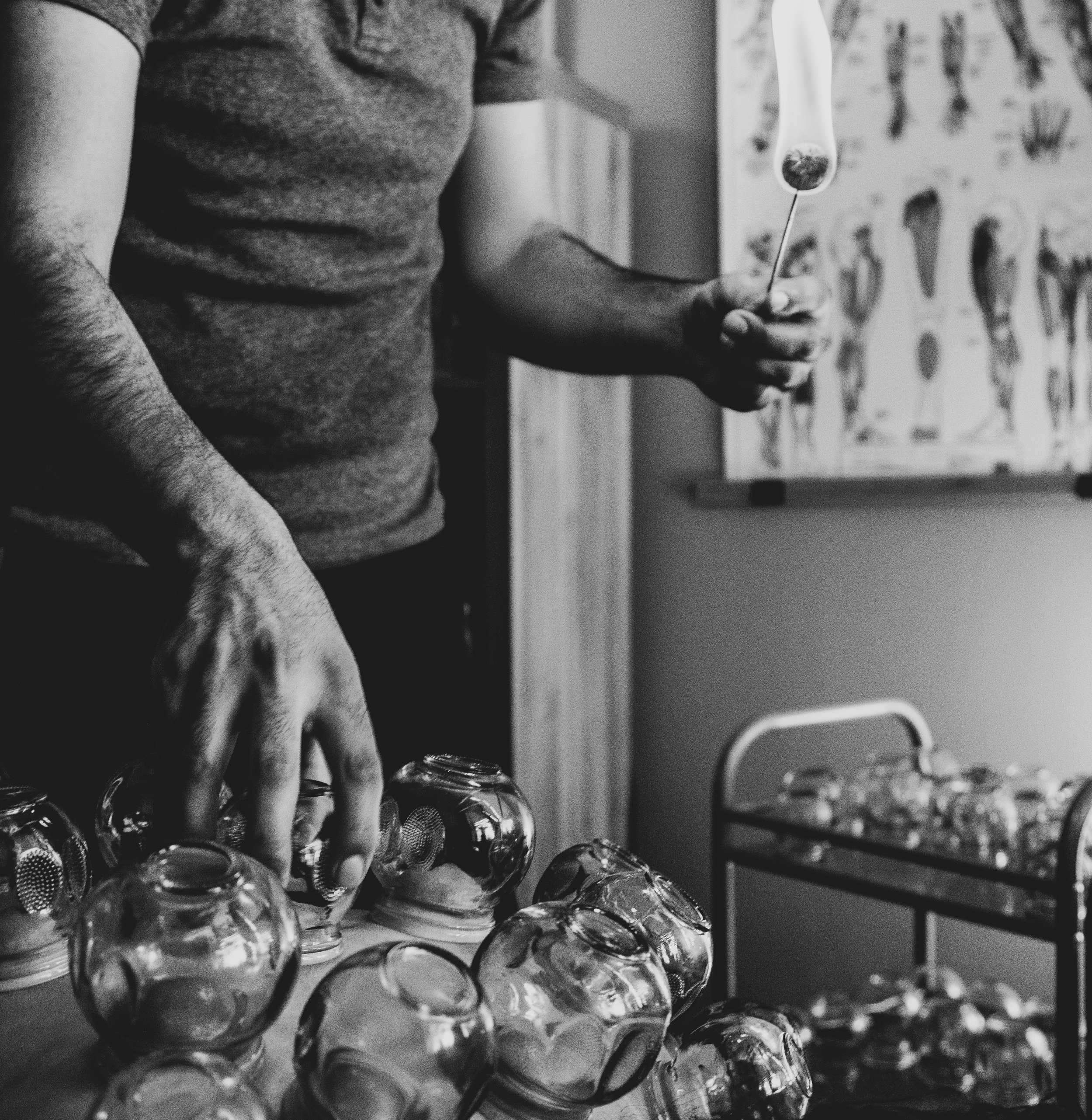
Said performs fire cupping
From all my experience there, not just stroke, but specifically stroke, you would see a patient coming in, and usually, [TCM] is the first line of treatment, not the last line of treatment.
They get admitted to the same Chinese medicine hospital, and in inpatient they start them on acupuncture right away, before any spasticity or other stroke effects set in. You're not gonna have to wait to see a new neurologist, and then after that, get a referral to PT and OT and whatever. They utilize cupping, tuina, qigong, it's all one system. It's all gonna be done under one roof. So, it saves people time. And you get better results the faster you go on it, instead of waiting.”
Larissa’s PhD in Traditional Chinese Medicine
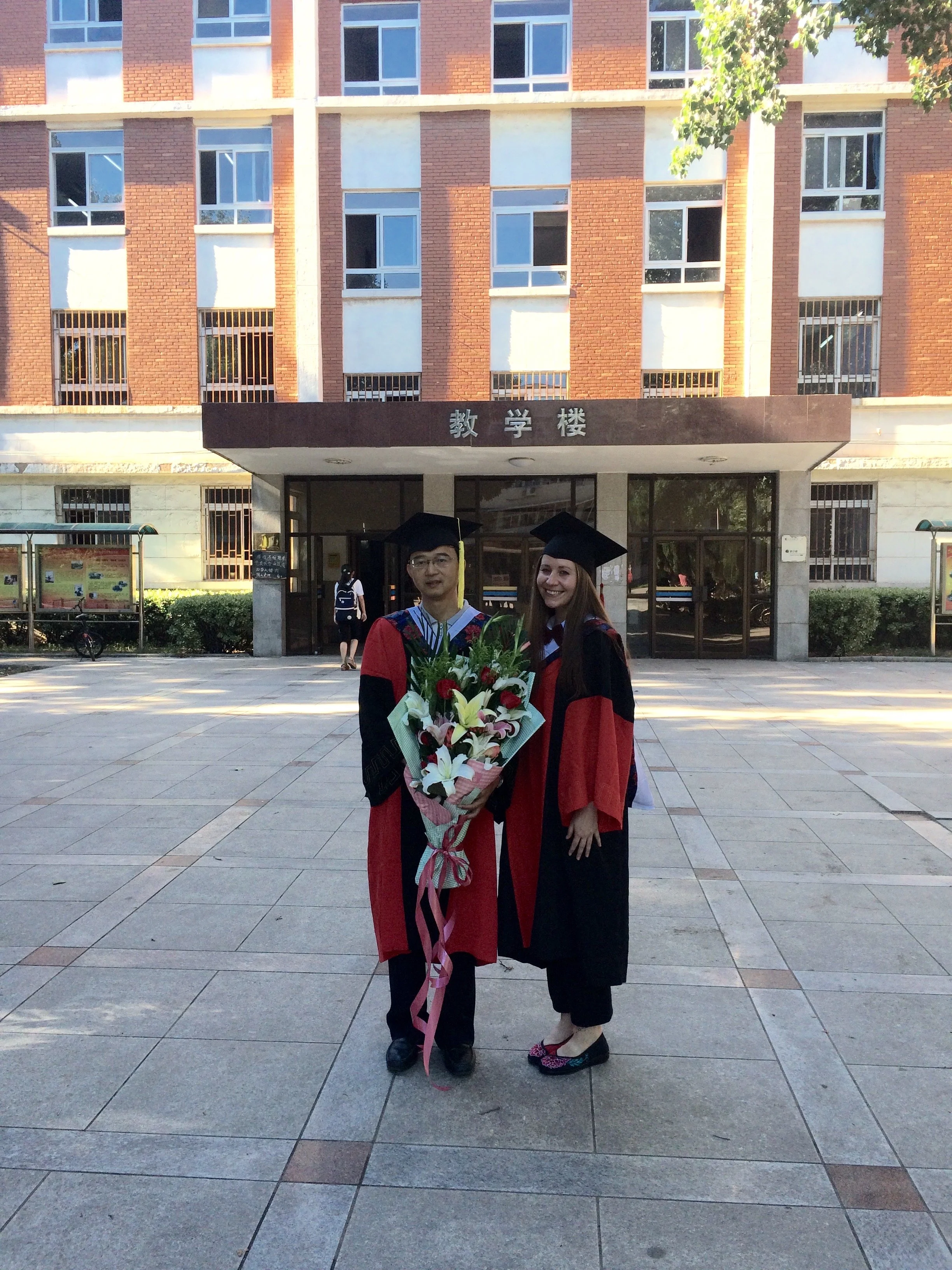
Larissa with her tutor Dr. Wang Shu, then-VP of First Teaching Hospital of TUTCM
Meanwhile, Larissa was completing a PhD in TCM focused on the integration of TCM and Physical Therapy (PT) in stroke recovery. Larissa says in the early stages of recruitment for her research, she learned just how different the cultural understandings of TCM and PT were in Tianjin, China vs. the United States.
“The hardest part about my research was I couldn't find patients that wanted to do physical therapy. The majority preferred to just do acupuncture and TCM alongside standard care. And part of that had to do with insurance coverage; insurance there will cover acupuncture, but in a lot of cases it did not actually cover PT, that was an extra expense. And so it's interesting because [in the U.S.] it is the opposite.
In the U.S., people don't ‘believe’ in acupuncture, but over there the patients didn’t ‘believe’ in physical therapy enough to want to spend the extra money on it, you know? So I actually had a really hard time recruiting patients that would agree to do physical therapy.
But even the physical therapy is, from my experience in Tianjin–I'm not saying it's this way everywhere, because I only focused on that hospital–is vastly different. It's a lot of hands on, it’s a lot of body work. They do utilize technology and exercise machines and similar methods that we see here too, but it's also a lot of hands-on manipulation, tuina and body work as well, which was really interesting. I know some PTs in the U.S. will do hands-on bodywork as well, but from what I have seen here during my internships and working in hospitals, it is not the norm.”
TCM, Stroke Recovery, and the Brain
Globally, stroke is the second leading cause of death, and the third leading cause of death and disability among non-communicable diseases. According to the World Health Organization, in the past 20 years the lifetime risk of stroke worldwide has gone up by 50%.
In a stroke, blood flow to the brain is interrupted, which can brain damage, disability, and sometimes death. After a stroke, for many people, daily life is upended. Individuals may experience symptoms such as weakness, paralysis, spasticity, speech or swallowing issues, mental and emotional health challenges, and more.
Many stroke survivors must adapt to a life with restrictions in activities of daily living and will often depend on other people’s continuous support to survive, explains Larissa. This can impose a great burden on the patient, patient’s family, community and the health care system. In the United States and other Western countries, physical therapy, speech therapy, and occupational therapy are commonly used for stroke rehabilitation.
Larissa shares that by contrast, in China acupuncture is one of the main treatments of stroke-related disabilities and symptoms. Acupuncture, along with other TCM practices, is commonly used as part of a stroke rehabilitation program in TCM hospitals like the First Teaching Hospital of Tianjin University to improve motor function, sensation, speech and other neurological functions in patients with stroke.
Larissa explains that because it is a relatively simple, inexpensive and safe treatment compared to other conventional interventions, acupuncture has been well accepted and widely used by Chinese patients.
Acupuncture for Stroke Symptoms
TCM is rooted in its own evidence base of thousands of years of painstaking observation and documentation. Increasingly, this system of medicine also boasts a robust body of peer-reviewed scientific “Western” research supporting its efficacy and mechanisms of action.
Research suggests that acupuncture may help the brain rewire itself by forming new connections and neural pathways, also known as neuroplasticity. Acupuncture has been shown to activate and strengthen networks in the brain involved in movement, language and cognition, as well as promote neurogenesis (creation of new neurons/nerve cells), and improve synaptic plasticity (the connections/communication between neurons). (Qin, et al., 2022, Zhang, et al., 2021.)

Acupuncture may improve blood flow to the brain, which improves oxygen and nutrient delivery to injured tissues. There has also been research showing acupuncture can reduce inflammation, decrease neuron death, and protect surrounding brain tissue. Acupuncture also influences brain chemistry including neurotransmitters such as dopamine and serotonin, as well as BDNF (brain-derived neurotrophic factor) which supports neuron survival and growth. (Chavez, et al., 2017.)
Timing may be a critical factor in patient outcomes, argue Qin, et al. in a 2022 literature review. Their findings suggest that the optimal window for acupuncture is within the first 48 hours post-stroke, with a “significant validity period” of 15 days. The researchers conclude ,“in addition to giving acupuncture as early as possible, a longer acupuncture period can be implemented to promote neuroplasticity and improve the sequelae of ischemic stroke.” (Qin et al, 2022)
This growing body of research provides empirical evidence that supports acupuncture as an effective treatment for stroke rehabilitation, alongside standard medical care.
The Brain in TCM
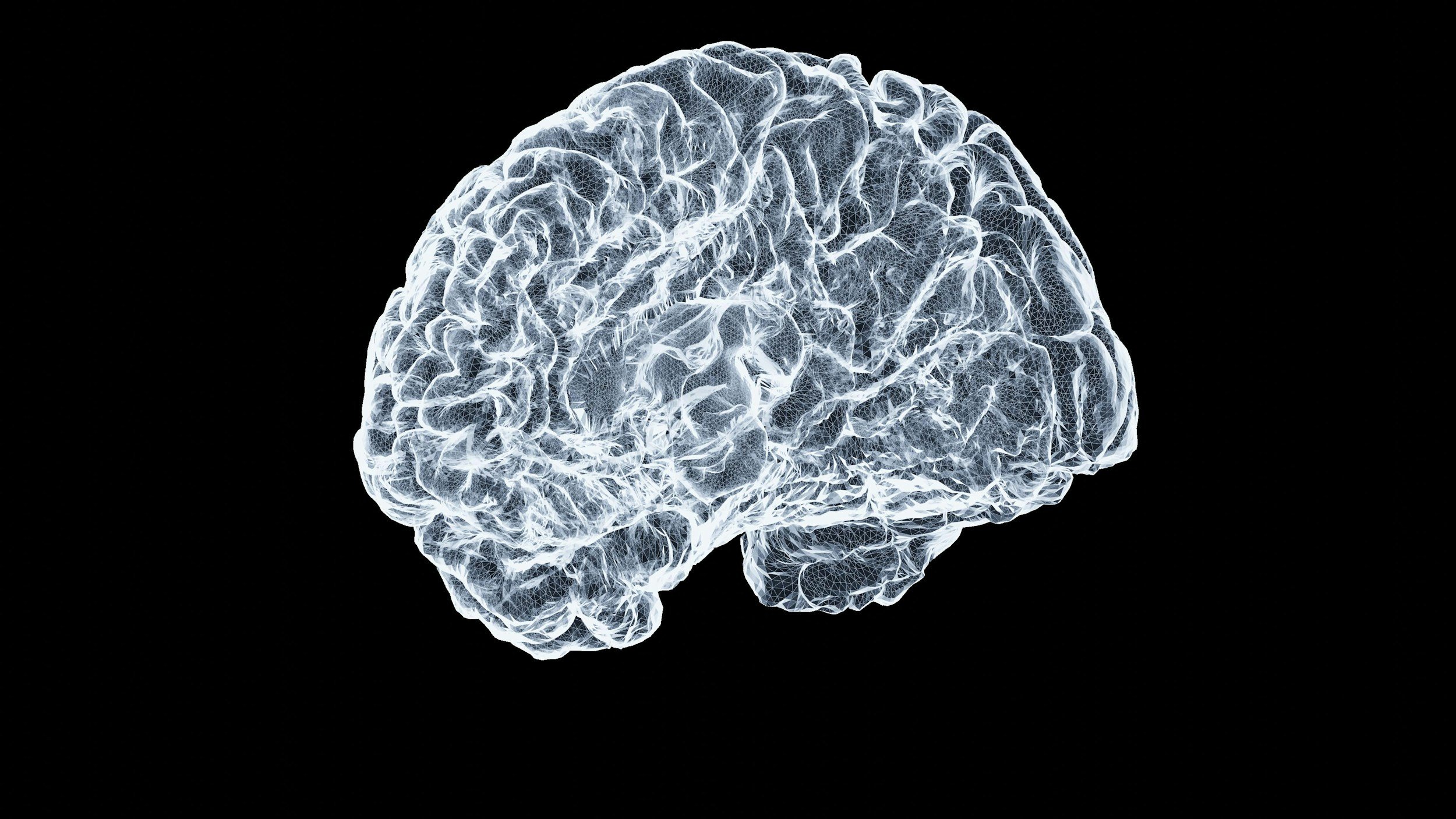
Traditional Chinese Medicine has its own system of organs and their significance, based on its unique cosmology. While TCM organs do overlap with Western medical understandings, there are also distinct differences. Notably, the brain is not considered an organ in TCM. Said notes that TCM’s view of the brain accounts for some of the unique effectiveness of practices he learned in Tianjin, and now shares with his patients in the U.S.
Said says,
“My theory…is that Chinese Medicine did not think about the brain as an organ, because the brain could be used in so many different ways.
Treating stroke patients, and sometimes you have brain damage, you cannot do anything about it, but…another way to approach it is, like, how do you use other parts of your brain to teach yourself to do the same movement in a different way than the usual? Neural pathways.
It's like, you learn how to walk one way, and that's how you take it for granted. You never analyze it, you never learn how to walk again, you learn to walk one time. And then all of a sudden, you're a 70-year-old, and you don't know how to walk. You just try the same way you've always been, that you learned, or you took it for granted. And it's not firing anymore.
So trying to think, like, this is the only way to learn how to walk is wrong. What you want to do is to teach the body how to do it in a different way. To use a different set of muscles, or a different set of sensation to get some function back. Instead of thinking the only way to do it is the old way of doing it.
For example, we'd get, like, a rotary cuff injury, and I've seen a few cases in China where you need a surgery, you won't be able to, like, technically lift your shoulder, because you have no support. But then, there's a lot of teachers there who help people discover other muscles that could do the same function, instead of being stuck with the same old way.
So we have a lot of muscles in the body, and a lot of neural pathways that we actually don't know how to use, because we've never learned to. And it's kind of, like, where this stuff taps in. It's like reteaching or relearning how to do stuff in many different ways, not just in one way.
With learning martial arts, for example, you learn that for this one movement, there are so many ways that you could use different muscles to do the same movement. These doctors in China are very good at analyzing, helping people find a different way to do the same old stuff. It's kind of like formatting and reprogramming, in a sense. So really working with the brain and the ways that the brain has the capacity to learn new things. You see a lot of cases [in Tianjin] where basically someone is not supposed to be functioning, but they still function, because they'll just learn to do it.”
Said explains that he’s used these experiences to support patients in the United States, not only with stroke recovery but with a wide range of neurological conditions. He says this holistic approach also takes into account the emotional and mental dimensions of neurological recovery and rehabilitation.
“The worst thing that could happen to a stroke patient is them giving up on themselves. To get depressed, and not keep moving.But if you're still seeing results, and you're still learning new things, which is a very healthy thing for the mind. It's always giving it new things to learn.So a lot of people, when they get a stroke, instead of just care about their own experience, they also make sure they teach others about this, make it easier for others to understand. To take the fear and the unknown and all the darkness out of it.”
Leaving Tianjin
Both Said and Larissa were profoundly impacted by their experiences in Tianjin, personally and professionally. Their work at the First Teaching Hospital of TUTCM has influenced their TCM practice in the years since they left–including their vision to create MN Integrative Health Studio itself.
Said
“You know, being in Palestine, for example, the medical system was not…advanced, [it was] pretty local stuff. There was no acupuncture. Stroke patients really struggle with [accessing] traditional care, like physical therapy, the usual stuff. So, when I would go home, I would treat stroke patients. I would go for a month or so and I would treat people a couple times a week, and just see the amount of relief that people get from simply a few needles. This can allow the body to let go, they can flex their arms, or whatever. It was huge for a lot of people, just to be able to do the simple things that they couldn't do before: like being able to swallow, or lift their tongue.”
Beyond the medicine itself that he learned in Tianjin, Said was also influenced by the way it was practiced.
“In an outpatient setting in China there's like 6 or 7 beds, or even 10 beds in a small room. And there's a doctor or two, and it's a teaching hospital, so maybe there’s 5 or 10 students there, depending on the teacher…the famous ones have, like an army behind them.
And most of the patients come daily, or 5 days a week. Which is kinda impossible to do here. Most of the patients have been coming in, so they know each other…there’s a sense of community. It's kind of like a zero privacy type of situation.
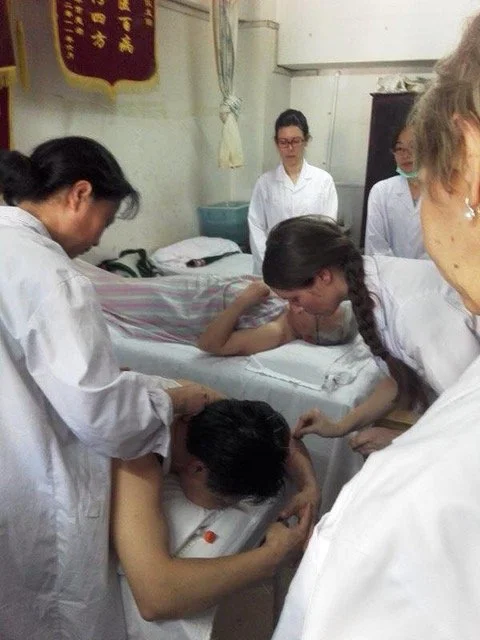
Larissa performing acupuncture at TUTCUM
The doctors see the progress, encourage people. It's very, like, a lot of motivational speeches. It’s that kind of atmosphere, not super sterile, how you’d think. It's just like a normal low-key place, but in a hospital.
It's more what you want it to be, for people to feel comfortable and safe. Even though they might not have that fancy of equipment or setup, people feel safe, and they learn from each other's experience. It’s a support group inside of medical treatment.
Maybe a doctor that knows a little bit more about tuina and cupping from the next room, you just get them, like ‘hey, what do you think?’ It's pretty seamless, it's not about, like, every time you want to get someone, you have to code and bill insurance for it, you know, or make it an actual appointment. Because everyone works under one roof. It's… the goal is to give the patient the best outcome. And not to make money. There's no, like, my patient, or your patient. They always take pride in each other's work. If one is successful, it's not just me, it's the whole team.”
After moving to the United States, Said saw a huge contrast in how stroke patients are treated.
“When I moved here, and I saw how…the U.S. is considered very advanced in medicine, but…to get a person from the ER, to get to see a specialist and get rehab, it takes months, where you’ve already lost the golden window to get best results for stroke patients.”
Rather than pessimism, Said sees his experience in Tianjin as a motivation to help improve the care people receive here in the U.S.:
“You wish things are a little bit different, but here we are. So it's our job to educate people, or maybe influence people to do something like this. Connect to a hospital or rehab center where you can teach other people to do the same work as well.”
Larissa
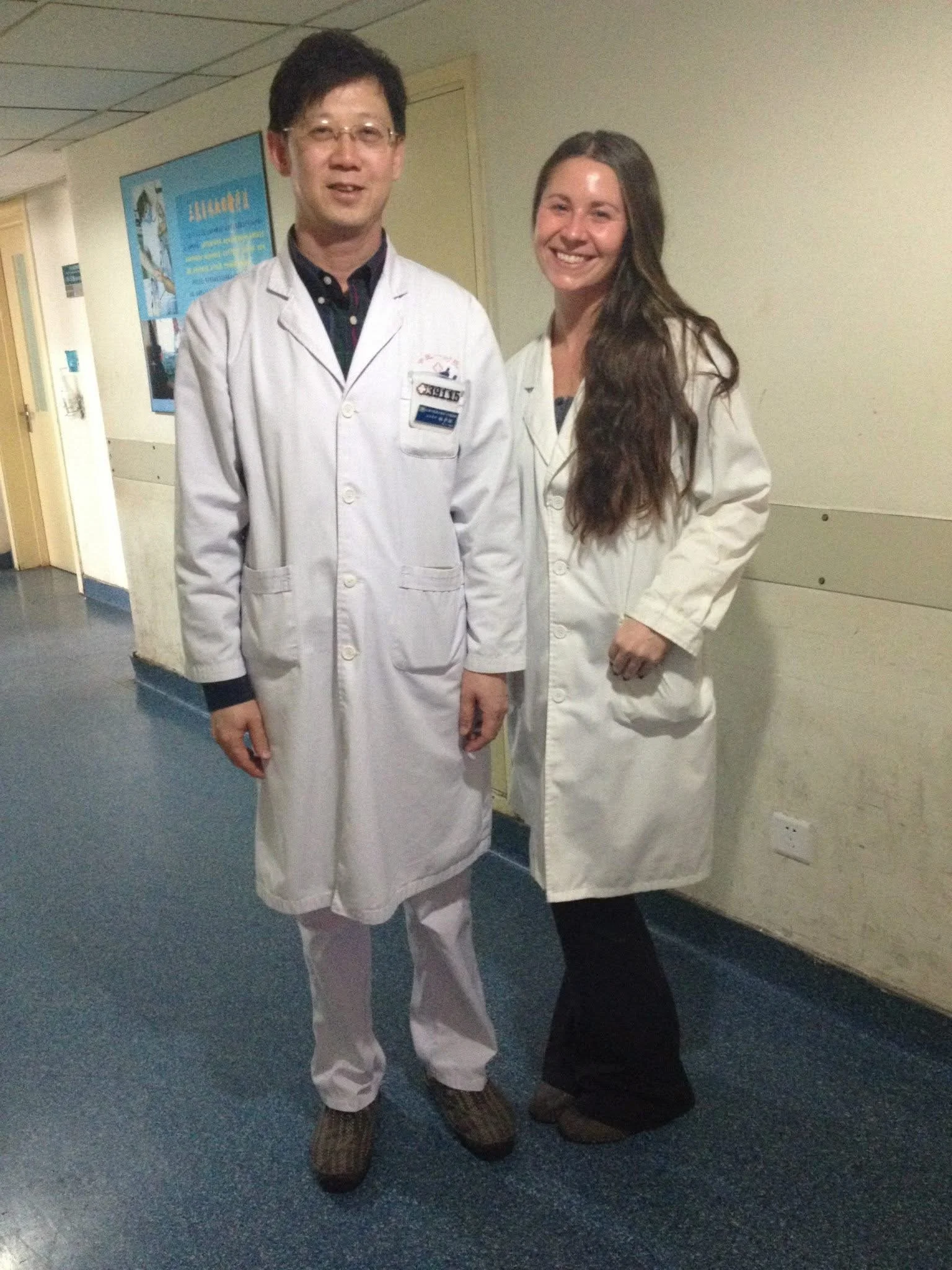
Larissa with Dr. Du YuZheng
Larissa’s experiences–first at Courage Kenney and later at the First Teaching Hospital of Tianjin University of Traditional Chinese Medicine–have formed her interest and expertise in treating people with stroke and neurological conditions. Larissa has had the opportunity to share her unique skillset in inpatient and outpatient hospital systems, as well as at MIHS, with some patients with stroke and other neurological conditions.
A Pilates instructor, Larissa also has specialized neurological Pilates training throughThe Neuro Studio. This specialization means she is qualified to use Pilates to support people with neurological conditions and symptoms, including stroke, spasticity, ataxia, tremors, and neuromuscular connection.

Like Said, Larissa acknowledges the U.S. health care system represents a tremendous loss in opportunity for outcomes in stroke and neurological recovery. Ideally, says Larissa, TCM programs would be more widely available and deeply integrated into inpatient and outpatient facilities that treat stroke and other neurological conditions. She also points to the need for research. “Because those two things go hand in hand; if we get more research out there that holds up to their gold standard, we can improve access generally.”
To effect change, Larissa is committed to educating fellow TCM practitioners, as well as other health care providers, to promote awareness of how valuable TCM can be for stroke recovery. This spring, she presented to fellow acupuncturists at Northwestern’s Acupuncture and Chinese Medicine (Great River) Symposium about Dr. Shi Xuemin’s world-renowned stroke protocol.
She adds that education of the public is essential:
“We need to educate people more so they know to seek care, even when they're no longer inpatient. So they know, ‘hey, I can start getting acupuncture alongside my physical therapy and the other things I'm doing, and that's going to help my progression.’
And I would love to personally see more stroke patients here at MIHS, and educate people so they are aware that TCM is a service that they could absolutely be utilizing to help their recovery.”
Among patients she’s already seen at MIHS for stroke recovery, Larissa observes promising results. In the words of a patient review:
“8 years ago, I experienced a hemorrhagic stroke that left me partially paralyzed, unable to run and with limited use of my hand, even my fingers. After years of trying acupuncture at various places, I was on the brink of losing hope as the treatments seemed futile against what I assumed was permanent brain damage. I was on the verge of giving up entirely until I discovered Minnesota Integrative Health two and a half months ago.
Deciding to give it a shot, I underwent acupuncture sessions twice a week. Just last week, something remarkable happened - I noticed a slight twitch in my fingers. Initially, I dismissed it as an optical illusion, but it persisted, occurring more frequently, almost numerous times a day. Though subtle, this twitch signifies progress, a positive impact that has reignited my hope in my recovery journey. I owe a debt of gratitude to the acupuncturists here, particularly Larissa, Said, and Lawrence.
Moreover, the cost for community acupuncture here is reasonable, unlike the exorbitant fees elsewhere. I encourage anyone hesitant due to typical acupuncture costs to give this place a chance. I cannot express enough gratitude for their expertise, and I only wish I had found them sooner.”
(shared with permission)

How to recognize symptoms of a stroke?
Use the acronym BE FAST:
Balance loss
Eye (vision) changes
Facial drooping
Arm weakness
Speech difficulties
Time to call 911
Other symptoms can include: numbness on one side of the body, sudden confusion, difficulty walking, dizziness, or a sudden and severe headache. It is important to note that nearly 60% of stroke deaths occur in women–and women are more likely to present with atypical stroke symptoms. These atypical symptoms can include nausea, fatigue, and a racing heart and/or chest pain.
If you experience any of these symptoms, call 911 immediately and go to the Emergency Room. Early treatment leads to higher survival rates as well as lower rates of long term disability. Every minute counts!
Learn more at the American Stroke Association website.
To find out more about Minnesota Integrative Health Studio services, check out our website. You can book online here. Questions? Feel free to contact us, call (612.345.5648), at or stop by “the studio” on our corner of northeast Minneapolis.
https://www.stroke.org/en/about-the-american-stroke-association/stroke-awareness-month
9,000 Needles https://youtu.be/X970_WTHX-0?si=Op-FQrwVrY0aqLkJ
https://www.who.int/news-room/fact-sheets/detail/stroke
https://pmc.ncbi.nlm.nih.gov/articles/PMC11786524/
https://www.cdc.gov/stroke/about/index.html
https://www.cdc.gov/stroke/treatment/index.html
https://socialsciencejournal.net/assets/archives/2025/vol7issue1/7009.pdf
Yang ZX, Xie JH, Liu DD. Xingnao Kaiqiao needling method for acute ischemic stroke: a meta-analysis of safety and efficacy. Neural Regen Res. 2017 Aug;12(8):1308-1314.
Qin S, Zhang Z, Zhao Y, Liu J, Qiu J, Gong Y, Fan W, Guo Y, Guo Y, Xu Z, Guo Y. The impact of acupuncture on neuroplasticity after ischemic stroke: a literature review and perspectives. Front Cell Neurosci. 2022 Nov 10;16:817732. doi: 10.3389/fncel.2022.817732. PMID: 36439200; PMCID: PMC9685811. https://pmc.ncbi.nlm.nih.gov/articles/PMC9685811/?utm_source=chatgpt.com
Zhang J, Lu C, Wu X, Nie D, Yu H. Neuroplasticity of Acupuncture for Stroke: An Evidence-Based Review of MRI. Neural Plast. 2021 Aug 19;2021:2662585. doi: 10.1155/2021/2662585. PMID: 34456996; PMCID: PMC8397547. https://pmc.ncbi.nlm.nih.gov/articles/PMC8397547/?utm_source=chatgpt.com
Chavez LM, Huang SS, MacDonald I, Lin JG, Lee YC, Chen YH. Mechanisms of Acupuncture Therapy in Ischemic Stroke Rehabilitation: A Literature Review of Basic Studies. Int J Mol Sci. 2017 Oct 28;18(11):2270. doi: 10.3390/ijms18112270. PMID: 29143805; PMCID: PMC5713240. https://pmc.ncbi.nlm.nih.gov/articles/PMC5713240/?utm_source=chatgpt.com
https://www.stroke.org/en/about-the-american-stroke-association/stroke-awareness-month
https://www.stroke.org/en/about-stroke/effects-of-stroke
https://www.stroke.org/en/about-stroke/stroke-symptoms
https://journals.sagepub.com/doi/10.1177/17474930241308142
https://www.mayoclinic.org/diseases-conditions/stroke/symptoms-causes/syc-20350113