Meet Shawn: MIHS Manager Speaks on LGBTQIA+ Health, Men’s Health, and Patient-Centered Care
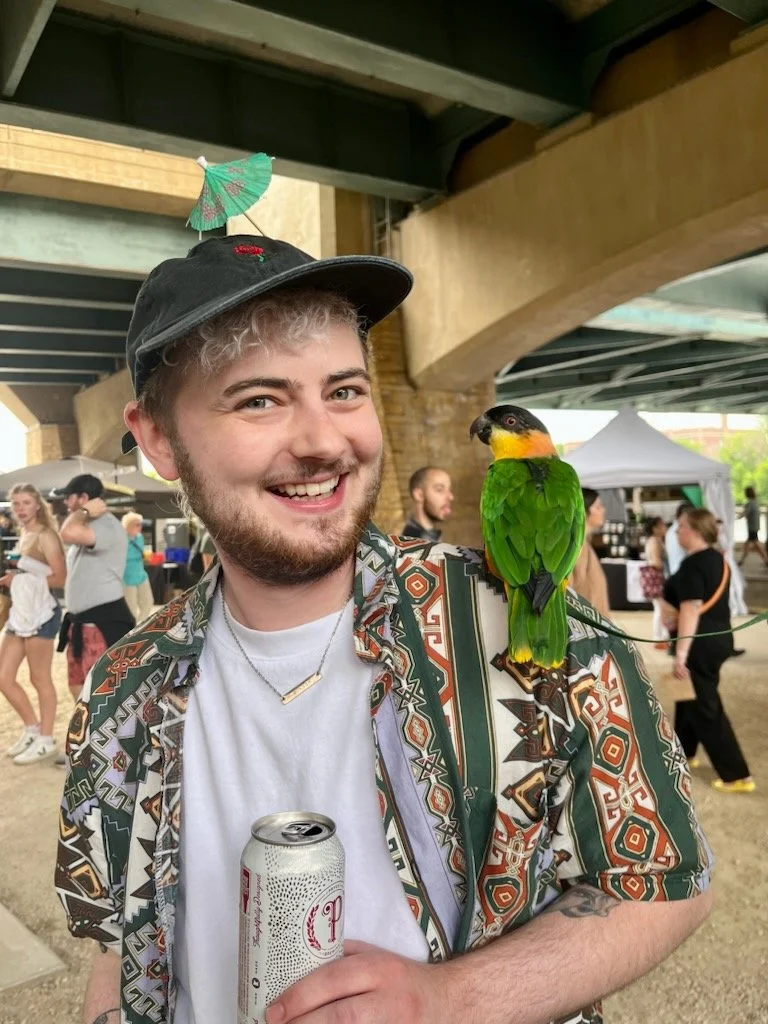
MN Integrative Health Studio Clinic Manager Shawn Wroblewski (L) out on the town with a beautiful bird (R)
Reiki, Energy Work, & Coaching
June is Pride month, of course. But did you know that June is also Men’s Health month?
For our June 2026 article, we are proud to introduce MN Integrative Health Studio’s new clinic manager Shawn Wroblewski. Shawn shares some insights about men’s health, queer/LGBTQIA+ health, and where the two intersect. He also shares his thoughts about how creating an inclusive space at MIHS can provide a welcoming, patient-centered care experience for every person that walks through our doors.
Men’s Health
Shawn: “I believe men, especially queer men, are in a very odd place when it comes to health care of any kind. Men are the most represented when it comes to medical practice studies, almost all medical knowledge we have is based off of studies of cis white men, but yet they oftentimes tend to be the people who are least likely to actually seek medical care for themselves.”
Many of us know the stereotype of the stoic man who refuses to see the doctor. You may even know a man or two (or let’s be honest, dozens) who fit this description. That man might even be you.
This stereotypical image is more than a generalization; it’s borne out by research, and has real consequences for people who identify as men in our society.
In a 2023 national survey on men’s health issues, Cleveland Clinic reports that 72% of men would rather do household chores than go to the doctor, and 44% do not get annual physicals. When men do seek health care, the survey results suggest they tend to be less honest with their providers.
Challenges for Men Seeking Health Care
Shawn: “Men often feel the pressure to be indestructible, oftentimes feel that they must be the provider at all moments…. I always hear jokes about how men can become babies when they are sick, but it makes a lot of sense to me as that is one moment, within their own home, where they can feel safe to be vulnerable and not judged. Men are oftentimes working in fields where taking time off is very frowned upon…going to the doctor is a big no-no because the doctor will tell them to take things easy, which is something that they have been conditioned to think means they are ‘bad men.’”
The reasons for these trends in men’s health are complex, structural, and cultural. A 2023 research paper cited “harmful masculine norms” as a major factor in the lagging life expectancy among men. The Cleveland Clinic survey also reported that 41% respondents said they were told as children that men don’t complain about health issues.
Among those who said they are not completely honest with their doctor, the top reasons given were embarrassment, discomfort, and fear of being judged.
Said Isayed, MIHS co-owner and TCMD says these statistics are consistent with his experience with his patients who identify as men:
“A lot of times when you’re trying to get information from men, they don’t want to give you information…like anything. They’re more stubborn, less likely to seek help or self-care, they only come when they’re actually hurting.”
Said says that “Men are less likely to come on their own, often their wives or partners introduce them.” He agrees that this has to do with cultural expectations, but also the fact that health education tends to be less geared toward men. “It’s like ‘men are tough’, but it’s also that women are more likely to spend money [on healthcare] so the industry is more geared toward women.”
What are the consequences of this reluctance among men to seek care? In 2021, JAMA reported a widening gap between the average lifespans of U.S. men and women, and in 2024 the CDC found that U.S. men live around five years less on average than women. While this lifespan gap persists across demographic differences, the outcomes are unevenly distributed. Black men experience even greater disparities in life expectancy compared to the U.S. national average, as do rural men.
These health disparities cut across many dimensions of health. According to the Men’s Health Network, men get heart disease ten years earlier, are more likely to experience injuries and chronic conditions, and are two to four times more likely to die by suicide.
Men’s Health for the Greater Good
Shawn: “[This is] an example of the destruction the patriarchy can do to a society as a whole and how it actively harms more than just women….We need men to go to therapy and go to the ER when they need to, when they get cut, break a bone, etc. …I think if we can, as a society, break this idea…and [encourage] getting help for the things you need as a human being, no matter your gender, we can have not just a healthier society, but a more well-rounded and safe one.”
The consequences of men’s health not only impact men themselves. The repercussions are felt by all the people—of all genders—that men interact with. Consider the burden of caregiving that falls on spouses, family members, and other loved ones when men’s health falters. Or the fact that men are disproportionately responsible for mass shootings, road rage, intimate partner violence, and other harmful behaviors.
Simply put, men’s physical, mental, and emotional health matters for all of us.
Men’s Health month has existed since 1994. But as men’s health continues to worsen in recent years, momentum is increasing to address improving health outcomes for men in the United States. Organizations like the Men’s Health Network and the American Institute for Boys and Men (AIBM) are focused on research and policy aimed at improving health outcomes for men and boys from all backgrounds. In 2025, the American Journal of Men’s Health published “A Window of Opportunity to Address the Critical Issue of U.S. Male Longevity and Disease Burden Gaps: A Call for U.S. Federal Oversight.”
While these gaps cut across socioeconomic and racial lines, the American Institute for Boys and Men emphasizes the particular burdens placed on working class men and Black men.
Men’s Health as a Specialty
Shawn: “I think for any man, queer or not, having a space where they are allowed to be comfortable without shame and allow themselves to get help is necessary.”
Said Isayed trained in Men’s Health as part of his Traditional Chinese Medicine Doctor program at the First Teaching Hospital of Tianjin University of Traditional Chinese Medicine (TUTCM) in Tianjin, China. Said says the Men’s Health model sets TUTCM apart from most care systems he’s seen in the United States. He explains, “there is a whole department for Men’s Health. A lot of places [in the U.S.], you don’t get referred to a men’s health doctor. These doctors are trained on neurology, urology, andrology, lifestyle.”
Indeed, policy proposals to improve men’s health outcomes in the U.S. include the development of programs specifically focused on Men’s Health. Men’s Health programs are increasing in some of the more prestigious health care systems in the United States, with Mayo Clinic and Weill Cornell among them. In the Twin Cities, Men’s Health departments can be found in health care systems including Health Partners, North Memorial, and more.
Said says that he found Men’s Health to be groundbreaking for him as a practitioner, but also as a man seeking health care. A Men’s Health department, he says, can help mitigate some of the embarrassment and confusion that tend to come up for men around health issues:
“From a personal experience, it was really difficult to go to a general doctor and try to talk about things. Knowing you are going to a specialist in Men’s Health made it easier. They know exactly what you need, you can ask any question.”
TCM and Men’s Health
Said says Traditional Chinese Medicine is especially well-suited to Men’s Health because it is patient-centered, holistic, and based on symptom relief as well as prevention. At TUTCM, Said learned how to combine the time-tested wisdom of TCM with modern biomedical practices for the best health outcomes for patients.
“There was a doctor I worked with in China who would do simple blood tests, and labs, and use herbs and acupuncture for symptoms, in cases where Western medicine might say there’s nothing to be done. It’s way more advanced. They do a lot of research on men’s health and anxiety and depression, for example. The same doctors doing acupuncture are doing surgery. It’s more holistic. In the hospital, there’s departments like urology, gynecology, and Men’s Health is its own department.
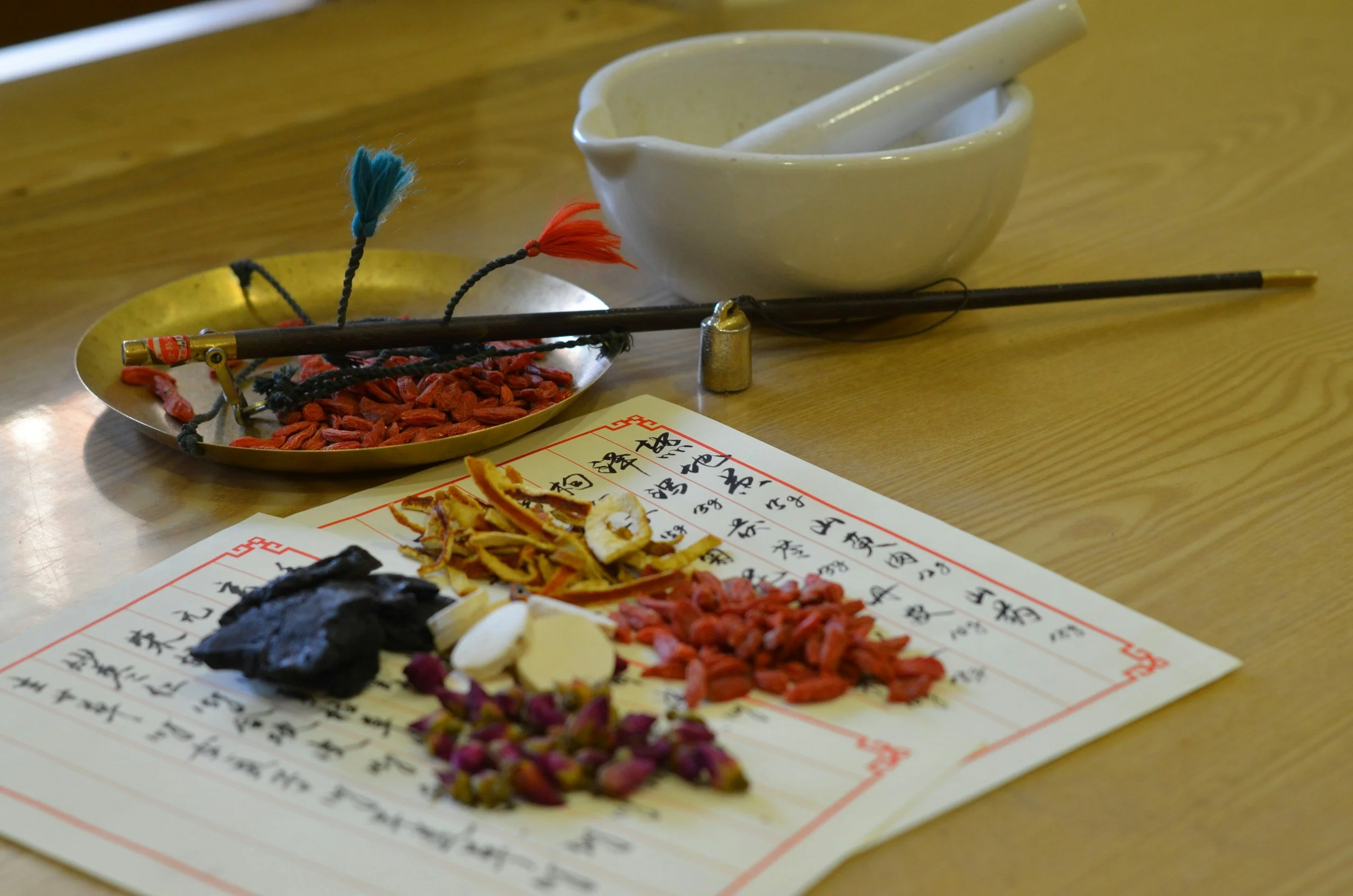
Let’s say someone has a poor sperm analysis. In Western medicine they’ll look at whether you’re a drinker, a smoker, if you have an infection and you need antibiotics. Other than that, there’s nothing else they can offer. In Chinese Medicine they can offer food therapy, Chinese herbs to improve motility, they can bring couples in and educate them together.
People come in and we can look at their kidney function, urinalysis, and use that to inform herbs, types of TCM treatment.
Integrating, using labs and things that come with Western medicine in Chinese Medicine. Most people don’t have any idea how helpful TCM can be with different health issues. ”
LGBTQIA+ Health
Shawn: “Being a trans man my experiences are a bit different, I grew up female and was raised as a girl until my teenage years. I recognize my male privilege but also often don't find myself dealing with the hangups of the patriarchal pressure put on cis men.”
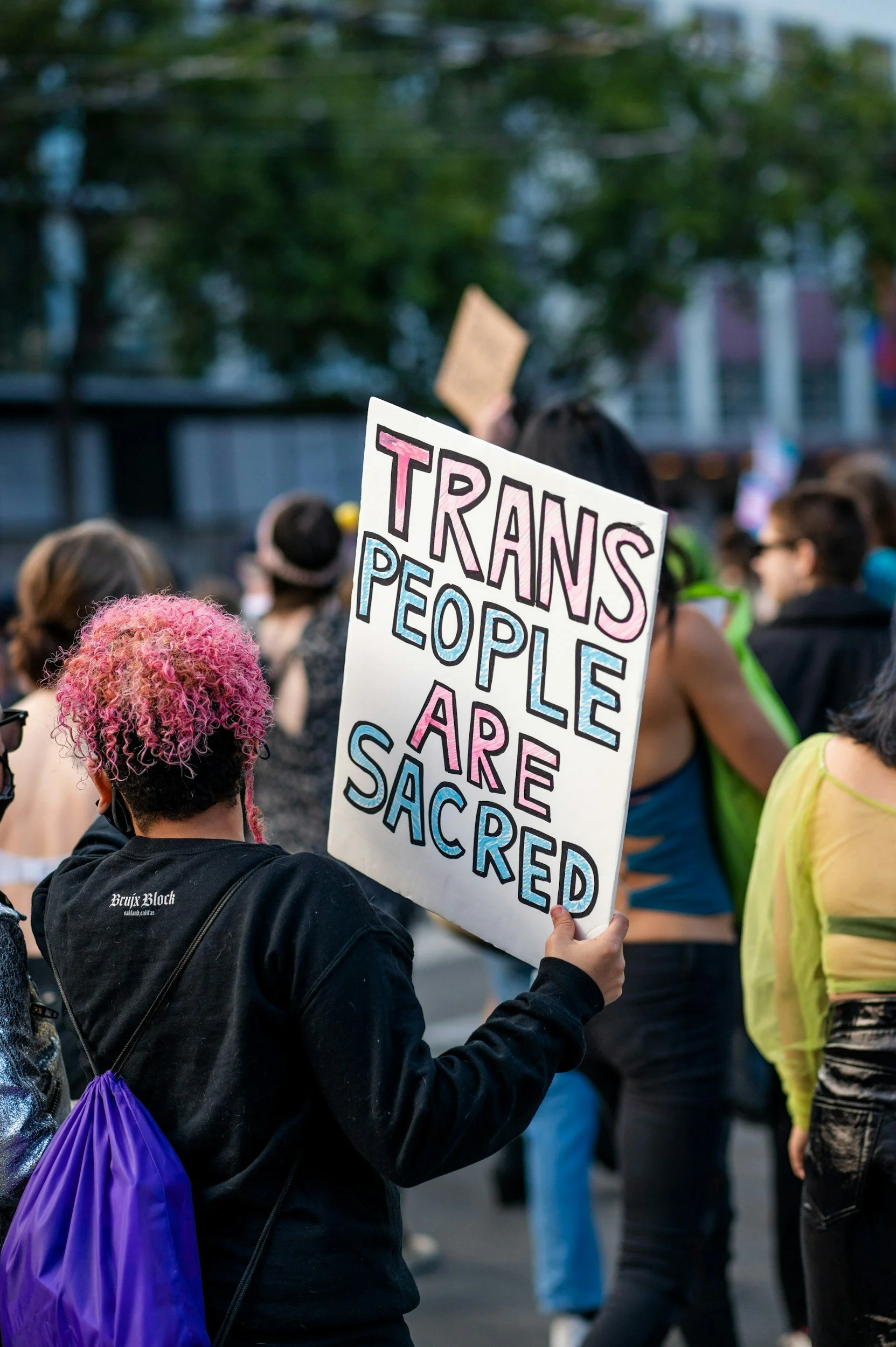
“Men” are a diverse and expansive group that includes anyone who identifies as a man—across race, ethnicity, class, sexual orientation, gender identities and expression. When we speak of men this Pride Month, it’s a perfect time to center queer and trans men. And during Pride Month and throughout the year, the time is always right to honor all queer, trans, nonbinary, and LGBTQIA+ identified people.
We celebrate our siblings, loved ones, and neighbors who help all of us to transcend binaries and limitations simply by living authentically as themselves.
Discrimination, Past and Present
Shawn: “When it comes to queer men, especially older gay/bi/queer men, we get all above with the addition of medical mistreatment and trauma during the HIV/AIDS epidemic of our past where often times queer men who would be open about their medical needs and seek help would be demonized for it.”
Although men are widely understood to be an advantaged group in U.S. society compared to other genders, both men and LGBTQIA+ people statistically delay or avoid care.
As groups, both populations experience barriers to care that are related to discomfort and judgment in the health care system. For LGBTQIA+ people interfacing with health care providers, these concerns are likely to be specifically rooted in bias, discrimination, and disrespect.
Shawn points out that queer and trans people struggle particularly based on the legacies of past harms and failures of the medical establishment to adequately and humanely address their needs. Tragically, these harms not only remain today, but gains of the past decades have been followed by a political climate of vengeful and reactionary backlash.
Research shows that LGBTQIA+ people delay or avoid health care visits in large part due to experiences of discrimination and feeling unseen by providers (Carabez et al., 2015; Eckstrand & Ehrenfeld, 2016; Eliason & Chinn, 2018). In the Healthcare Equality Index 2024 issued by the Human Rights Campaign, 1 in 5 LGBTQI+ adults surveyed “postponed healthcare treatment due to disrespect or discrimination by healthcare providers,” with 51% of trans and nonbinary respondents reporting disrespect and discrimination.
The 2022 U.S. Transgender Survey revealed similar results, with nonbinary AFAB (assigned female at birth) and trans men reporting the greatest proportions of negative experiences with healthcare practitioners. These negative experiences are compounded for LGBTQIA+ individuals who also hold marginalized identities based on their race, ethnicity, disability status, income, and other factors.
Integrative Care, TCM and LGBTQIA+ Health
Shawn: “I also think what a lot of [TCM] clinics do is allow for this space…where most likely [patients] aren't going to be running into people they fear judgment from. Coming into a space where I, as someone who has had top surgery but still feel very uncomfortable shirtless, could feel safe enough to take my shirt off and just talk to another human was an eye-opening experience for me.”
Last year, in their blog article Community-Centered Healing: a Queer Tradition, Bre Beachy wrote about what makes integrative care uniquely supportive for queer, trans, and LGBTQIA+ people:
“…queer and trans folks turn to alternative practices when Western medicine has failed them or is inaccessible, they want to support their body holistically, and need care rooted in community, dignity, and bodily autonomy. Community-based care and mutual aid are deeply rooted in LGBTQIA+ History, and integrative healing modalities have become more than just alternatives, but acts of survival from systems that exclude and harm them.”
Bre added that, like Shawn, their personal experiences at MIHS as a queer/trans person were deeply impactful:
“…visiting this space was the first time that care had ever felt affirming and that my health concerns were heard. I went into this from chronic pain, but I kept leaving appointments and classes with a connectedness and alignment with my mind and body that I had never really felt before.”
Integrative Health is Patient-Centered
This is integrative health care. In previous blog posts we’ve explored “What Is Integrative Health?” At MIHS, we define Integrative Health by 5 key principles.
Integrative Health Principle 3: Integrative health is patient-centered. Integrative health practitioners focus on the person, supporting them to achieve a higher level of wellness–rather than focus primarily on the disease, body part, pathology, etc.
To Said, patient-centered care simply means,“you treat everyone who comes in at the same level, with respect.” Said says the explanation for why queer, trans, nonbinary, and other LGBTQIA+ people are more likely to have affirming experiences with TCM is based on its fundamentally patient-centered philosophy:
“[In TCM], you look at the person as a whole person, you don’t think of anything else, just the person.
A biological person, with hormones, emotions. You assess based on what you see. Once you go through people going on hormones, that affects the biology of the body.
For example, if for people taking hormone therapy, testosterone will boost yang energy, so they tend to run more warm, sweaty. And that’s what TCM does best is regulate the nervous system and metabolism. You present with the person who they are, what they look like, the whole body, medication, lifestyle, and you treat them from there. You don’t see different genders, you just treat people as they come.”
Building An Inclusive Space for Healing
Shawn: “One thing I find very amazing about this space we have created [at MIHS], is that we allow anyone of any beliefs, identities, etc., to come here as long as you are respectful. Having a space where it’s judgment-free can be a wonderful bridge for people to even move on to being more open to accepting help in Western medicine, as well. I think building a space to be a stepping stone to help heal the traumas of the past and build a foundation for acceptance of humanity for men, and allow them to seek healthcare for all aspects of their life, is what we strive for everyday.”
Said adds that providing patient-centered care is ultimately about values:
“Put money last, as long as people get better. That’s how I practice. It’s like what can you afford? You just want people to get better. An investment in your community is better than just an investment in money. Having more people feel better and talking about Chinese Medicine is a better goal than making money and paying taxes.”
*******************
To find out more about Minnesota Integrative Health Studio services, check out our website. You can book online here. Questions? Feel free to contact us, call (612.345.5648), at or stop by “the studio” on our corner of northeast Minneapolis.
Yan BW, Arias E, Geller AC, Miller DR, Kochanek KD, Koh HK. Widening Gender Gap in Life Expectancy in the US, 2010-2021. JAMA Intern Med. 2024;184(1):108–110. doi:10.1001/jamainternmed.2023.604https://www.dol.gov/sites/dolgov/files/ebsa/about-ebsa/our-activities/resource-center/fact-sheets/women-health-care-jobs-fact-sheet.pdf
Giorgianni SJ, Henry RK. A Window of Opportunity to Address the Critical Issue of U.S. Male Longevity and Disease Burden Gaps: A Call for U.S. Federal Oversight. Am J Mens Health. 2025 Nov-Dec;19(6):15579883251400718. doi: 10.1177/15579883251400718. Epub 2025 Dec 6. PMID: 41351452; PMCID: PMC12682996. https://pmc.ncbi.nlm.nih.gov/articles/PMC12682996/
Hayes C, Gupta T. Falling life expectancy among US men BMJ 2023; 383 :p2937 doi:10.1136/bmj.p2937
https://menshealthmonth.org/week/history
https://menshealthnetwork.org/
https://menshealthnetwork.org/lifespan-gender-gap/#GapGuide
https://aibm.org/research/six-facts-on-mens-health-from-aibm/
https://newsroom.clevelandclinic.org/2023/09/06/cleveland-clinic-survey-examines-the-current-state-of-mens-health-in-america
https://schaeffer.usc.edu/research/rural-health-men-life-expectancy-quality/
https://aibm.org/research/six-facts-on-mens-health-from-aibm/
https://weillcornell.org/news/men’s-health-month-own-your-health
https://www.brownhealth.org/be-well/importance-mens-health-month
Choy J, Kashanian JA, Sharma V, Masson P, Dupree J, Le B, Brannigan RE. The men's health center: Disparities in gender specific health services among the top 50 "best hospitals" in America. Asian J Urol. 2015 Jul;2(3):170-174. doi: 10.1016/j.ajur.2015.06.005. Epub 2015 Jun 24. PMID: 29264139; PMCID: PMC5730713.https://pmc.ncbi.nlm.nih.gov/articles/PMC5730713/
https://www.mnintegrative.com/blog/acupuncture-in-queer-healthcare
Dr. Mike Smith GMHC The Empowerment Center 6/23/12https://www.youtube.com/watch?v=DtN4iUNARrI&t=2s
https://reports.hrc.org/hei-2024
Trans And Native: Meet The Indigenous Doctor Giving Them Hope AJ+https://www.youtube.com/watch?v=MSnvtj0G3cA&t=55s
https://transequality.org/issues/health-healthcare.
https://transequality.org/sites/default/files/2025-06/USTS_2022Health%26WellbeingReport_WEB.pdf
Corinna CD Franklin (2023). Poorer Health in the LGBTQ+ Community Due to Fear of Mistreatment. Journal of the Pediatric Orthopaedic Society of North America. Volume 5, Supplement 1. 2023, 625,ISSN 2768-2765. https://doi.org/10.55275/JPOSNA-2023-625.https://www.sciencedirect.com/science/article/pii/S276827652400107X
Rastogi, A., Menard, L., Miller, G. H., Cole, W., Laurison, D., Caballero, J. R., Murano-Kinney, S., & Heng-Lehtinen, R. (2025, June). Health and wellbeing: A report of the 2022 U.S. Transgender Survey. Advocates for Transgender Equality.https://ustranssurvey.org/download-reports/
https://dragonhemp.com/blogs/learn/pride-wellness-a-history-of-homosexuality-spiritual-practice
These medical practitioners use traditional Chinese medicine to make healthcare safer for LGBTQ2S+ patients byTobin Ng Feb. 5, 2024https://broadview.org/traditional-chinese-medicine-lgbtq2s/
https://riverstonechiropractic.com/acupuncture-and-post-surgical-care/