

TCM and Vaccines: A Brief, Complex, and Gross History
With back to school and flu season around the corner, and disease outbreaks on the rise in the U.S. and beyond, we thought this month was a good time to broach the cultural lightning rod topic of vaccination. After all, Traditional Chinese Medicine is deeply connected to vaccination—from their shared historical roots to modern-day practice.
Vaccination As Global Success Story
For much of the past century, vaccines have been heralded as a worldwide success story. Through human ingenuity and global collaboration, highly contagious diseases—which previously led to mass suffering and death—were systematically contained. Infectious disease plummeted in the span of mere decades, and smallpox was declared eradicated in 1980–from the entire planet.
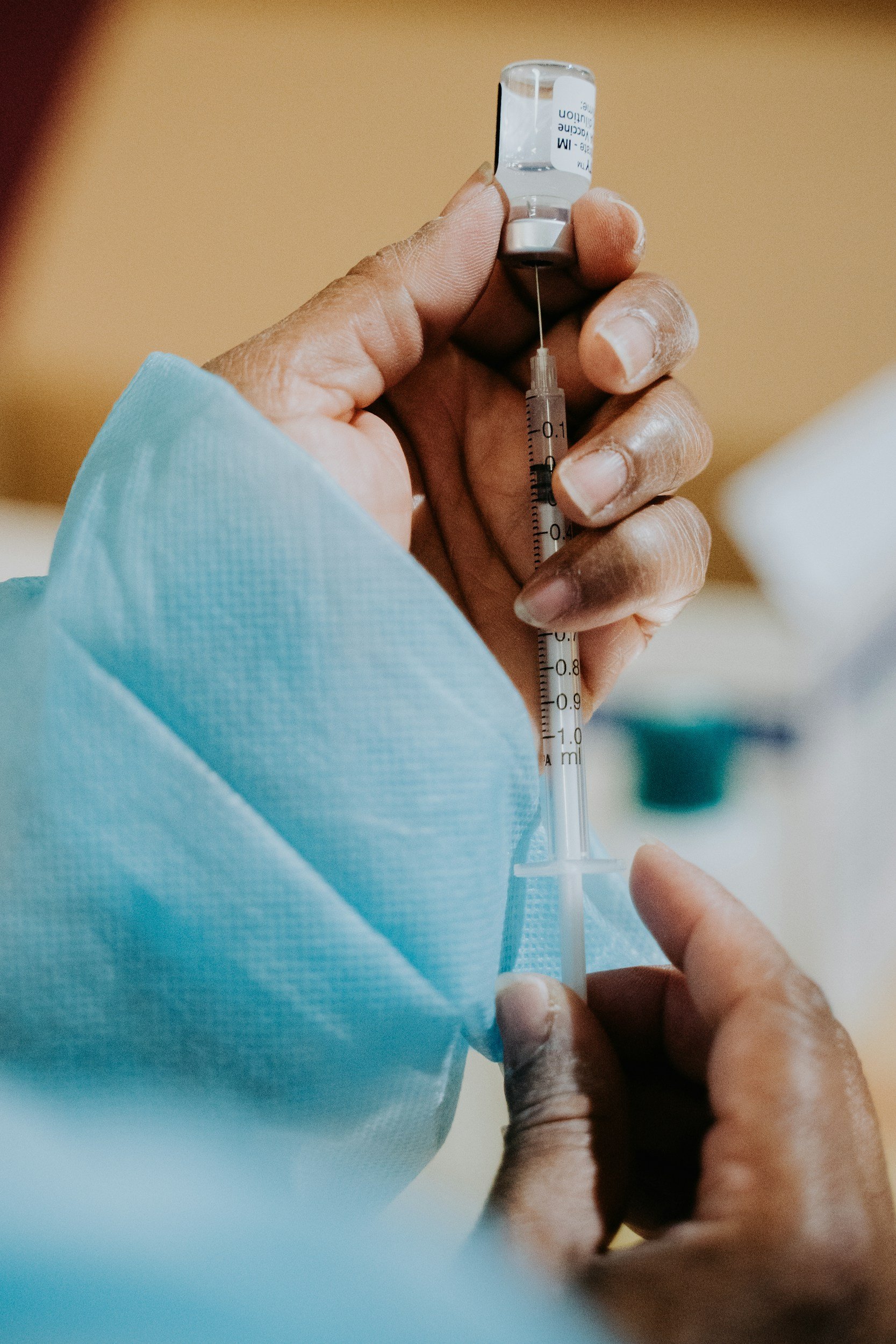
In the United States, national guidelines implemented in the late 20th century saw the reduction, elimination, and eradication of multiple preventable diseases by the early 2000s. Despite gains being centered among wealthier populations initially, a growing worldwide public health infrastructure ultimately broadened vaccine access throughout the world. The World Health Organization reports that in the past fifty years, vaccination has meant over 150 million lives saved, with infant death reduced by 40% globally.
Declining Vaccine Confidence, Surging Infectious Disease
Despite these large scale successes, worldwide trust in vaccine safety has been declining significantly over the past decade. While these trends intensified during the COVID-19 pandemic, they had actually started prior to 2020. And although the United States has been in the spotlight for prominent vaccine skepticism at the highest levels of government, this mistrust in vaccination transcends boundaries, touching every region of the globe.
The conversation about vaccines is often framed as deeply polarized, contentious, and “us vs. them.” But public health researchers who focus on vaccine hesitancy caution that this global phenomenon is far more nuanced than social media would have you think. The reasons for declining confidence in vaccines, or “vaccine hesitancy,” are complex.
Researchers cite misinformation and disinformation, mistrust in institutions, wariness of corporate and pharmaceutical influence, stymied immunization efforts, cuts in public health funding worldwide, and socioeconomic barriers to vaccine accessibility. Public health experts writing about vaccine hesitancy in South Africa and Brazil noted that “perspectives on vaccines are influenced by social determinants, and “intersect with race, class, inequality, trust, and lived experiences with health systems” (Matos, Wiysonge & Couto, 2026).
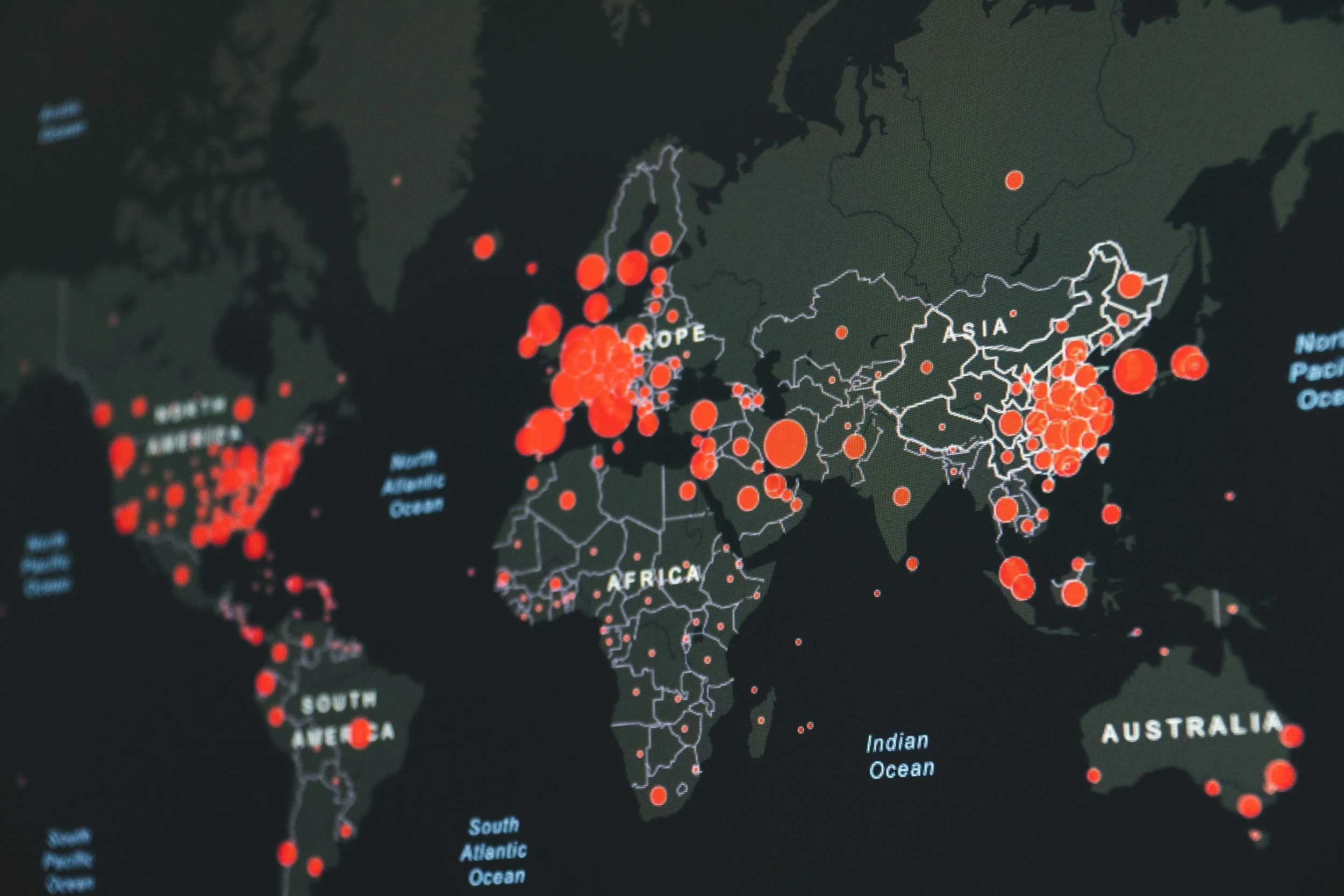
Amidst this disruption of vaccine confidence, we see a recent resurgence of preventable diseases, like measles and whooping cough, in the U.S. and worldwide. Some outbreaks correlate with global conflict zones including Sudan, Palestine, Yemen, and Venezuela. The sudden elimination of USAID and other funding sources has been destabilizing public health structures throughout the world. Even absent such high-impact events, countries in Europe and North America are seeing increases in infectious diseases that were just recently fully eradicated, their “measles-free” status slipping away with recent outbreaks.
A Brief History of Vaccination
Vaccines are often said to have originated in Europe. Edward Jenner was credited with “inventing” the smallpox vaccine in England around the turn of the 18th century. Using the cowpox virus, Jenner created what is considered the first vaccine, inferring immunity from smallpox on the vaccinated. (Fun fact: “vaccine” is named for the Latin “vaccinae,” which is the cow in cowpox.)
But the history of vaccination is older and deeper than one English doctor—and far from Eurocentric. By using low-level viral material to create an immune response for disease prevention, Jenner was simply building on centuries of knowledge and practice of what is known as “variolation,” or inoculation. According to various histories, inoculation occurred throughout the world: from rural folk practices in Europe, to the Middle East, Russia, and India, among other societies.

It is China, though, that arguably boasts the oldest and most meticulous documentation of inoculation. In fact, China may well be the origin point of global vaccination practices, through the historical practice of Traditional Chinese Medicine (TCM).
MIHS co-owner Larissa Vados, PhD, LAc notes, “China was one of the first, if not the first country to introduce inoculation, a very early form of vaccination.”
“We learned about it in school,” MIHS co-owner and TCMD Said Isayed says of his Traditional Chinese Medicine Doctor training in Tianjin, China. “The global influence….in 1688, they said, the Russians came to China to learn the technique. And the technique reached the Ottoman Empire, and then it was moved to Europe. Then Edward Jenner introduced the smallpox vaccine.”
Said elaborates:
“Using toxins to combat toxins: that's a Chinese medicine principle. And that's what influenced Louis Pasteur to do the rabies vaccine, because he used a spinal tissue to create the rabies vaccine. The Chinese already had that documented. It's the same sort of idea.”
“Can I Imagine How Gross Things Were?”
Said believes that understanding this history is essential to educating the public about the value of vaccination.
“Because if you want to tell people what to do, you have to tell them why. It's like, oh, it's to prevent disease,’ but people like to understand more. People need to know how stuff's been made. People debate the research…but maybe talk about all the history, how humans had to struggle to come up with this. It’s like, ‘can I imagine how gross things were’?”
Since we haven’t gotten into details yet, you may be wondering what Said means. How gross, exactly, were the things people did in the history of inoculation?
Pretty gross.
Some of the documented practices for smallpox variolation included: squeezing pus from the inflamed pustules of people dying of smallpox directly into an open wound; injecting the scabs or pus of smallpox pustules with a needle; buying or bartering smallpox scabs and rubbing them on the skin; tying scabs onto open skin with wool and leaving it like that for awhile; grinding scabs into powder and huffing or snorting them; collecting pus with cotton and stuffing that cotton up the nose.
Why, you might ask, would people go to these truly disgusting lengths?
Well, it seemed to work. These variolation practices were noted at the time to prevent disease, or at least minimize its severity. For such a deadly and disfiguring disease as smallpox—with its mortality rate of 30%—it was simply worth the risk.
Said says this is exactly why the long history of vaccines is so important to share—because it puts our current situation in perspective.
“They were that desperate, that they actually thought about putting scabs in their noses. Humans would do desperate measures and desperate tasks. You're gonna take [a scab] off and grind it. Just the idea of, ‘I'm taking this gross thing that's killing people, and putting it in my body.’ That's how bad it was. Because back in the day, you're done; there's no cure. Now, it’s not perfect.
But at least stuff is getting done more professionally. We’re interested in dosage, and people trying to make more sense about the human body.”
Is Traditional Chinese Medicine Too “Natural” For Vaccines?
Despite the direct throughline from Chinese medicine history to modern vaccines, Larissa says,
“One persistent misconception I encounter as a TCM practitioner is the belief that acupuncture and Chinese medicine are inherently opposed to vaccines, pharmaceuticals, or other forms of modern medicine because they are ‘not natural.’”
In fact, she says of ancient TCM practitioners, “these were traditional medicine doctors, practicing herbal medicine and early forms of acupuncture, that also utilized and promoted inoculation against disease.”
Like Said, Larissa studied TCM at the The First Teaching Hospital of Tianjin University of Traditional Chinese Medicine (TUTCM), where she earned a PhD in Traditional Chinese Medicine.
Larissa continues:
“TCM was not created in opposition to pharmaceuticals or vaccines, it was created before modern medicine existed. It was not designed to be either or. In China, where this medicine developed, it is now utilized alongside modern medicine in hospitals and clinics. Just as in many countries, China also has required vaccines and a childhood vaccine schedule.

In modern China, the title of ‘acupuncturist’ does not exist in the same way as it does in the United States. The majority of ‘acupuncturists’ are actually licensed physicians. TCM is practiced much differently in China than it is in the US - it is fully integrated into the health care system. TCM is part of many medical schools, where medical students study modern medicine. Both modern and traditional medicine are practiced together in hospitals and clinics seamlessly - this is truly integrative medicine.
Physicians may prescribe you herbal medicine, while also prescribing you an antibiotic. They may give you acupuncture, as well as refer you to surgery or give you a cortisone injection (some surgeons are also trained in acupuncture and practice both!). You will get cupping, herbal medicine, acupuncture, and moxibustion as an inpatient at the First Teaching Hospital Tianjin University of Traditional Chinese Medicine, as well as pharmaceuticals and any other recommended biomedical care.
In my three years studying and working in the hospital in Tianjin during my PhD program, I never heard one TCM physician or medical student recommend against any vaccination. Vaccination was seen as a normal part of medical care, that is preventive in nature and protective to the enormous population of China. All of the TCM physicians I worked alongside and studied under, some of whom have family generations back practicing TCM, believed vaccination to be an integral part of medical care and not in opposition to TCM in any way.
If the doctors of TCM in the country where this medicine developed are not anti-vaccine, what gives anyone from a western country who studies this medicine the right to claim TCM is ‘natural’ and therefore anti-vaccine?”
Vaccines Through the Lens of TCM Theory
While modern vaccines did not yet exist when TCM was first created, Larissa sees vaccination as aligning well with the ancient wisdom of TCM philosophy.
“In TCM, Zheng Qi and Wei Qi are two types of qi that play a role in helping the body resist illness. It has been suggested by TCM practitioners that a vaccine can be seen as introducing a small amount of a controlled outside pathogenic factor to train the body’s defensive functions (Wei Qi).
If a person’s Zheng Qi is strong, they will experience minimal side effects from vaccines and build strong protection. If a person’s Zheng Qi is weak or deficient, they may have some side effects from the vaccine, and may not build as robust immunity.
Although the language and framework of TCM are different from modern biomedical science, this description nicely matches up with what is actually happening with most vaccines. The body is introduced to a portion of a disease, or a weakened version of a disease, and the immune system is ‘trained’ on how to build up its defenses against this disease to be able to more efficiently and effectively fight it off.”
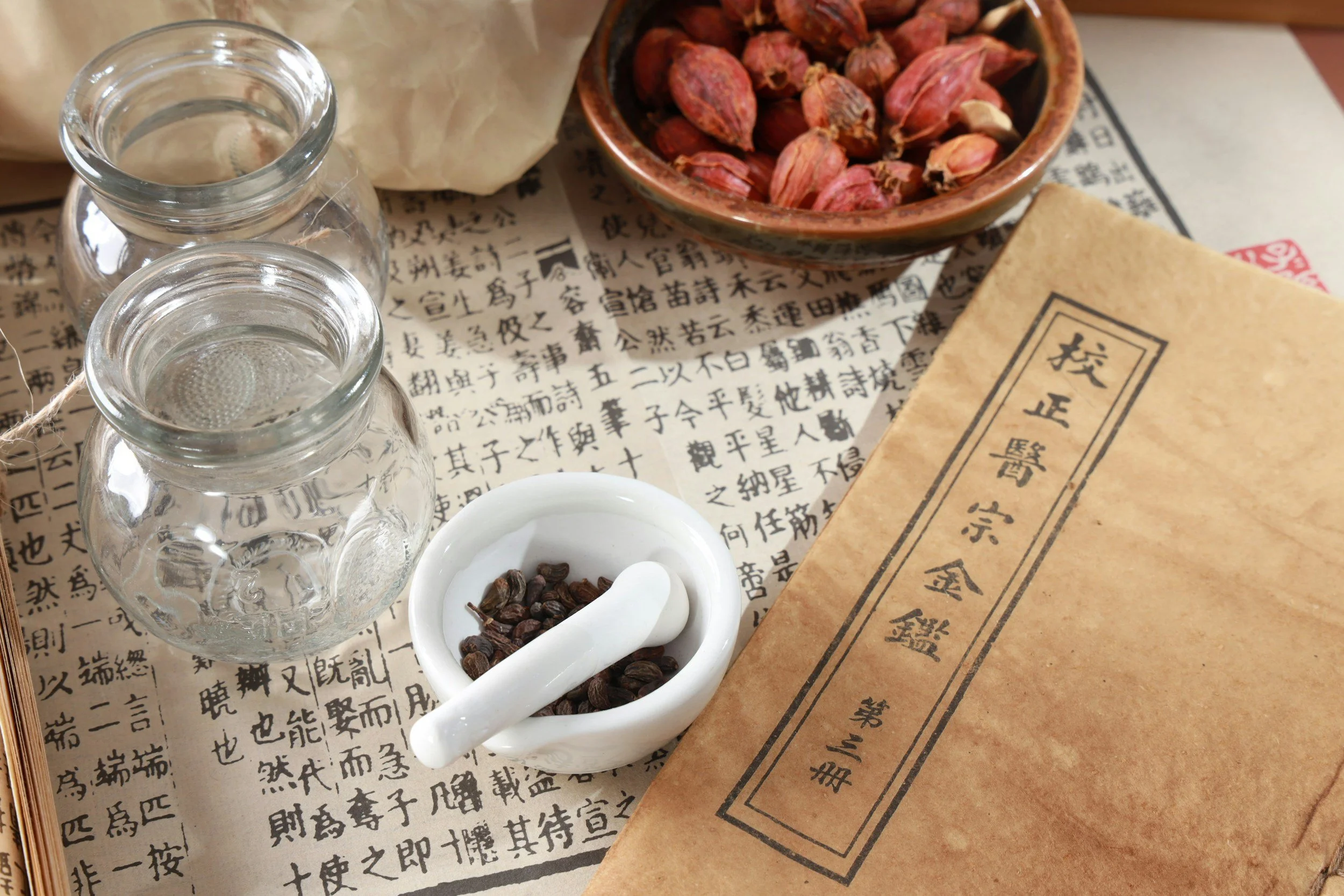
Said notes that the underlying mechanism and theory of vaccination is found in many practices.
“It's like immunotherapy….a lot of people have no problem doing immunotherapy.
It's the same thing as vaccinating. You are introducing small amounts….teaching your body, your immune system.
To get used to dealing with this, instead of freaking out. How to get rid of it, filter it, whatever. It's the same principle.
It’s also similar to naturopathy and homeopathy…
It's a basic principle of lots of systems of medicine.”
TCM and Vaccines as Integrative Health Care
As we’ve written about in previous articles, our work at MN Integrative Health Stduio—and TCM itself—is ultimately about integrative health care. As integrative health practitioners at MIHS, we define integrative health by five tenets: holistic, restorative, patient-centered, interdisciplinary, and evidence-based.
In our 2025 article “What Is Integrative Health? (Part 1)”, we describe integrative health as interdisciplinary by asserting that by “integrating the best of conventional health care with the best of complementary/alternative practices, integrative health emphasizes mutual respect, support and communication among practitioners and disciplines. Integrative health exemplifies cooperation, or ‘both/and’; not competition, or ‘either/or.’”
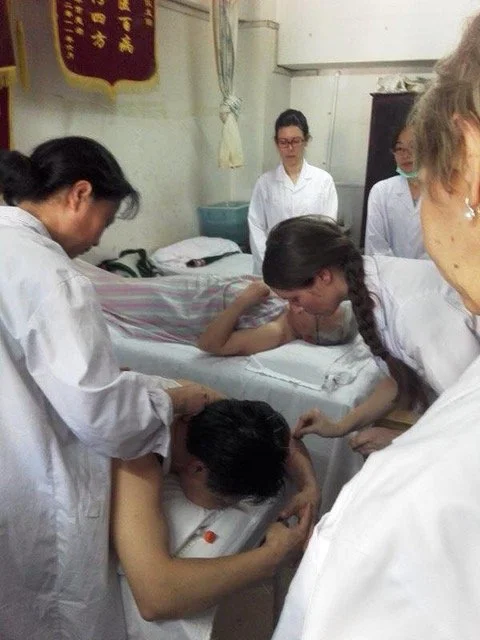
Larissa argues that “rather than an ‘alternative’ medicine, as some are inclined to do in our western culture, TCM is best described as an integrative medicine.”
She continues, “TCM is not about rejecting modern medical advances; it is about integrating and incorporating the most appropriate tools to help the patient. TCM is best practiced alongside modern medicine, not in opposition to it.” Moreover, Larissa cautions,
“framing TCM and modern medicine as opposing forces creates a divide that should not exist, and does a disservice to patients and practitioners everywhere.”
When it comes to TCM and vaccines, she says, “Traditional Chinese Medicine theory beautifully aligns with the idea of preventive immunization. TCM promotes the idea of preventive medicine, and vaccination is by definition preventive medicine.”
Said agrees, emphasizing that “we have a lot of people come in for TCM who like natural things, right? But also, we want to make sure that they’ve also been to the doctor, had blood work, gotten the necessary vaccinations, etc.”
Finally, Said adds that preventive medicine is not only an individual phenomenon. Getting vaccinated can help support personal health, depending on the individual.
Ultimately, though, when it comes to the importance of vaccination, “it's about community safety, the safety of the general population.”
It’s All About Balance
Given how polarized the conversation has become in recent years, respect and communication are essential to advancing mutual understanding and collective wellbeing.
The Vaccine Confidence Project is a global research organization that aims to build confidence in vaccination not through telling people what to do, but deep listening and engagement. Founder Heidi Larson argues that people’s concerns about vaccines are varied and complex, and deserve to be taken seriously.

As Derrick Lundberg, CMT points out, “to me, it's all about balance. No matter what it is that happens whether it's the result of a disease or a lesser result from the inoculation of a disease, we should be treating every body like it is a dynamic environment seeking balance.”
In the end, when it comes to making choices about vaccination, Said says,
“you can’t tell people what to do. The thing that people deserve is to get educated about what it is and how it works. And they can make their own decision. Most people will make the right decision.”
*******************
To find out more about Minnesota Integrative Health Studio services, check out our website. You canbook online here. Questions? Feel free to contact us, call (612.345.5648), at or stop by “the studio” on our corner of northeast Minneapolis.
Roush SW, Murphy TV, Vaccine-Preventable Disease Table Working Group AT. Historical Comparisons of Morbidity and Mortality for Vaccine-Preventable Diseases in the United States. JAMA. 2007;298(18):2155–2163. doi:10.1001/jama.298.18.2155 https://jamanetwork.com/journals/jama/fullarticle/209448
Riedel S. Edward Jenner and the history of smallpox and vaccination. Proc (Bayl Univ Med Cent). 2005 Jan;18(1):21-5. doi: 10.1080/08998280.2005.11928028. PMID: 16200144; PMCID: PMC1200696. https://pmc.ncbi.nlm.nih.gov/articles/PMC1200696/
https://www.cdc.gov/smallpox/about/history.html
https://collections.libraries.indiana.edu/iulibraries/s/smallpox-vaccine-exhibit/page/great-qing
https://www.sciencedirect.com/topics/pharmacology-toxicology-and-pharmaceutical-science/variolation
https://yalebooks.yale.edu/2020/10/09/the-forgotten-history-of-inoculation/
https://pmc.ncbi.nlm.nih.gov/articles/PMC3407399/
https://en.chinacdc.cn/health_topics/immunization/
https://www.who.int/china/activities/protecting-people-through-vaccination
https://www.who.int/health-topics/vaccines-and-immunization#tab=tab_1
https://www.who.int/news-room/questions-and-answers/item/vaccines-and-immunization-vaccine-safety
https://publichealth.jhu.edu/2025/how-the-us-ensures-vaccine-safety
https://www.who.int/news-room/feature-stories/detail/vaccine-efficacy-effectiveness-and-protection
Cavaillon JM, Legout S. Louis Pasteur: Between Myth and Reality. Biomolecules. 2022 Apr 18;12(4):596. doi: 10.3390/biom12040596. PMID: 35454184; PMCID: PMC9027159.https://pmc.ncbi.nlm.nih.gov/articles/PMC9027159/
Brumbaugh KQ, Gellert F, Mokdad AH. Understanding Vaccine Hesitancy: Insights and Improvement Strategies Drawn from a Multi-Study Review. Vaccines (Basel). 2025 Sep 25;13(10):1003. doi: 10.3390/vaccines13101003. PMID: 41150390; PMCID: PMC12567618. https://pmc.ncbi.nlm.nih.gov/articles/PMC12567618/
Oluwatosin Goje, Aanchal Kapoor. Meeting the challenge of vaccine hesitancy. Cleveland Clinic Journal of Medicine Sep 2024, 91 (9 suppl 1) S50-S56; DOI: 10.3949/ccjm.91.s1.08 https://www.ccjm.org/content/91/9_suppl_1/S50
https://theconversation.com/vaccine-hesitancy-cant-be-boiled-down-to-a-single-factor-what-we-learnt-in-south-africa-and-brazil-278807https://doi.org/10.64628/AAJ.k5whwen7g
Cooper, S., & Wiysonge, C. S. (2023). Towards a More Critical Public Health Understanding of Vaccine Hesitancy: Key Insights from a Decade of Research. Vaccines, 11(7), 1155. https://doi.org/10.3390/vaccines11071155https://www.mdpi.com/2076-393X/11/7/1155
Bednarczyk, R. A. (2026). Suboptimal vaccine uptake and vaccine hesitancy in the United States: current challenges and future directions. Expert Review of Vaccines, 25(1). https://doi.org/10.1080/14760584.2026.2653756https://www.tandfonline.com/doi/full/10.1080/14760584.2026.2653756#abstract
Kuleen Sasse, Ron Mahabir, Olga Gkountouna, Andrew Crooks, Arie Croitoru. Understanding the determinants of vaccine hesitancy in the United States: A comparison of social surveys and social media. Published: June 6, 2024. https://doi.org/10.1371/journal.pone.0301488https://journals.plos.org/plosone/article?id=10.1371/journal.pone.0301488
https://www.cfr.org/articles/vaccine-skepticism-has-risen-in-the-u-s-and-in-many-other-countries
https://www.gavi.org/vaccineswork/understanding-vaccine-hesitancy
https://www.vaccineconfidence.org/who-we-are/about/
https://www.thinkglobalhealth.org/article/vaccine-preventable-disease-a-global-tracker
https://my.clevelandclinic.org/health/diseases/21096-immunotherapy-side-effects
Guan Linyu, Gu Shenjia, Fu Chuanxi (2025). The historical status, experience and enlightenment of variolation in ancient China. 2025 -08 -06 · DOI: 10.3760/cma.j.cn112150-20241217-01018
Cui Y, Gong L, Chang L, Lu W, Zhao S, Zhuo Z, Zhang X. Traditional Chinese medicine as potential adjuvants for tumor vaccines: a review of types, mechanisms, and forms. Front Immunol. 2025 Dec 10;16:1661694. doi: 10.3389/fimmu.2025.1661694. PMID: 41451199; PMCID: PMC12727925.